
Elie Wiesel Biography Quotes 30 Report mistakes
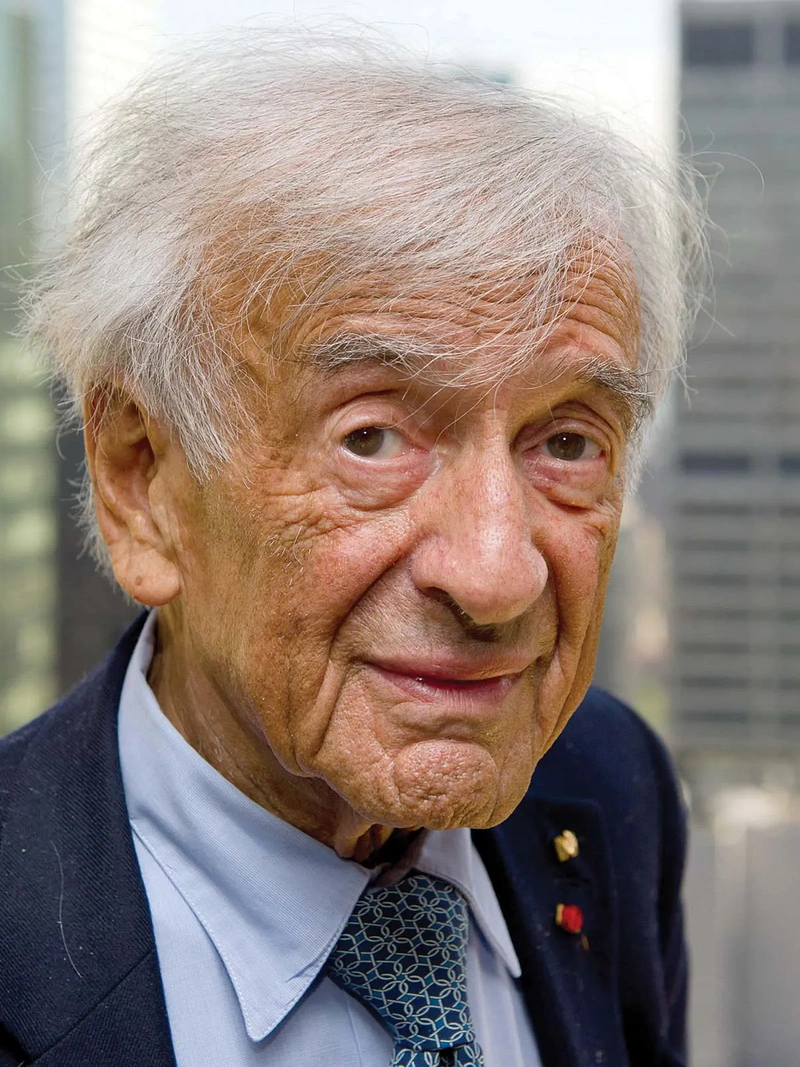
Attr: Britannica
| 30 Quotes | |
| Born as | Eliezer Wiesel |
| Occup. | Novelist |
| From | USA |
| Born | September 30, 1928 Sighet, Romania |
| Died | July 2, 2016 New York City, USA |
| Aged | 87 years |
| Cite | |
Citation Formats
APA Style (7th ed.)
Elie wiesel biography, facts and quotes. (2026, February 11). FixQuotes. https://fixquotes.com/authors/elie-wiesel/
Chicago Style
"Elie Wiesel biography, facts and quotes." FixQuotes. February 11, 2026. https://fixquotes.com/authors/elie-wiesel/.
MLA Style (9th ed.)
"Elie Wiesel biography, facts and quotes." FixQuotes, 11 Feb. 2026, https://fixquotes.com/authors/elie-wiesel/. Accessed 27 Mar. 2026.
Early Life and Background
Eliezer "Elie" Wiesel was born on September 30, 1928, in Sighet, a Jewish town in Romania's Maramures region then shaped by shifting borders, languages, and loyalties. He grew up in a traditional Hasidic environment where prayer, story, and argument were daily breath; his father, Shlomo, was respected for practical wisdom and community engagement, while his mother, Sarah, rooted the home in religious warmth. The Europe of his childhood was already cracking under nationalism and antisemitism, yet Sighet still offered the illusion of continuity - a place where texts and neighbors could seem sturdier than politics.That illusion ended with the Second World War. In 1944, after German occupation of Hungary, Wiesel and his family were deported to Auschwitz; he was separated from his mother and younger sister, who were murdered, and he endured forced labor with his father at Auschwitz and later Buchenwald. Shlomo Wiesel died shortly before liberation in 1945. The teenager who walked out of Buchenwald was not merely a survivor; he was a witness formed in an era that tested the limits of language, faith, and human solidarity.
Education and Formative Influences
After the war, Wiesel was taken in by France as one of the Jewish orphaned survivors; he studied in Paris, learned French, and trained as a journalist, absorbing both Jewish learning and the secular intellectual life of postwar Europe. He attended the Sorbonne and moved among circles where existentialism, post-Holocaust theology, and the politics of memory collided, while also sustaining the inner inheritance of Talmudic debate and Hasidic tales. His early reporting sharpened his eye for public evasions and private wounds, and his formative mentors included figures who urged him to speak without turning catastrophe into spectacle.Career, Major Works, and Turning Points
Wiesel began as a reporter in Paris and later in the United States, but his decisive turning point came when he committed his memories to narrative: after drafting a long Yiddish manuscript, he distilled it into the spare memoir "Night" (first published in 1958 in French, later in English), a work that made his personal ordeal a moral address to the living. He settled in the United States, became a major public intellectual, and wrote novels, essays, and testimony-infused works including "Dawn" (1960), "The Accident" (1961), and "The Gates of the Forest" (1964), often returning to the psychological aftershocks of survival. Over decades he taught, lectured, and served on the US President's Commission on the Holocaust, helping shape what became the United States Holocaust Memorial Museum; in 1986 he received the Nobel Peace Prize, recognized not for political office but for the moral pressure his voice exerted on public conscience.Philosophy, Style, and Themes
Wiesel's inner life was marked by a tension between inherited faith and the furnace of history: he wrote as a religious man wounded by God, and as a modern witness suspicious of easy closure. His prose sought compression rather than ornament, often carrying the feeling that what is left unsaid is part of the meaning - an ethics of restraint born from experiences that language can only circle. In craft as in conscience, he treated the visible page as the tip of a submerged iceberg, insisting that the real weight of testimony includes what cannot be fully shown.His central themes - memory, responsibility, and the peril of moral sleep - are inseparable from his psychology as a survivor who feared not only cruelty but the world's capacity to look away. “The opposite of love is not hate, it's indifference”. That sentence is less aphorism than self-diagnosis: he understood that indifference is how neighbors become bystanders and bystanders become accomplices, and he wrote to keep that mechanism exposed. In the same spirit, he framed silence as a choice with consequences, not a neutral posture: "I swore never to be silent whenever and wherever human beings endure suffering and humiliation. We must always take sides. Neutrality helps the
Our collection contains 30 quotes written by Elie, under the main topics: Ethics & Morality - Truth - Wisdom - Justice - Friendship.
Elie Wiesel Famous Works
- 1995 All Rivers Run to the Sea: Memoirs (Memoir)
- 1968 A Beggar in Jerusalem (Novel)
- 1966 The Jews of Silence (Non-fiction)
- 1962 Day (Novel)
- 1961 Dawn (Novella)
- 1958 Night (Memoir)