
Elizabeth Harrison Biography Quotes 1 Report mistakes
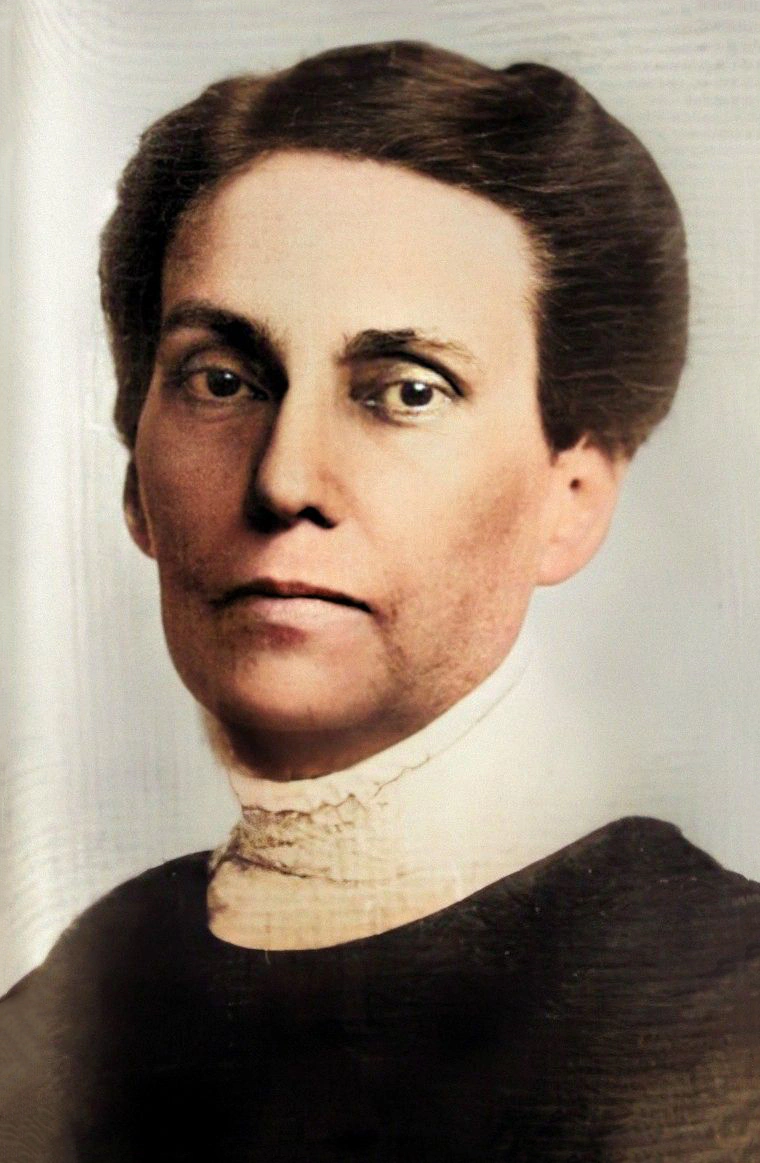
Attr: National-Louis University
| 1 Quotes | |
| Known as | Elizabeth Harrison (educator) |
| Occup. | Educator |
| From | USA |
| Born | September 1, 1849 Athens, Kentucky, United States |
| Died | October 31, 1927 San Antonio, Texas, United States |
| Aged | 78 years |
| Cite | |
Citation Formats
APA Style (7th ed.)
Elizabeth harrison biography, facts and quotes. (2026, February 11). FixQuotes. https://fixquotes.com/authors/elizabeth-harrison/
Chicago Style
"Elizabeth Harrison biography, facts and quotes." FixQuotes. February 11, 2026. https://fixquotes.com/authors/elizabeth-harrison/.
MLA Style (9th ed.)
"Elizabeth Harrison biography, facts and quotes." FixQuotes, 11 Feb. 2026, https://fixquotes.com/authors/elizabeth-harrison/. Accessed 27 Mar. 2026.
Overview
Elizabeth Harrison (1849, 1927) was an American educator and a formative leader in the kindergarten movement in the United States. Best known as the founder of the Chicago Kindergarten Training School, an institution that evolved into the National Kindergarten and Elementary College, then the National College of Education, and today is part of National Louis University, she helped professionalize early childhood education, advancing both teacher preparation and a child-centered philosophy rooted in the work of Friedrich Froebel. She was not a First Lady; the First Lady during the Benjamin Harrison administration was Caroline Scott Harrison.Early Life and Education
Harrison was born in 1849 in Kentucky. As a young woman she became interested in the then-novel idea of kindergarten, an educational approach that emphasized structured play, moral development, nature study, music, and storytelling for children before the primary grades. Seeking rigorous training, she studied Froebelian principles with leading figures of the era and immersed herself in the broader movement to bring kindergartens into American communities and public schools.Entry into the Kindergarten Movement
By the late 1870s and early 1880s, Harrison was studying and observing exemplary kindergartens and teacher-training programs. She absorbed ideas circulating among pioneering practitioners and philosophers, particularly the St. Louis circle influenced by Susan Blow and philosopher-educator William Torrey Harris, who helped interpret Froebel for American schools. Her conviction that the kindergarten needed professionally trained teachers would shape the rest of her career.Founding a Training School in Chicago
Moving to Chicago, Harrison organized formal training for kindergarten teachers at a time when such preparation was scarce. In 1886, 1887 she founded the Chicago Kindergarten Training School. Under her leadership the school established a demanding curriculum that blended theory, observation, supervised practice, music, manual work, and child study. Over time the institution broadened its programs and adopted new names, the National Kindergarten and Elementary College and later the National College of Education, becoming a centerpiece of teacher education in the Midwest. That lineage continues today within National Louis University.Educational Philosophy
Harrison’s work translated Froebel’s ideas into practical American classrooms. She championed:- The moral and social purpose of education, taught through stories, songs, nature work, and purposeful play.
- The professionalization of kindergarten teaching through rigorous preparation, not mere “motherly instinct.”
- Close study of child development to guide teaching methods.
- Partnerships with families and civic groups to sustain kindergartens, especially for children in working-class neighborhoods.
While firmly Froebelian, she remained open to the broader progressive currents of her time and engaged with contemporaries who emphasized experiential learning, social aims of schooling, and the integration of kindergarten with the primary grades.
Writings and Public Voice
Harrison was a prolific lecturer and author whose books and pamphlets were widely used by teachers and mothers. Two of her best-known works are:- A Study of Child Nature, a practical guide that framed kindergarten work as grounded in child development and moral education.
- In Storyland, a collection of stories designed for use in kindergartens and primary classrooms to cultivate imagination and character.
Through accessible prose, she helped teachers translate educational theory into daily practice.
Leadership and Associations
Beyond her college, Harrison held leadership roles in professional networks that knit the movement together. She worked actively with the International Kindergarten Union (IKU), speaking at meetings and helping set standards for teacher preparation. In Chicago she collaborated with women’s clubs and reformers who advocated for free kindergartens and for bringing kindergartens into the public schools.People Around Her
Harrison’s career intersected with many notable educators and reformers, including:- Susan Blow, who established the first public-school kindergarten system in St. Louis and shaped Froebelian training in America.
- William Torrey Harris, philosopher and superintendent, whose support helped legitimize kindergarten within public education.
- Francis W. Parker, a leading progressive educator in Chicago whose emphasis on child-centered, experiential learning resonated with Harrison’s aims.
- Jane Addams and Hull-House colleagues, whose settlement work included kindergartens and broader child-welfare initiatives in Chicago.
- Patty Smith Hill and Lucy Wheelock, prominent kindergarten leaders who, like Harrison, professionalized teacher education and broadened the field’s reach.
Later Years
Harrison remained closely involved with her college for decades, mentoring instructors and shaping curricula as the institution expanded. She continued to publish, lecture, and advocate for the integration of kindergarten into public systems and for high standards in teacher preparation. She died in 1927, having seen the kindergarten move from a philanthropic experiment to an established component of American schooling.Legacy
Elizabeth Harrison’s legacy lives on in several ways:- The institution she founded became a lasting hub for teacher education and today forms part of National Louis University.
- Her books and lectures helped generations of teachers connect theory to classroom practice.
- Her insistence on professional training and her advocacy within national networks helped standardize kindergarten work and anchor it in public education.
Not to Be Confused
Harrison is sometimes confused with figures from the Benjamin Harrison presidential family. The First Lady during that administration was Caroline Scott Harrison, and the president’s daughter from his second marriage was Elizabeth Harrison Walker. Educator Elizabeth Harrison, born in 1849 and deceased in 1927, was not a First Lady but a pioneering force in early childhood education.Our collection contains 1 quotes written by Elizabeth, under the main topics: Kindness.
Source / external links