
Elizabeth I Biography Quotes 33 Report mistakes
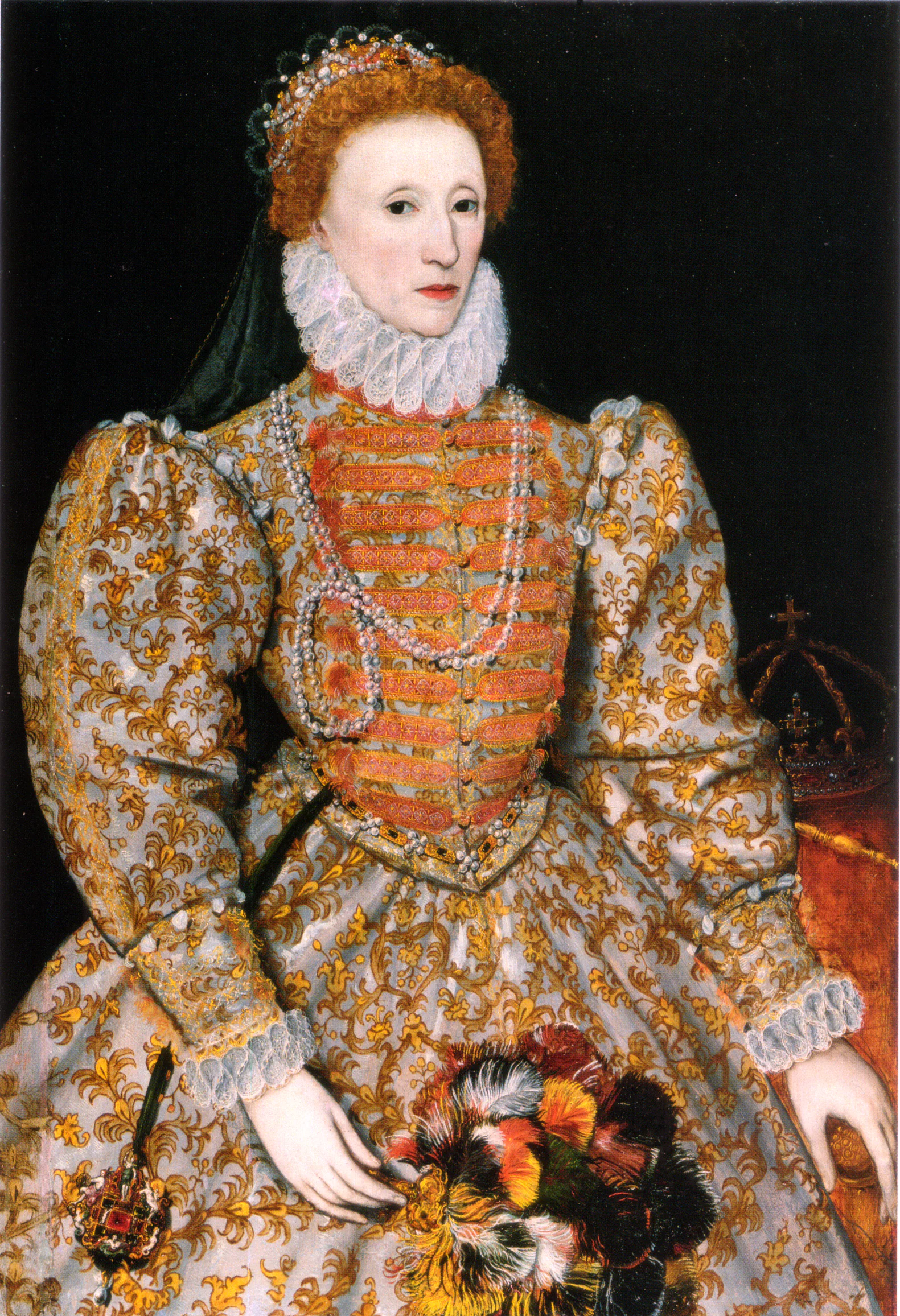
| 33 Quotes | |
| Born as | Elizabeth Tudor |
| Known as | Virgin Queen |
| Occup. | Royalty |
| From | England |
| Born | September 7, 1533 Greenwich Palace, London, England |
| Died | March 24, 1603 Richmond Palace, Surrey, England |
| Cause | Natural causes |
| Aged | 69 years |
| Cite | |
Citation Formats
APA Style (7th ed.)
Elizabeth i biography, facts and quotes. (2026, February 1). FixQuotes. https://fixquotes.com/authors/elizabeth-i/
Chicago Style
"Elizabeth I biography, facts and quotes." FixQuotes. February 1, 2026. https://fixquotes.com/authors/elizabeth-i/.
MLA Style (9th ed.)
"Elizabeth I biography, facts and quotes." FixQuotes, 1 Feb. 2026, https://fixquotes.com/authors/elizabeth-i/. Accessed 27 Mar. 2026.
Early Life and Background
Elizabeth Tudor was born on 1533-09-07 at Greenwich Palace into a court that treated bloodlines as statecraft. She was the second child of Henry VIII and Anne Boleyn, a marriage engineered to secure a male heir and to justify England's break with Rome. When Anne was executed in 1536, the infant princess was declared illegitimate and pushed to the margins of the royal household - a formative lesson in how quickly favor could invert into peril.Raised amid the Tudor succession crisis, Elizabeth watched half-siblings and ministers rise and fall with startling speed. Under Edward VI the Protestant swing continued; under Mary I the realm lurched back to Catholicism and persecution. In 1554, after Wyatt's Rebellion, Elizabeth was imprisoned in the Tower of London and then confined at Woodstock, a young woman forced to practice silence, plausible deniability, and the art of surviving other people's certainties. By the time Mary died in 1558, Elizabeth had learned that innocence rarely protected anyone - only judgment, allies, and timing did.
Education and Formative Influences
Elizabeth received an elite humanist education unusual even for a prince: tutors such as Roger Ascham praised her appetite for languages and disciplined reasoning. She read classical authors, mastered Latin and Greek, and spoke French and Italian well enough to navigate diplomacy; she also absorbed Protestant scholarship without becoming a doctrinaire zealot. Court ceremonial, scripture, and Renaissance statecraft fused into her early sense that a monarch must control appearances while calculating consequences - a mindset sharpened by the example of Henry's absolutism and Mary's uncompromising piety.Career, Major Works, and Turning Points
Crowned in 1559, Elizabeth inherited a fractured church, an emptying treasury, and dangerous neighbors. The Elizabethan Religious Settlement (1559) restored royal supremacy and established a moderate Protestant settlement, seeking unity through conformity rather than theological purity. Her long reign became a sequence of calibrated risks: resisting marriage as a diplomatic tool while using courtship to stall foreign pressure; managing Parliament without surrendering prerogative; and cultivating ministers such as William Cecil (Lord Burghley) and later Robert Cecil to build administrative continuity. She confronted crises that forced her hand - the Northern Rising (1569), papal excommunication (1570), and the long shadow of Mary, Queen of Scots, whose execution in 1587 tightened the logic of Protestant security but stained Elizabeth's preference for deniable decisions. The attempted invasion by the Spanish Armada in 1588 became a defining triumph of morale, seamanship, and weather, while the later years were darker: grinding war in Ireland, inflation and poor harvests, and factional court politics culminating in the Earl of Essex's rebellion (1601). She died on 1603-03-24 at Richmond, the last Tudor, leaving the crown to James VI of Scotland and the uneasy inheritance of a newly confident but still contested Protestant kingdom.Philosophy, Style, and Themes
Elizabeth's inner life was shaped by exposure to catastrophe at intimate range: a mother's execution, a father's volatility, a sister's suspicion, and the constant possibility that her body could become a political instrument. She built a public self that was both intensely personal and carefully staged - the Virgin Queen whose unmarried state became a symbol of national autonomy. Yet beneath the pageantry lay a mind trained to treat emotion as data. Her Tilbury speech distilled that psychological alchemy into performance: “I know I have the body of a weak and feeble woman, but I have the heart and stomach of a king, and of a king of England too”. The line is less bravado than strategy - admitting vulnerability to claim authority, turning gendered doubt into patriotic resolve.Her statecraft tended toward balance, delay, and the search for the reversible option, a preference born of years when one wrong word could mean the Tower. But she was no passive trimmer; she believed decision must arrive before opportunity decays. “If we still advise we shall never do”. In that tension between caution and action lies her distinctive style: keep counsel close, let rivals exhaust themselves, then strike when the legal and moral narrative can be framed in your favor. She also fused sovereignty with belonging, treating England's affection not as sentiment but as legitimacy itself: “My mortal foe can no ways wish me a greater harm than England's hate; neither should death be less welcome unto me than such a mishap betide me”. Psychologically, this reveals a ruler who feared abandonment more than death, because popular consent was the invisible architecture holding her precarious title together.
Legacy and Influence
Elizabeth I's reign did not invent English power, but it disciplined it: a comparatively stable church settlement, a strengthened navy, and a political culture that learned to speak the language of national interest. She presided over a cultural flowering associated with Shakespeare, Marlowe, and Spenser, even as censorship and religious surveillance reminded subjects that creativity thrived under watchful eyes. In memory she became an elastic icon - Protestant heroine, Machiavellian schemer, unmarried saint, calculating survivor - precisely because her life was an argument about power under constraint. Her most enduring influence lies in the template she left for modern leadership: authority built through rhetoric, controlled image, and pragmatic governance, yet always haunted by the costs of survival in an age when the crown was never merely worn, but constantly contested.Our collection contains 33 quotes written by Elizabeth, under the main topics: Ethics & Morality - Wisdom - Justice - Mortality - Leadership.
Other people related to Elizabeth: Edmund Spenser (Poet), William Camden (Historian), James Anthony Froude (Historian), John Harington (Writer), John Knox (Clergyman), Robert Burton (Writer), John Still (Clergyman), George Chapman (Poet), Cate Blanchett (Actress), John Foxe (Writer)
Source / external links