
Elizabeth Kenny Biography Quotes 4 Report mistakes
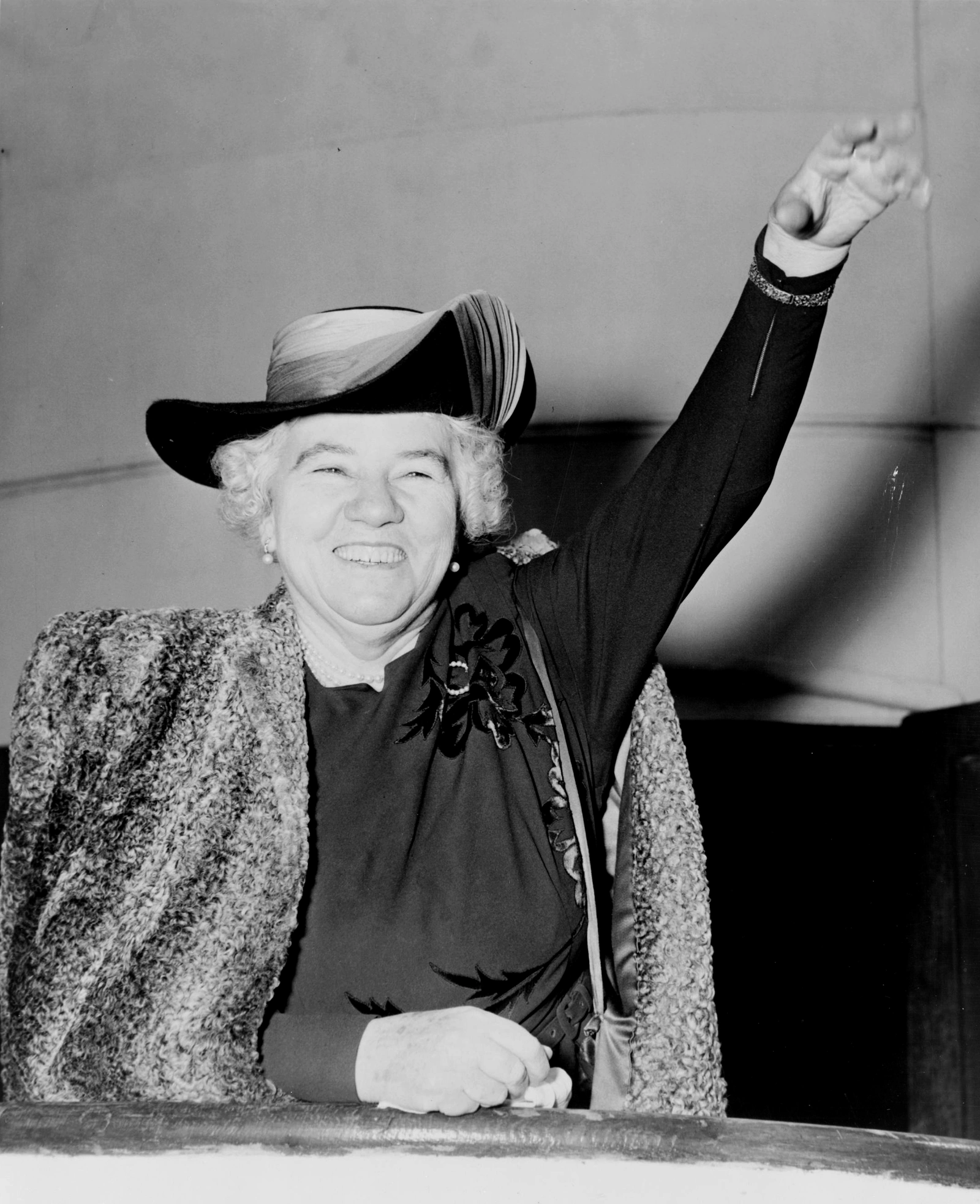
| 4 Quotes | |
| Occup. | Celebrity |
| From | Australia |
| Born | September 20, 1880 |
| Died | November 30, 1952 |
| Aged | 72 years |
| Cite | |
Citation Formats
APA Style (7th ed.)
Elizabeth kenny biography, facts and quotes. (2026, February 11). FixQuotes. https://fixquotes.com/authors/elizabeth-kenny/
Chicago Style
"Elizabeth Kenny biography, facts and quotes." FixQuotes. February 11, 2026. https://fixquotes.com/authors/elizabeth-kenny/.
MLA Style (9th ed.)
"Elizabeth Kenny biography, facts and quotes." FixQuotes, 11 Feb. 2026, https://fixquotes.com/authors/elizabeth-kenny/. Accessed 5 Mar. 2026.
Early Life and Background
Elizabeth Kenny was born on September 20, 1880, at Warialda in northern New South Wales, into the hard logistics of bush life where distance, drought, and accident made improvisation a daily skill. The Kenny family later moved into Queensland, and she grew up amid selectors, drovers, and the practical ethics of mutual aid - a world in which formal credentials mattered less than whether you could steady a fever, splint a limb, or ride out to help.Those early years formed her in two lasting ways: a fierce self-reliance and a combative empathy. She learned to negotiate authority without being crushed by it, and she absorbed the rural conviction that suffering was not an abstraction but a neighbor. Long before she became a public figure, she was already experimenting with what would later define her: close observation of patients, skepticism toward ritualized care, and an instinct to act when others hesitated.
Education and Formative Influences
Kenny did not follow a conventional nursing-school pathway; she trained piecemeal through mentorship, reading, and practice, working as a bush nurse and later serving with the Australian Army Nursing Service during World War I. That mixture - wartime discipline, rural scarcity, and self-directed study of anatomy and physiology - shaped her suspicion of fixed doctrine. She developed her ideas in the era when poliomyelitis terrified communities and orthopedics favored immobilization, plaster, and long convalescence, often leaving children with rigid deformities that looked like fate.Career, Major Works, and Turning Points
In the 1910s and 1920s, Kenny began treating acute polio with hot moist packs and gentle movement aimed at easing muscle spasm and restoring function, contradicting prevailing practice. She fought for institutional space in Queensland, then broadened her campaign through lectures and demonstrations; resistance from medical authorities became a recurring feature of her career, as did the loyalty of families who believed they had seen their children spared needless disability. Her turning point came in the late 1930s and 1940s when she took her methods to the United States, gaining influential allies and opening the Sister Kenny Institute in Minneapolis, Minnesota, which became a center for her approach to rehabilitative care and a platform for her celebrity. She framed her system for the public and clinicians in her autobiography, And They Shall Walk (1943), presenting herself as both witness and combatant in a medical civil war.Philosophy, Style, and Themes
Kenny's inner life reads as a sustained argument between indignation and discipline. She believed urgency could coexist with steadiness, a nurse's composure serving as treatment in itself: “Panic plays no part in the training of a nurse”. That sentence captures her bedside style - brisk, commanding, and emotionally controlled - and also her self-mythology. In crowded wards and skeptical committees, she performed certainty, not because she lacked doubt, but because doubt could be contagious, and her patients were often children whose families needed permission to hope.Her philosophy of conflict was equally central. Kenny expected resistance and treated it as proof of the stakes, warning against surrendering emotional control to opponents: “He who angers you conquers you”. In practice, she did not always follow her own counsel; her clashes with orthodox medicine could be abrasive, and critics used her bluntness to dismiss her competence. Yet the same trait powered her influence: “It's better to be a lion for a day than a sheep all your life”. Her theme, repeated in action more than rhetoric, was that suffering demanded experiment, and that tradition without results was a moral failure. She made pain visible - not as nobility, but as spasm, contracture, and fear that could be reduced by heat, touch, and movement.
Legacy and Influence
Kenny died on November 30, 1952, in Australia, after returning from her American triumphs to an old pattern of controversy and devotion. While later polio vaccination transformed the landscape, her deeper legacy sits inside modern rehabilitation: early mobilization, functional retraining, and a patient-centered refusal to treat paralysis as a purely mechanical problem. She also left a cultural imprint - a symbol of the outsider clinician who forces institutions to re-examine habit - and her life remains a case study in how charisma, grievance, compassion, and clinical observation can fuse into a public campaign that changes what care is allowed to look like.Our collection contains 4 quotes written by Elizabeth, under the main topics: Motivational - Truth - Nurse - Anger.
Source / external links