
Elliott Erwitt Biography Quotes 3 Report mistakes
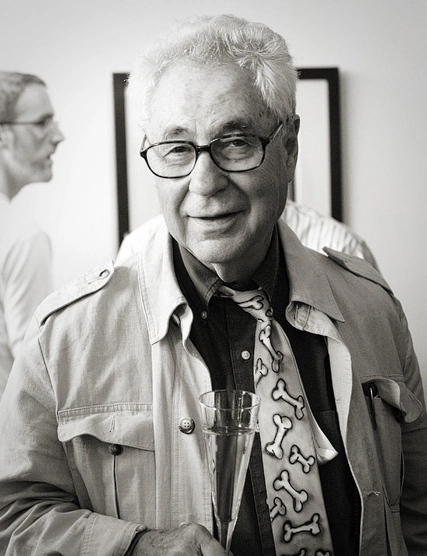
| 3 Quotes | |
| Occup. | Photographer |
| From | France |
| Born | July 26, 1928 Paris, France |
| Age | 97 years |
| Cite | |
Citation Formats
APA Style (7th ed.)
Elliott erwitt biography, facts and quotes. (2026, February 11). FixQuotes. https://fixquotes.com/authors/elliott-erwitt/
Chicago Style
"Elliott Erwitt biography, facts and quotes." FixQuotes. February 11, 2026. https://fixquotes.com/authors/elliott-erwitt/.
MLA Style (9th ed.)
"Elliott Erwitt biography, facts and quotes." FixQuotes, 11 Feb. 2026, https://fixquotes.com/authors/elliott-erwitt/. Accessed 4 Mar. 2026.
Early Life and Background
Elliott Erwitt was born Elio Romano Erwitz on July 26, 1928, in Paris to Russian-Jewish parents who had been scattered by revolution and interwar upheaval. France in the late 1920s offered refuge and culture, but not permanence: the family moved to Milan during his childhood, and the rise of Mussolini's fascism tightened the air around minority families. Erwitt later spoke little about trauma in confessional terms, yet the recurring undertone of displacement in his work - a watchful, slightly angled view of public life - feels rooted in a boy who learned early that belonging could be provisional.In 1939, with Europe collapsing into war, the Erwitts left Italy and reached the United States, settling in New York and then Los Angeles. The immigrant's double vision became his native instrument: he watched Americans with affection and skepticism, attentive to manners, uniforms, shop windows, and the small theater of the street. Even before he had a career, he collected evidence of how people perform for one another, and how comedy can be a mask for fear.
Education and Formative Influences
In Los Angeles after the war, Erwitt studied briefly at Hollywood High School and then at Los Angeles City College, where he gravitated toward darkrooms and design. He supported himself with commercial lab work and small assignments, absorbing the mechanics of printing and the discipline of deadlines. The decisive influence was not academic so much as experiential: looking, editing, and learning how a photograph can be both description and judgment. By 1949 he was in New York, where he encountered the city as a continuous set of unscripted scenes and began to meet working photojournalists who treated the street as an ethical arena.Career, Major Works, and Turning Points
Erwitt's turning point came through mentorship and institutions that defined mid-century photography. Robert Capa noticed his work and helped bring him into Magnum Photos - first as a nominee in 1953 and then as a full member in 1954 - placing him inside the agency that married humanist reportage to authorial freedom. He served in the U.S. Army in Germany in the mid-1950s and photographed with a wry, civilian eye; later assignments ranged from advertising and magazine work to film and television production. Yet his enduring signature emerged in the pictures he made between jobs: dogs at curb level, couples in passing embrace, officials caught between authority and awkwardness. Images such as "California Kiss, Santa Monica" (1955), the ironic warmth of his dog series, and his coverage of political theater - including his widely reproduced photograph of the Nixon-Khrushchev confrontation at the 1959 American National Exhibition in Moscow - showed how he could turn public events into intimate parables about ego, desire, and performance.Philosophy, Style, and Themes
Erwitt's philosophy begins with attention as a moral act. “To me, photography is an art of observation. It's about finding something interesting in an ordinary place... I've found it has little to do with the things you see and everything to do with the way you see them”. That statement is not modesty but method: he trusted the everyday as the true stage of history, and he treated composition as a form of thinking. His humor - a leash that leads the viewer, a hat that rhymes with a billboard, a kiss framed by car windows - is rarely a punchline. It is a way to disarm the subject and the photographer alike, making room for tenderness without sentimentality.The same observational stance hardened into critique when he confronted modern self-consciousness. “Now very often events are set up for photographers... The weddings are orchestrated about the photographers taking the picture, because if it hasn't been photographed it doesn't really exist”. Erwitt came of age when photojournalism still claimed access to unrepeatable moments, then watched public life adapt to the camera's appetite. His best work keeps rescuing the un-orchestrated - the glance, the stumble, the private joke - insisting that humanity survives staging. “You can find pictures anywhere. It's simply a matter of noticing things and organizing them. You just have to care about what's around you and have a concern with humanity and the human comedy”. The psychology behind the line is revealing: caring is his antidote to the cool predation that the camera can become, and comedy is his way of admitting that people are ridiculous precisely because they matter.
Legacy and Influence
Erwitt's legacy lies in how he expanded the definition of documentary authority. He proved that wit can be a serious instrument, and that formal elegance need not flatten emotion. For generations of photographers working in the shadow of Magnum's myth, his pictures offered permission to value the small, the funny, and the flawed - not as escape from history but as its texture. In an era increasingly governed by images made to certify that an experience "happened", Erwitt remains a quiet corrective: a photographer of notice rather than noise, whose humane irony continues to teach viewers how to see without conquering what they see.Our collection contains 3 quotes written by Elliott, under the main topics: Art - Wedding.
Elliott Erwitt Famous Works
- 2011 Elliott Erwitt: Sequentially Yours (Book)
- 2010 Elliott Erwitt's Paris (Book)
- 2008 Elliott Erwitt's Dogs (Book)
- 2006 Elliott Erwitt: Personal Best (Book)
- 2001 Elliott Erwitt: Snaps (Book)
Source / external links