
Elon Musk Biography Quotes 14 Report mistakes
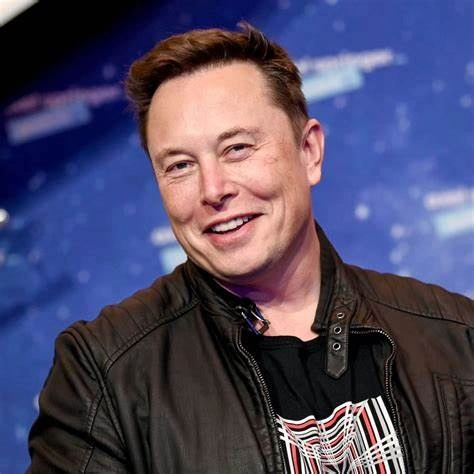
| 14 Quotes | |
| Occup. | Businessman |
| From | USA |
| Born | June 28, 1971 Pretoria, South Africa |
| Age | 54 years |
| Cite | |
Citation Formats
APA Style (7th ed.)
Elon musk biography, facts and quotes. (2026, February 11). FixQuotes. https://fixquotes.com/authors/elon-musk/
Chicago Style
"Elon Musk biography, facts and quotes." FixQuotes. February 11, 2026. https://fixquotes.com/authors/elon-musk/.
MLA Style (9th ed.)
"Elon Musk biography, facts and quotes." FixQuotes, 11 Feb. 2026, https://fixquotes.com/authors/elon-musk/. Accessed 5 Mar. 2026.
Early Life and Background
Elon Reeve Musk was born on June 28, 1971, in Pretoria, South Africa, in the late-apartheid era, a setting that mixed technical modernity with political rigidity. His childhood was marked by intense reading, solitary concentration, and an early attraction to systems he could master - computers, science fiction, and engineering puzzles. That inwardness mattered: it trained a habit of self-driven learning and a tolerance for social friction that later showed up in his management style and appetite for public controversy.Family circumstances were complex. Musk has described a difficult home environment and periods of bullying at school, experiences that can harden a person into either withdrawal or ambition; in him they seemed to produce both. His relationship to place was also uneasy. Even before he left, he oriented his imagination toward the United States and the myth of the frontier - not the cowboy version, but the technological one, where scale and risk are culturally legible.
Education and Formative Influences
Musk emigrated to Canada in 1989, using family ties to leave South Africa and position himself for an American future, then studied at Queen's University before transferring to the University of Pennsylvania, earning degrees in physics and economics in 1997. Those disciplines became a lifelong pairing: physics as a way to reason from constraints, economics as a way to translate ambition into institutions, incentives, and capital. He briefly entered a PhD program at Stanford in 1995, then left almost immediately, convinced the internet boom offered a faster laboratory than academia for building consequential tools.Career, Major Works, and Turning Points
With his brother Kimbal, Musk co-founded Zip2 (1995), a web software company for city guides and newspapers, sold to Compaq for about $307 million in 1999; the proceeds financed X.com, which became PayPal and was sold to eBay for $1.5 billion in 2002. Instead of settling into investor life, he treated liquidity as fuel: he founded SpaceX in 2002 to reduce launch costs and pursue Mars ambitions; he became a key backer and later CEO of Tesla, pushing electric vehicles from niche to mass-market through the Roadster, Model S, Model 3, and Model Y. He launched SolarCity with cousins in 2006 (later absorbed into Tesla), co-founded OpenAI in 2015 (later diverging from it), formed The Boring Company and Neuralink in 2016, and reshaped public communication and corporate governance through his 2022 acquisition of Twitter, later rebranded X. Several inflection points defined him: near-bankruptcy in 2008 as Tesla and SpaceX teetered, SpaceX's 2008 fourth Falcon 1 launch success that unlocked NASA contracts, Tesla's scaling crises and eventual profitability, and the move from admired innovator to polarizing political-cultural actor as his platform ownership and commentary amplified.Philosophy, Style, and Themes
Musk's inner life, as revealed by his decisions, revolves around a single organizing principle: convert existential anxiety into engineering projects. He repeatedly chooses arenas where failure is public, expensive, and technically nontrivial, then tries to bend probability by force of iteration. That worldview is captured in his claim, “The first step is to establish that something is possible; then probability will occur”. Psychologically, it reads like a self-instruction against paralysis: define the problem as solvable, then endure the grind until the world yields. It is not gentle optimism; it is a method for staying functional under pressure, especially when timelines collapse and critics multiply.His managerial style is correspondingly high-intensity and sometimes abrasive - a willingness to centralize decisions, demand first-principles reasoning, and treat organizations as machines for speed. The emotional engine is moral urgency: “When something is important enough, you do it even if the odds are not in your favor”. In practice, that ethic can inspire teams to do the impossible, or justify burnout and risk concentration, depending on where one stands. Musk also normalizes failure as a necessary sensor for innovation, arguing, “Failure is an option here. If things are not failing, you are not innovating enough”. That sentence doubles as personal permission - a way to metabolize humiliation and keep moving - and as an institutional doctrine that has shaped SpaceX's test culture, Tesla's rapid redesign cycles, and his broader reputation for gambling on audacious timelines.
Legacy and Influence
Musk's enduring influence is already visible in infrastructure and imitation: reusable rockets that reset launch economics, electric vehicles that pushed incumbents into an industry-wide pivot, and a renewed public romance with space and manufacturing at a time when software dominated prestige. He also helped popularize a modern archetype - the founder-operator who treats capital markets, engineering teams, and mass attention as a single integrated system. Whether praised as a visionary or criticized for volatility and cultural combativeness, he has altered what ambitious engineers think is permissible, and what the public expects technology leaders to attempt.Our collection contains 14 quotes written by Elon, under the main topics: Witty One-Liners - Motivational - Never Give Up - Forgiveness - Vision & Strategy.
Other people related to Elon: Jay Weatherill (Politician)
Elon Musk Famous Works
- 2017 Making Humans a Multi-Planetary Species (Non-fiction)
- 2016 Master Plan, Part Deux (Essay)
- 2014 All Our Patent Are Belong To You (Essay)
- 2013 Hyperloop Alpha (Non-fiction)
- 2006 The Secret Tesla Motors Master Plan (just between you and me) (Essay)