
Elvis Stojko Biography Quotes 18 Report mistakes
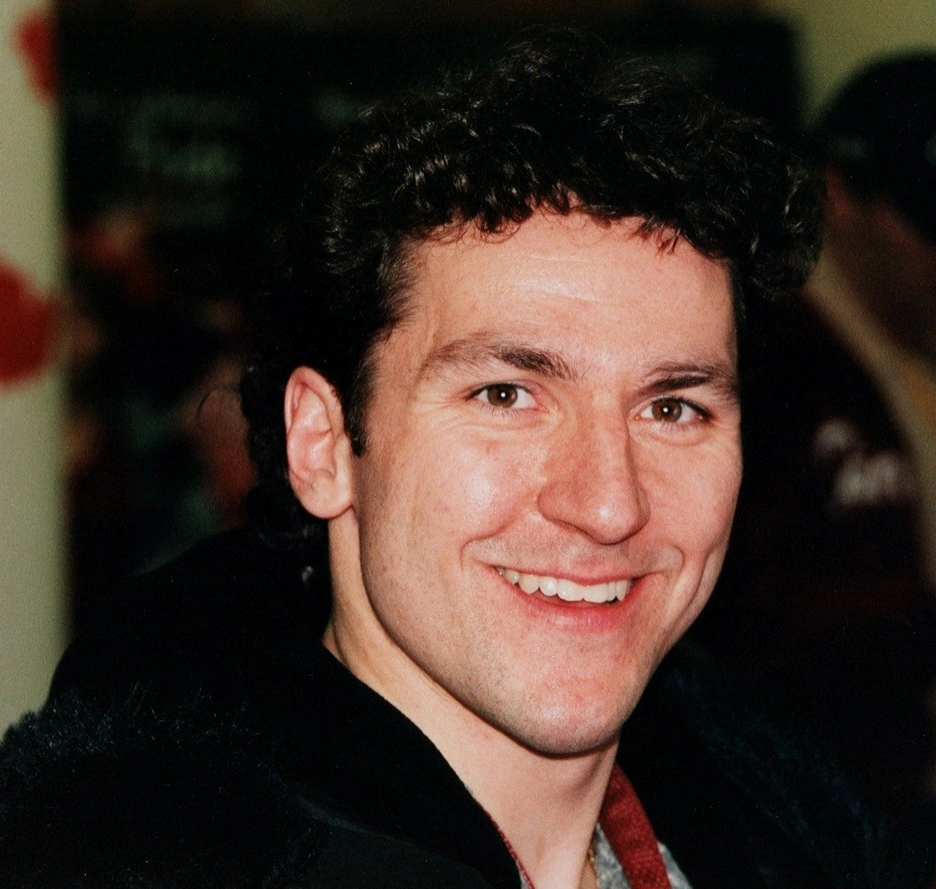
| 18 Quotes | |
| Occup. | Athlete |
| From | Canada |
| Born | March 22, 1972 Newmarket, Ontario |
| Age | 54 years |
| Cite | |
Citation Formats
APA Style (7th ed.)
Elvis stojko biography, facts and quotes. (2026, March 23). FixQuotes. https://fixquotes.com/authors/elvis-stojko/
Chicago Style
"Elvis Stojko biography, facts and quotes." FixQuotes. March 23, 2026. https://fixquotes.com/authors/elvis-stojko/.
MLA Style (9th ed.)
"Elvis Stojko biography, facts and quotes." FixQuotes, 23 Mar. 2026, https://fixquotes.com/authors/elvis-stojko/. Accessed 28 Mar. 2026.
Early Life and Background
Elvis Stojko was born on March 22, 1972, in Newmarket, Ontario, and grew up in the greater Toronto area in a Serbian immigrant household that prized discipline, endurance, and self-reliance. His father and mother had come from the former Yugoslavia, and the family carried with it both the memory of dislocation and a practical ethic of hard work. Stojko entered skating very young, initially because a local rink offered accessible ice time, but also because the sport gave a restless, physically bold child a structured arena in which energy could become mastery. From the start he stood apart from the conventional image of the male figure skater: compact, powerful, athletic, more interested in speed, jumps, and martial intensity than in decorative gentility.
That difference became central to his identity. Stojko came of age in Canada after the era of Toller Cranston and Brian Orser, when men's skating still balanced artistry with technical command but television increasingly rewarded dramatic athletic feats. He absorbed hockey culture as readily as skating culture, loved karate, and developed the stoic, combative bearing that would later define his performances. Injuries, financial strain, and the relentless travel of elite youth competition hardened him early. By his teens he had become not simply a talented skater but a competitor with a fighter's psychology - someone who treated the rink less as a stage than as a proving ground.
Education and Formative Influences
Stojko's education was shaped more by rinks, coaches, and repetition than by any conventional academic path. He trained in Ontario under coaches including Doug Leigh, whose students emphasized jump technique, consistency, and competitive toughness. The great Canadian standard-bearer Brian Orser was an obvious formative influence: not only as a national hero, but as a model of technical ambition, especially on the triple Axel, then the emblem of elite men's skating. Stojko also drew from outside skating. Martial arts informed his posture and attack; popular film and music helped him imagine programs with narrative force rather than merely courtly polish. In the late 1980s and early 1990s, as the sport entered an era of escalating technical difficulty, he learned to convert these influences into a new kind of male skating persona - masculine without apology, theatrical without fragility, and rooted in repeatable, competition-grade jumps.
Career, Major Works, and Turning Points
Stojko emerged internationally in the early 1990s and became one of the defining men's skaters of the decade. He won the 1991 World Junior title, announced himself among seniors soon after, and took Olympic silver at Lillehammer in 1994 after a fierce duel in an era dominated by technical risk and high television stakes. He won the World Championship in 1994, 1995, and 1997, and captured a remarkable seven Canadian titles. His signature programs - often built around martial, cinematic, or rock-inflected music, including a famous "Dragon: The Bruce Lee Story" free skate - matched explosive jumps with an aggressive, forward-driving style. He was among the first men to land a quadruple-triple combination in major competition, helping normalize the quad as a championship weapon. At the 1998 Nagano Olympics he skated through severe injury, including a damaged groin, and still earned silver, a performance that deepened his public image as skating's iron man. Later he moved into professional skating, television, and performance work, including skating tours and entertainment appearances, while continuing to be a visible voice in Canadian sport.
Philosophy, Style, and Themes
Stojko's skating philosophy fused old-school repetition with a modern understanding that elite sport is as psychological as it is physical. He believed technique had to hold under pressure, and his career became an argument that bravery is itself a style. Unlike skaters whose appeal rested on ease, Stojko often made effort visible; audiences could see the work, the strain, the will. That honesty became part of his artistry. He sought not to hide athletic violence inside elegance, but to make power aesthetically convincing. When he said, “I had the strength and the finesse there and put it all together”. , he was naming the ideal he chased for years: a synthesis of force and control, not a retreat from one into the other.
His remarks also reveal a man driven by renewal rather than complacency. “After you've done it for so many years, you have to find a new direction. You have to find something in your soul that's going to push you towards - to find your inspiration”. That sentence exposes the inner contest beneath his medals: not simply beating rivals, but repeatedly recovering motive after pain, expectation, and fame had drained novelty from the work. The same searching temperament appears in, “When you're younger, your inspiration is there. As you get older, it tends to waver. Once you find it - I found it again - that's where you can draw from. That's where you draw your strength from”. His style on the ice - direct, muscular, emotionally contained until release - mirrored that psychology. He skated like someone who distrusted softness, who needed purpose to be earned, and who found beauty not in ornament but in resilience.
Legacy and Influence
Elvis Stojko remains one of the most consequential athletes in Canadian figure skating because he changed what many viewers thought a male skater could look like and how he could command a rink. He did not merely win; he broadened the sport's emotional and physical vocabulary, bringing in speed, combativeness, and a distinctly modern athletic masculinity without abandoning line or musical intelligence. For Canadian audiences he was a national symbol of grit in the 1990s, a champion who seemed willing to absorb punishment for performance. For later skaters, especially jump-driven men, he helped legitimize the quad-centered future of the sport. His enduring image is not only that of a medalist, but of a competitor who made toughness legible as art and transformed perseverance into persona.
Our collection contains 18 quotes written by Elvis, under the main topics: Motivational - Learning - Victory - Sports - Resilience.
Other people related to Elvis: Brian Boitano (Athlete)
Source / external links