
Emile M. Cioran Biography Quotes 74 Report mistakes
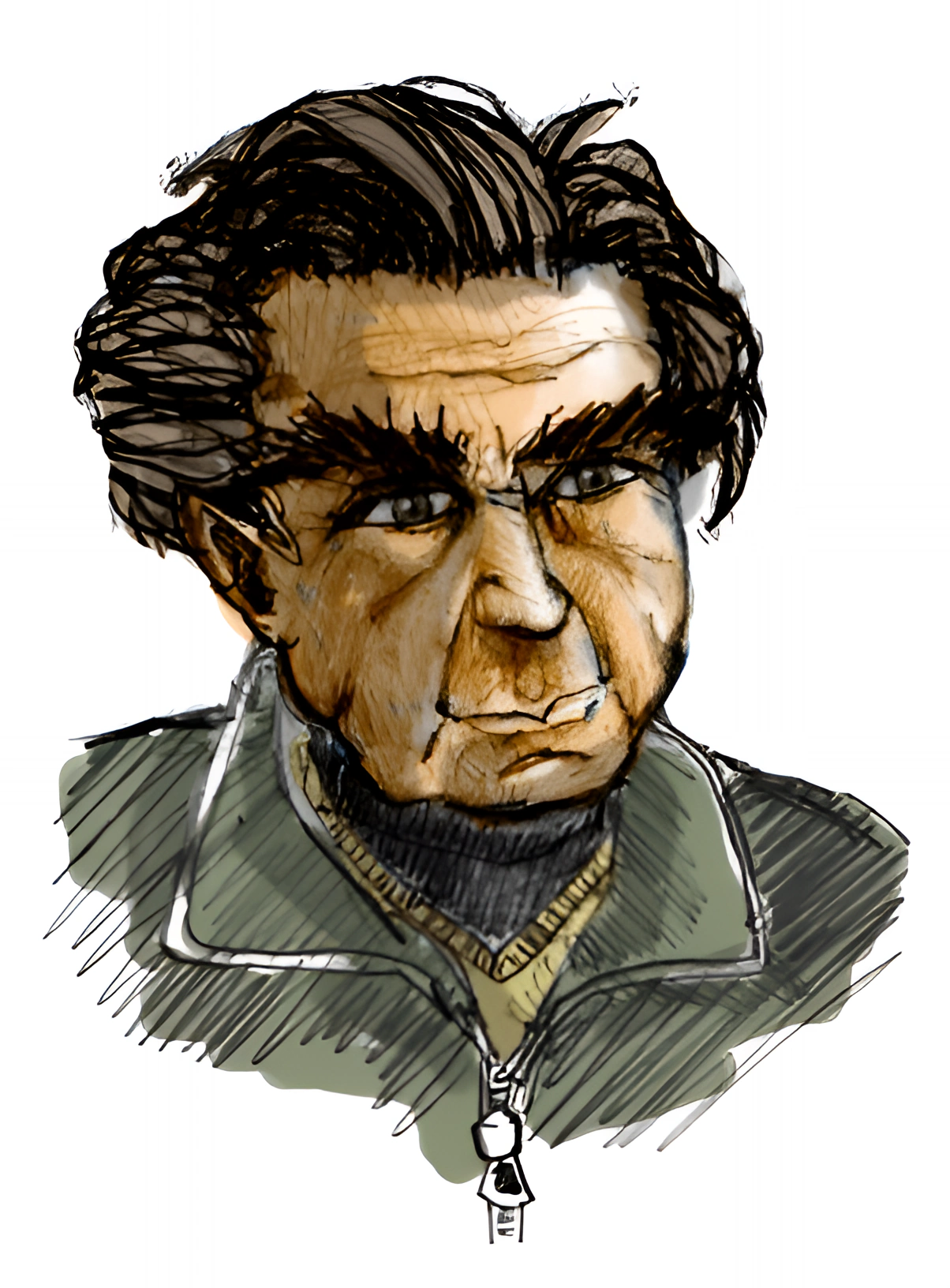
| 74 Quotes | |
| Occup. | Philosopher |
| From | Romania |
| Born | April 8, 1911 |
| Died | June 21, 1995 |
| Aged | 84 years |
| Cite | |
Citation Formats
APA Style (7th ed.)
Emile m. cioran biography, facts and quotes. (2026, February 11). FixQuotes. https://fixquotes.com/authors/emile-m-cioran/
Chicago Style
"Emile M. Cioran biography, facts and quotes." FixQuotes. February 11, 2026. https://fixquotes.com/authors/emile-m-cioran/.
MLA Style (9th ed.)
"Emile M. Cioran biography, facts and quotes." FixQuotes, 11 Feb. 2026, https://fixquotes.com/authors/emile-m-cioran/. Accessed 27 Mar. 2026.
Early Life and Background
Emile M. Cioran was born on April 8, 1911, in Rasinari, a Romanian village near Sibiu in Transylvania, then within the Austro-Hungarian world and, after World War I, folded into Greater Romania. His father, Emilian Cioran, was an Orthodox priest; his mother, Elvira, was remembered in his later writing with a mixture of tenderness and recrimination. The landscape of mountain village piety and provincial constraint gave him an early sense of metaphysical claustrophobia - a feeling that existence was both overdetermined by tradition and, at the same time, radically unjustified.As an adolescent in Sibiu, he was seized by insomnia, a lifelong affliction that became the laboratory of his thought: night as a private school in despair, lucidity, and exaggeration. Interwar Romania was a young state with old anxieties - caught between peasant religiosity and modern nationalism, between Francophile elites and violent ideological temptations. Cioran absorbed the era's feverish mood: its impatience with mediocrity, its attraction to extremes, and its suspicion that history itself was a trap.
Education and Formative Influences
He studied philosophy at the University of Bucharest in the early 1930s, moving in a circle that included Mircea Eliade and Eugene Ionesco, and attending courses by Nae Ionescu, a charismatic professor whose mixture of Orthodoxy, existential urgency, and political radicalism marked a generation. Cioran read Schopenhauer, Nietzsche, Kierkegaard, and Russian novelists with the intensity of someone seeking not a system but a diagnosis; he also encountered the corrosive romance of European "crisis" thinking between the wars, when intellectual life often treated catastrophe as purification.Career, Major Works, and Turning Points
Cioran debuted in Romanian with On the Heights of Despair (1934), followed by books that sharpened his aphoristic aggression and historical pessimism, including The Book of Delusions (1936) and The Transfiguration of Romania (1936), the last entangled with the nationalist intoxications of its moment - an episode he later regretted and distanced himself from. After a scholarship took him to Berlin (1933-1935), he settled in Paris in 1937; war and exile sealed the choice, and he eventually wrote almost exclusively in French, beginning with A Short History of Decay (1949). The postwar decades produced his signature sequence of fragmentary, incandescent volumes - among them The Temptation to Exist (1956), The Fall into Time (1964), and The Trouble with Being Born (1973) - which made him a cult classic of postwar Paris while he lived austerely, refusing prizes and protecting the sovereignty of his solitude. He died in Paris on June 21, 1995, after years of decline.Philosophy, Style, and Themes
Cioran's inner life was shaped by two pressures that rarely coexist: a craving for the absolute and a relentless talent for undermining it. He distrusted systems because they anesthetize; his preferred form - aphorism, fragment, curse, prayer turned inside out - preserved thought in the moment of combustion. Even his humor is a defense mechanism, laughter deployed against the blackmail of meaning. “I'm simply an accident. Why take it all so seriously?” That sentence is not a pose but a psychological strategy: if existence is contingency, then grandeur is suspect, and the only honest tone is one that alternates between elegy and mockery.Yet he was not merely a nihilist; he was a moralist of insomnia, fascinated by the energies that keep people moving when reasons fail. He understood negative emotions as forms of vitality, dangerous but enlivening: “You are done for - a living dead man - not when you stop loving but stop hating. Hatred preserves: in it, in its chemistry, resides the mystery of life”. The line exposes his self-portrait as a man who feared emotional neutralization more than suffering. And because he treated writing as confession without reconciliation, he demanded a literature of maximal risk: “Write books only if you are going to say in them the things you would never dare confide to anyone”. In exile, language became his last homeland; French was not adoption but discipline, a way to refine rage into precision and turn private torment into a public style.
Legacy and Influence
Cioran endures as one of the 20th century's most distinctive voices of anti-consolation: a philosopher without a system, a skeptic with a mystic's intensity, and an exile who made style into fate. His Romanian beginnings and later French mastery illuminate a broader European story - the collapse of old certainties, the seductions of ideology, and the postwar recoil into private truth-telling. Writers, poets, and readers drawn to aphorism, pessimism, and existential candor continue to find in him a rare model of intellectual honesty: thought that refuses rescue, yet insists on clarity, music, and the dignity of saying what most people can only think in the dark.Our collection contains 74 quotes written by Emile, under the main topics: Witty One-Liners - Ethics & Morality - Truth - Wisdom - Dark Humor.
Emile M. Cioran Famous Works
- 1986 Anathemas and Admirations (Book)
- 1973 The Trouble With Being Born (Book)
- 1969 The New Gods (Book)
- 1964 The Fall Into Time (Book)
- 1956 The Temptation to Exist (Book)
- 1949 A Short History of Decay (Book)
- 1937 Tears and Saints (Book)
Source / external links