
Emily Murphy Biography Quotes 2 Report mistakes
| 2 Quotes | |
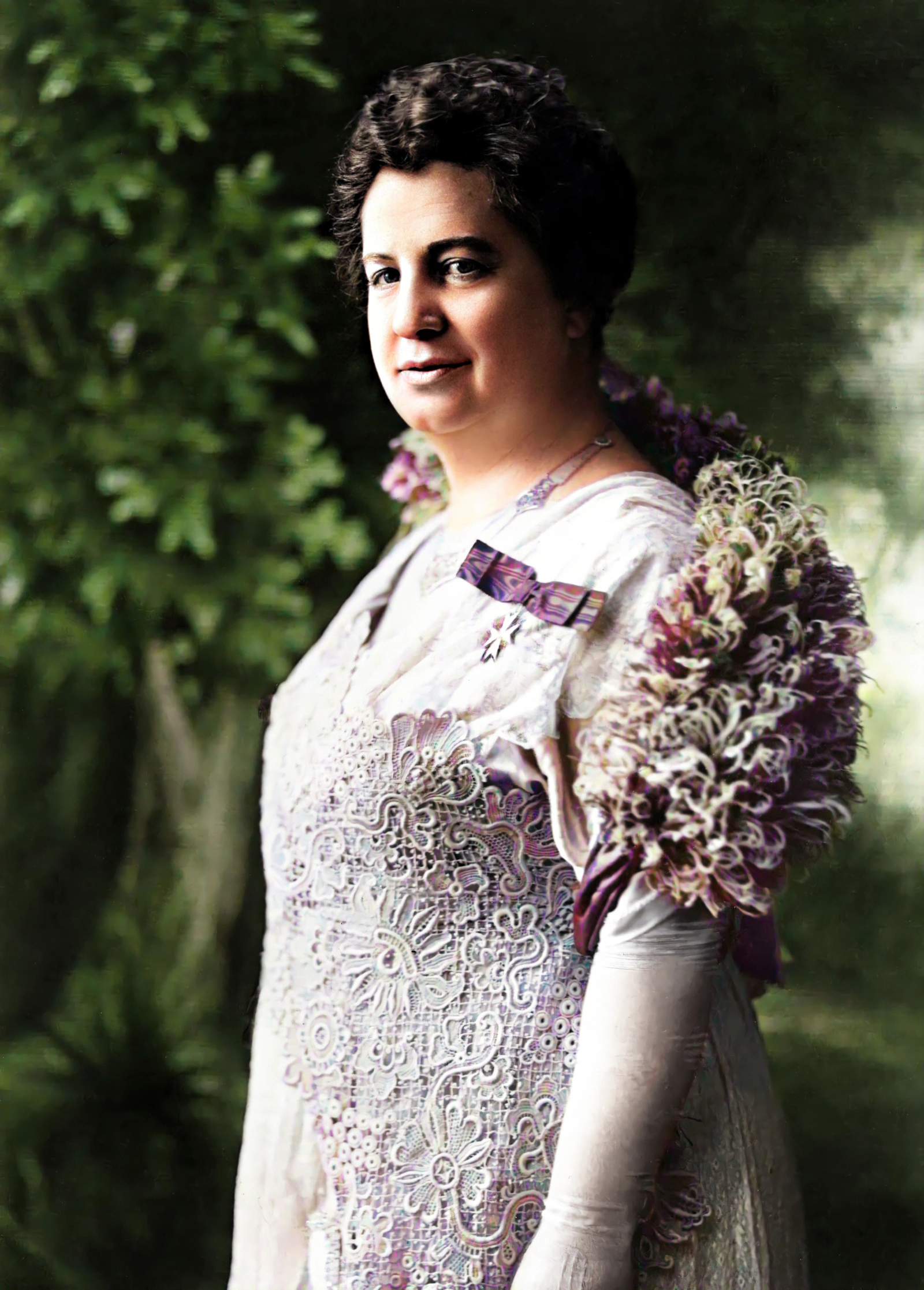
| Born as | Emily Gowan Ferguson |
| Occup. | Activist |
| From | Canada |
| Born | March 14, 1868 Toronto, Ontario |
| Died | October 17, 1933 Edmonton, Alberta |
| Cause | Cancer |
| Aged | 65 years |
| Cite | |
Citation Formats
APA Style (7th ed.)
Emily murphy biography, facts and quotes. (2026, February 11). FixQuotes. https://fixquotes.com/authors/emily-murphy/
Chicago Style
"Emily Murphy biography, facts and quotes." FixQuotes. February 11, 2026. https://fixquotes.com/authors/emily-murphy/.
MLA Style (9th ed.)
"Emily Murphy biography, facts and quotes." FixQuotes, 11 Feb. 2026, https://fixquotes.com/authors/emily-murphy/. Accessed 6 Mar. 2026.
Early Life and Background
Emily Gowan Ferguson was born on March 14, 1868, in Cookstown, Ontario, into a prosperous, politically connected Presbyterian family whose assumptions about empire, respectability, and social order were typical of late-Victorian English Canada. She grew up as Canada was consolidating Confederation and pushing westward, a period that married boosterish modernity to deep anxieties about poverty, alcohol, immigration, and Indigenous resistance. Those pressures formed the background music of her life: a belief that society could be improved through law and moral reform, paired with an instinct to sort the world into the "fit" and "unfit".In 1887 she married Arthur Murphy, an Anglican clergyman who later became an administrator, and she moved with him to the western prairies, first to Swan River and then to Edmonton. The West offered both opportunity and volatility - rapid settlement, boomtown politics, and a harsh gender order that depended on women for unpaid civic labor while limiting their formal power. Murphy learned to work inside that contradiction, cultivating influence through organizations, newspapers, and later the courts, while presenting her activism as an extension of domestic responsibility rather than a challenge to it.
Education and Formative Influences
Murphy did not follow a conventional university path, but she was well read and trained by environment: a home that valued argument, church life that translated morality into policy, and the prairie reform network that linked temperance advocates, women's clubs, and suffrage organizers. Like many middle-class reformers around 1900, she absorbed the language of social purity and the era's emerging "scientific" hierarchies - especially eugenics - which promised to turn prejudice into administrative common sense. Those ideas would later sit uneasily beside her genuine insistence that women were entitled to legal personhood and public authority.Career, Major Works, and Turning Points
Murphy became one of the best-known reform voices in Alberta through club work and journalism, writing as "Janey Canuck" in popular sketches that blended humor, domestic detail, and political instruction. The decisive turning point came in 1916, when Alberta appointed her the first woman magistrate (police magistrate) in the British Empire, placing her inside the machinery of criminal justice at the height of wartime and postwar moral panic. A courtroom challenge soon argued that women were not "persons" eligible for appointment under British law; Murphy answered by pushing the larger constitutional question. In 1927 she joined Henrietta Muir Edwards, Nellie McClung, Louise McKinney, and Irene Parlby to petition Ottawa; in 1929 the Judicial Committee of the Privy Council held that women were "persons" eligible for Senate appointment - the famous Persons Case. Alongside these gains, Murphy also wrote The Black Candle (1922), a sensational anti-drug text that influenced public opinion and helped harden Canadian narcotics policy, while advancing racist and nativist claims that later damaged her reputation.Philosophy, Style, and Themes
Murphy's inner life reads as a tug-of-war between empathy and control. She could see, with sharp clarity, how women were trivialized and excluded, and she tried to turn that grievance into institutional leverage. Yet she also feared social disorder and often trusted coercive solutions - policing, segregation, and state supervision - over structural reform. Her prose voice, honed in "Janey Canuck" pieces and in advocacy, worked by making the private public: domestic scenes became arguments for legislation, and personal anecdotes became moral evidence.Her view of gender mixed realism with condescension. In one of her barbed generalizations, she wrote, “This is courtship all the world over - the man all tongue; the woman all ears”. The line reveals how she framed inequality as habit and psychology, not only law - women trained to listen, men trained to speak - and why she believed reform required reshaping everyday behavior as much as statutes. But her social vision narrowed drastically when she turned from sex hierarchy to race and immigration; she warned, “It is claimed, but with what truth we cannot say, that there is a well-defined propaganda among the aliens of colour to bring about the degeneration of the white race”. The rhetorical hedge ("we cannot say") scarcely masks the fear beneath it: a worldview in which national health was imagined as biological purity, and the state as guardian of a threatened "white" household. That contradiction - feminist constitutionalism alongside racialized moral panic - is central to understanding both her achievements and her harms.
Legacy and Influence
Murphy endures as a founding figure in Canadian women's constitutional history, a strategist who helped move equality claims from petitions and clubs into courtrooms and legislatures, and whose role in the Persons Case remains a milestone for public office and citizenship. At the same time, her influence reaches into darker corridors: The Black Candle fed myths about drugs and non-white "degeneration", reinforcing punitive policies that disproportionately targeted marginalized communities. Modern assessments therefore hold two truths at once: she expanded the legal category of "person" for women, and she helped narrow the boundaries of belonging for others. Her life is a portrait of reform in its age - courageous, politically effective, and compromised by the era's confidence that social problems could be solved by ranking people and regulating them.Our collection contains 2 quotes written by Emily, under the main topics: Equality - Romantic.
Source / external links