
Epictetus Biography Quotes 54 Report mistakes
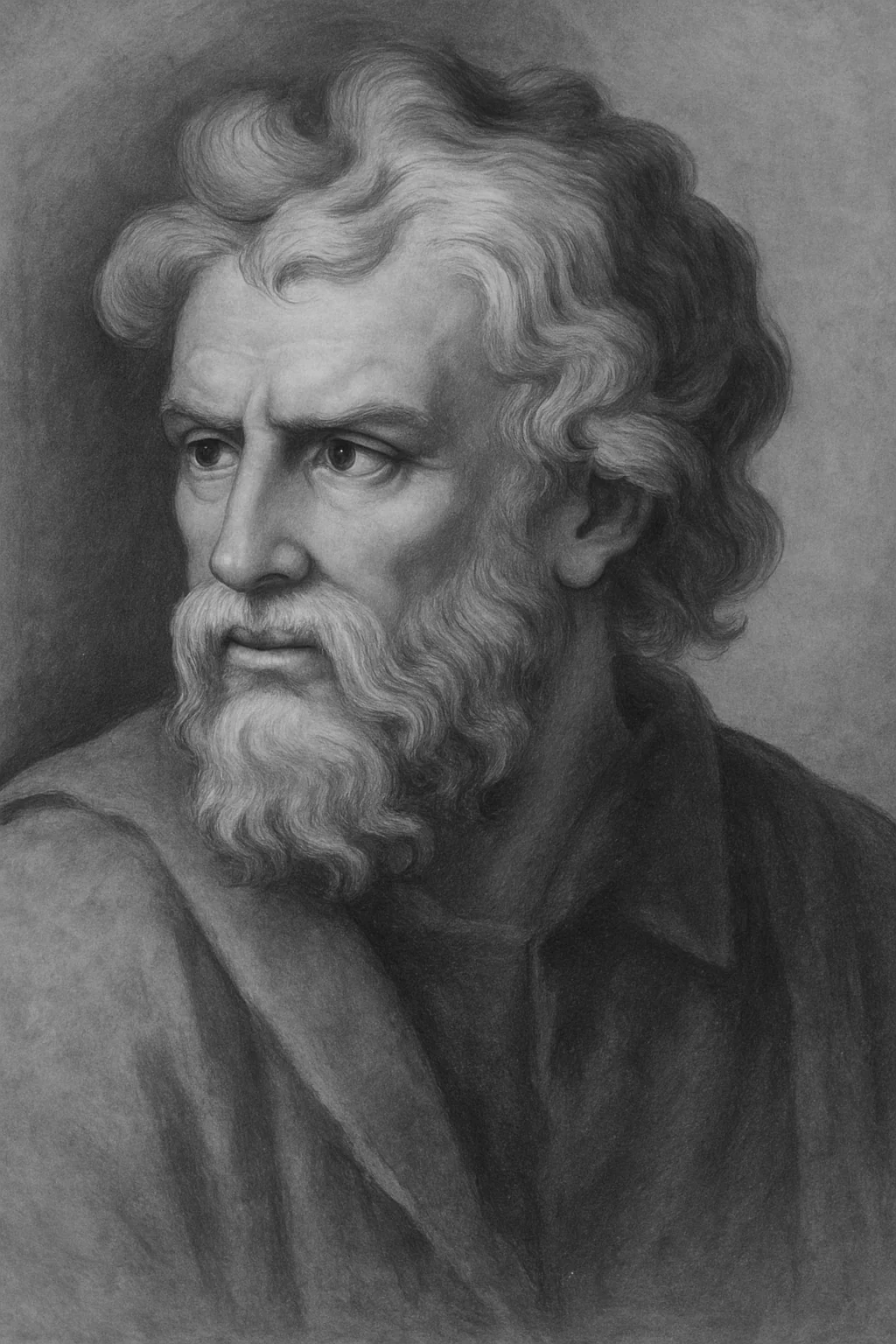
| 54 Quotes | |
| Occup. | Philosopher |
| From | Greece |
| Born | 55 AC Hierapolis, Phrygia, Ancient Greece |
| Died | 135 AC Nicopolis, Epirus, Ancient Greece |
| Cite | |
Citation Formats
APA Style (7th ed.)
Epictetus biography, facts and quotes. (2026, February 1). FixQuotes. https://fixquotes.com/authors/epictetus/
Chicago Style
"Epictetus biography, facts and quotes." FixQuotes. February 1, 2026. https://fixquotes.com/authors/epictetus/.
MLA Style (9th ed.)
"Epictetus biography, facts and quotes." FixQuotes, 1 Feb. 2026, https://fixquotes.com/authors/epictetus/. Accessed 27 Mar. 2026.
Early Life and Background
Epictetus was born around 55 CE, probably at Hierapolis in Phrygia (in the Greek-speaking eastern Roman Empire), and grew up under the conditions that most sharply tested Stoic claims about freedom. He was enslaved early and taken to Rome, where his owner was Epaphroditus, a powerful freedman connected to Nero's court. Epictetus later recalled a damaged leg - ancient sources report lameness, whether from accident or cruelty - and the physical impairment became, in his teaching, a living reminder that the self is not identical with the body.Rome in the late first century was a place where philosophy could be both fashion and threat: elite households hosted lectures, while emperors feared moralists who preached independence from power. In this setting Epictetus learned to speak to people who felt trapped - by status, appetite, career, grief - yet were outwardly prosperous. His earliest audience was not a school in the modern sense but a household world of patrons, servants, and officials, in which dignity had to be built inwardly because it could not be guaranteed outwardly.
Education and Formative Influences
In Rome, Epictetus studied Stoicism under Musonius Rufus, the most influential Stoic teacher of the era, known for insisting that philosophy must be lived rather than admired. The classroom was the city: trials, banquets, exile rumors, and the daily spectacle of imperial caprice. From Musonius he inherited a focus on ethical training, plain speech, and the conviction that reason (logos) is the divine element in human beings - a fragment of the cosmic order that can be aligned through discipline. He also absorbed the older Stoic canon - especially the contrast between what is "up to us" and what is not - and turned it into a practical manual for people who did not have leisure to become scholars.Career, Major Works, and Turning Points
Under Emperor Domitian, philosophers were expelled from Rome (commonly dated to 93/94 CE), and Epictetus left Italy for Nicopolis in Epirus, where he founded a school that drew Roman elites, administrators, and future statesmen. He wrote nothing himself; his influence survives through Arrian of Nicomedia, later a historian and governor, who attended his lectures and produced the Discourses and the concise Enchiridion (Handbook), presenting Epictetus as a teacher who interrogated students, staged moral "drills", and treated philosophy as medicine for the soul. Later tradition claims Emperor Hadrian admired him, and by the early second century Epictetus had become a reference point for those seeking an ethics sturdy enough for an empire of constant movement, danger, and loss.Philosophy, Style, and Themes
Epictetus built his system around the will (prohairesis) - the faculty of judgment and choice - insisting that it alone is truly ours. Everything else, from health to reputation to the behavior of rulers, is "not up to us" and therefore cannot be the foundation of peace. His guiding psychological insight is that suffering begins when the mind mistakes externals for goods, then panics at their instability. In his most quoted formulation, “There is only one way to happiness, and that is to cease worrying things which are beyond the power of our will”. The point is not numbness but accuracy: freedom is the ability to assent only to what reason can defend and to treat events as raw material for virtue.His teaching voice is famously direct - closer to a coach than a metaphysician - because he believed self-deception thrives in elegant theories. He used shocks to detach students from vanity and bodily obsession, as in “You are a little soul carrying around a corpse”. The provocation clarifies the inner hierarchy: the body is to be cared for, not worshiped, and fear of pain or death is exposed as a confusion about where the self truly resides. He also framed learning as an unending demolition of false certainty: “It is impossible to begin to learn that which one thinks one already knows”. That sentence reveals his pedagogy and his suspicion of status - the student must become teachable by admitting ignorance, and the powerful must unlearn the habit of confusing command over others with command over themselves.
Legacy and Influence
Epictetus became one of the most transmitted Stoics because his philosophy fit the needs of administrators, soldiers, and ordinary people facing uncertainty, and because Arrian preserved his speech in a form that reads like living dialogue. The Enchiridion in particular became a late antique and Byzantine manual, then a Renaissance and early modern classic, shaping Christian moralists as well as secular thinkers; Marcus Aurelius echoes him repeatedly, and later interpreters treated him as proof that inner liberty can be taught without wealth, office, or even physical wholeness. In modern times his distinction between judgment and event, and his insistence that character is trained through daily choices, fed everything from cognitive therapies to leadership literature - often simplified, but still anchored in his central claim: that the invincible person is not the one who controls the world, but the one who can meet it without being conquered by it.Our collection contains 54 quotes written by Epictetus, under the main topics: Ethics & Morality - Truth - Wisdom - Friendship - Mortality.
Other people related to Epictetus: Marcus Aurelius (Soldier), Ryan Holiday (Author), James Stockdale (Soldier), Citium Zeno (Philosopher)
Frequently Asked Questions
- Epictetus Discourses: Arrian's record of his Stoic teachings; 8 books originally, 4 survive
- Epictetus cause of death: Unknown; likely natural causes (c. 135 CE)
- Epictetus meaning: Greek for acquired or gained
- Epictetus books: Discourses, Enchiridion (Handbook), Fragments - compiled by Arrian
- Epictetus pronunciation: eh-pik-TEE-tuhs (/ˌɛpɪkˈtiːtəs/)
Epictetus Famous Works
- 135 Fragments (Book)
- 125 Enchiridion (Book)
- 108 Discourses (Book)
Source / external links