
Erica Jong Biography Quotes 30 Report mistakes
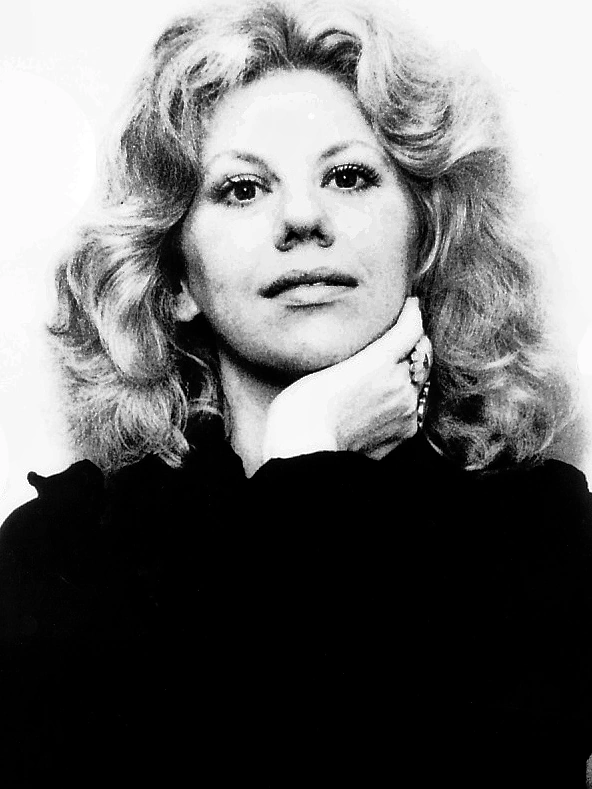
| 30 Quotes | |
| Born as | Erica Mann |
| Occup. | Novelist |
| From | USA |
| Born | March 26, 1942 New York City, USA |
| Age | 83 years |
| Cite | |
Citation Formats
APA Style (7th ed.)
Erica jong biography, facts and quotes. (2026, February 11). FixQuotes. https://fixquotes.com/authors/erica-jong/
Chicago Style
"Erica Jong biography, facts and quotes." FixQuotes. February 11, 2026. https://fixquotes.com/authors/erica-jong/.
MLA Style (9th ed.)
"Erica Jong biography, facts and quotes." FixQuotes, 11 Feb. 2026, https://fixquotes.com/authors/erica-jong/. Accessed 6 Mar. 2026.
Early Life and Background
Erica Jong was born Erica Mann on March 26, 1942, in New York City, into a Jewish family shaped by the pressures and possibilities of mid-century America. Her father, Saul Mann, was a musician and bandleader, a working artist who taught by example that creativity could be a vocation but rarely a stable one; her mother, Florence, brought her own ambitions and anxieties to a home where performance and self-invention were everyday arts. Jong later wrote with unusual candor about the family weather - love, conflict, money worries, sexual secrecy - that forms a writer who is both observer and participant.Growing up in a city that sold glamour while policing female desire, she absorbed the double messages of the 1950s: be exceptional, but not too loud; be educated, but not too independent. That tension, intensified by Jewish upward-mobility narratives and the postwar cult of domesticity, became a lifelong engine. Long before she was famous, she was already rehearsing a central theme - the cost of being a woman who refuses to apologize for wanting more than safety.
Education and Formative Influences
Jong studied literature at Barnard College, graduating in 1963, and then continued to graduate work at Columbia University, earning an M.A. in 1965; she later lived and studied in London as well. The era mattered as much as the syllabi: she came of age alongside the civil rights movement, the early rumblings of second-wave feminism, and a literary culture still dominated by male gatekeepers. Modernist and confessional writers, psychoanalytic language in the air, and the frankness of postwar poetry all fed her sense that the private self could be legitimate public material, provided it was rendered with craft rather than mere confession.Career, Major Works, and Turning Points
Jong began as a poet and critic, publishing verse before she became a household name, but her turning point arrived with the novel Fear of Flying (1973), released into a culture newly electrified by sexual revolution and newly divided about it. The book, with its comic velocity, psychoanalytic self-scrutiny, and the now-famous phrase "zipless" desire, made her both a feminist icon and a target, and its success followed her like a shadow - expanding her platform while flattening her complexity in the public imagination. She continued the story in How to Save Your Own Life (1977) and Parachutes and Kisses (1984), and she widened her range with later fiction and nonfiction, including the Shakespeare-inflected novel Shylock's Daughter (1996), as well as memoiristic work that returned again and again to marriage, motherhood, ambition, and the costs of notoriety.Philosophy, Style, and Themes
Jong's writing is powered by a bracing insistence that female interiority - lust, boredom, jealousy, tenderness, artistic hunger - is not a footnote to "real" literature but its combustible center. Her comic style is not a mask for seriousness so much as a method of survival: jokes become scalpels that cut through shame, and the narrator's apparent breeziness keeps pace with dread. She repeatedly stages the self as a courtroom where contradictory desires testify at once, and her gift is making that chaos intelligible without making it neat. As she once put it, “Ambivalence is a wonderful tune to dance to. It has a rhythm all its own”. The line captures her characteristic motion: forward movement without false certainty, sensuality braided with doubt.At the core is a moral psychology of risk - not recklessness, but the willingness to follow experience past the point where respectability protects you. She understood that artistic honesty demands exposure, and she framed it as courage rather than self-display: “Everyone has talent. What is rare is the courage to follow the talent to the dark place where it leads”. That "dark place" in Jong is often domestic and erotic, the rooms where women are trained to be agreeable and then blamed for feeling trapped. Yet she never let fear have the final say, insisting on motion even when the body resists: “I have accepted fear as a part of life - specifically the fear of change... I have gone ahead despite the pounding in the heart that says: turn back”. This is the private ethic behind her public provocations - a refusal to let anxiety, marriage scripts, or cultural backlash decide what can be said.
Legacy and Influence
Erica Jong endures as a catalyst figure of post-1960s American letters: a novelist who helped mainstream the idea that women's sexual speech could be literary, funny, and intellectually serious at once. Fear of Flying became both a classic and a controversy, opening doors for later writers while also illustrating how quickly a woman author can be reduced to a single topic by reviewers, admirers, and enemies alike. Her broader body of work - spanning poetry, novels, essays, and memoir - maps the long aftermath of liberation: the negotiations of love and power, the conflict between artistic vocation and caretaking, and the psychic bill that arrives after public transgression. She remains influential not because every reader agrees with her, but because she made candor a craft and forced the culture to argue with a woman's voice that would not lower itself to a whisper.Our collection contains 30 quotes written by Erica, under the main topics: Witty One-Liners - Motivational - Wisdom - Truth - Art.
Erica Jong Famous Works
- 2003 Seducing the Demon: Writing for My Life (Memoir)
- 1994 Fear of Fifty: A Midlife Memoir (Memoir)
- 1973 Fear of Flying (Novel)