
Erich Segal Biography Quotes 23 Report mistakes
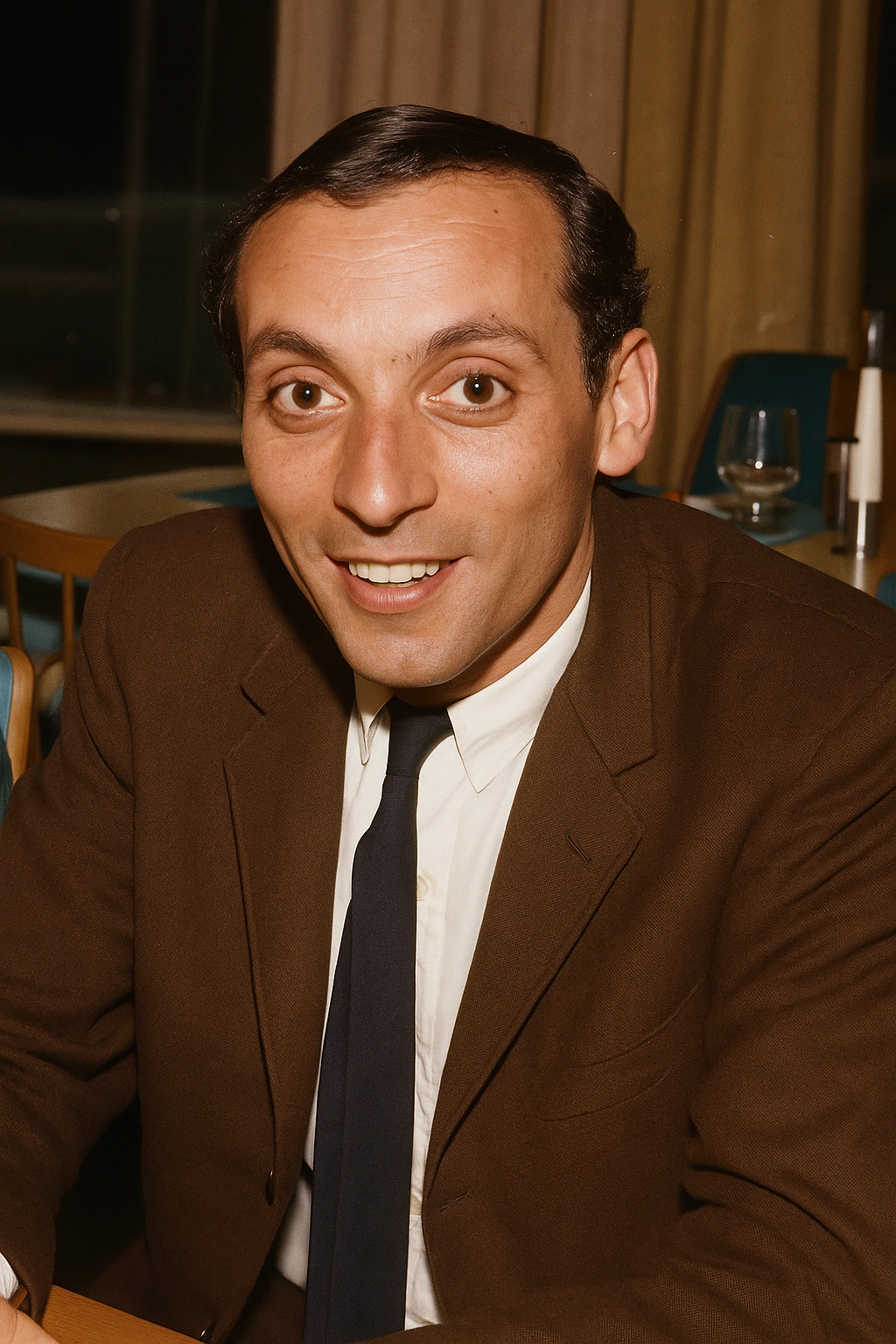
Attr: Joop van Bilsen / Anefo
| 23 Quotes | |
| Born as | Erich Wolf Segal |
| Occup. | Novelist |
| From | USA |
| Born | June 16, 1937 Brooklyn, New York, United States |
| Died | January 17, 2010 London, England, United Kingdom |
| Cause | heart attack |
| Aged | 72 years |
| Cite | |
Citation Formats
APA Style (7th ed.)
Erich segal biography, facts and quotes. (2026, February 11). FixQuotes. https://fixquotes.com/authors/erich-segal/
Chicago Style
"Erich Segal biography, facts and quotes." FixQuotes. February 11, 2026. https://fixquotes.com/authors/erich-segal/.
MLA Style (9th ed.)
"Erich Segal biography, facts and quotes." FixQuotes, 11 Feb. 2026, https://fixquotes.com/authors/erich-segal/. Accessed 27 Mar. 2026.
Early Life and Background
Erich Wolf Segal was born on June 16, 1937, in Brooklyn, New York, to a Jewish family shaped by the pressures and aspirations of mid-century immigrant America. He grew up in a city where education was both ladder and refuge, and where the postwar boom promised reinvention if you could master the codes of institutions that still felt patrician and closed. That mixture - striving, performance, and a wary tenderness toward outsiders - would later surface in his most famous fiction, where love is intense precisely because it must negotiate class, pedigree, and pride.Segal came of age as the United States shifted from wartime austerity to consumer confidence, and as universities became engines of status. He was temperamentally drawn to the old world of texts and languages, yet alert to the new world of mass culture. The result was a writer whose sensibility could move between Greek and Latin antiquity and the cadences of contemporary romance, and who understood that a story might gain its deepest sting when it looked, on the surface, like something simple.
Education and Formative Influences
He studied at Harvard University, then pursued advanced work in classics, earning a PhD and building a scholarly career that trained him to think in structures - plot as argument, character as premise, scenes as proof. The discipline of classical philology sharpened his ear for rhetorical compression and his eye for tragic inevitability, while his immersion in campus life gave him a laboratory for observing how prestige and insecurity coexist. He absorbed both the grandeur of ancient narratives and the intimate humiliations of modern ones, a combination that would define his best-known characters: brilliant, young, driven, and suddenly mortal.Career, Major Works, and Turning Points
Segal taught classics (notably at Yale and later at Harvard) while writing for stage and screen; he co-wrote the Beatles film Yellow Submarine (1968), a credit that hinted at his ability to translate high learning into popular forms. His decisive turning point came with Love Story (1970), first as a screenplay and then as a novel published to coincide with the film adaptation; it became a global phenomenon, turning collegiate romance into modern myth and making his name synonymous with heartbreak. He continued to publish fiction that returned to academic and professional worlds - including Oliver's Story (1977) and later novels such as The Class (1985) - and he remained, even at peak celebrity, a classicist by craft: a writer convinced that the oldest plots still worked if you made the emotions contemporary.Philosophy, Style, and Themes
Segal's style is engineered for velocity and impact: short scenes, bright dialogue, and a lyric economy that hides the scaffolding of classical tragedy. His characters behave like moderns but suffer like ancients, discovering that achievement does not buy exemption from fate. He understood institutions - especially elite universities - as arenas where love and loyalty are tested by pride. The Harvard ethos in his fiction is both seductive and corrosive, a place where even failure can be repackaged as status: “Part of being a big winner is the ability to be a big loser. There is no paradox involved. It is a distinctly Harvard thing to be able to turn any defeat into victory”. The line is less celebration than diagnosis, revealing a psychology trained to convert pain into narrative control.At the core of his work is the question of what language can do when confronted with death, shame, or irreversible choice. Love Story opens with a sentence that functions as a thesis on grief and the poverty of explanation: “What can you say about a twenty-five-year-old girl who died?” Segal's answer is not philosophy but intimacy - a catalog of particulars that tries, and fails, to hold the lost person in place. His lovers often face decisions where rationality is inadequate, and his fiction makes room for the unruly mind beneath the polished surface: “The explanations for the things we do in life are many and complex... for really big decisions, we should heed what our unconscious tells us”. That tension between composure and the ungovernable heart gives his melodrama its edge: the tears are real because the characters have tried so hard not to need them.
Legacy and Influence
Segal died on January 17, 2010, leaving a legacy that is easy to parody but harder to replace: he proved that a love story could be both commercially irresistible and structurally classical, a tragedy in contemporary dress. Love Story helped set the template for modern romantic drama across novels and film, popularizing the idea that youth and promise do not protect against catastrophe, and that emotional directness can coexist with literary craft. His enduring influence is less the catchphrases than the architectural lesson he smuggled into mass culture - that the oldest human questions, about pride, belonging, and the limits of words in the face of loss, still sell because they still hurt.Our collection contains 23 quotes written by Erich, under the main topics: Art - Puns & Wordplay - Love - Sarcastic - Mortality.
Other people related to Erich: Arthur Hiller (Director)
Frequently Asked Questions
- Erich Segal awards: Academy Award nominee for the Love Story screenplay; the film won multiple Golden Globes.
- Erich Segal books in order: Love Story (1970); Oliver's Story (1977); Man, Woman and Child (1980); The Class (1985); Doctors (1988); Acts of Faith (1992); Prizes (1995); Only Love (1997)
- Erich Segal pronunciation: AIR-ik SEE-gull (EH-rik SEE-guhl)
- Erich Segal Love Story: His 1970 novel about Oliver and Jenny; a bestseller that became a hit film the same year.
- Erich Segal movies: Yellow Submarine (1968), Love Story (1970), Oliver's Story (1978), A Change of Seasons (1980), Man, Woman and Child (1983), Only Love (1998 TV)
- How old was Erich Segal? He became 72 years old
Erich Segal Famous Works
- 1995 Prizes (Novel)
- 1992 Acts of Faith (Novel)
- 1988 Doctors (Novel)
- 1985 The Class (Novel)
- 1980 Man, Woman and Child (Novel)
- 1977 Oliver's Story (Novel)
- 1970 Love Story (Novel)
- 1968 Yellow Submarine (Screenplay)
Source / external links