
Erma Bombeck Biography Quotes 62 Report mistakes
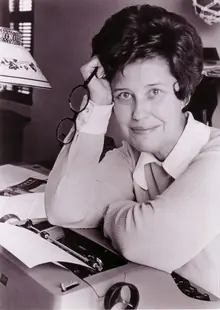
| 62 Quotes | |
| Born as | Erma Louise Fiste |
| Occup. | Journalist |
| From | USA |
| Spouse | Bill Bombeck |
| Born | February 21, 1927 Dayton, Ohio, USA |
| Died | April 22, 1996 San Francisco, California, USA |
| Cause | Kidney failure |
| Aged | 69 years |
Erma Louise Fiste was born on February 21, 1927, in Dayton, Ohio, into a working-class Midwestern world shaped by the Great Depression and, soon after, war mobilization. Her father, Erma Haines Fiste, worked as a city employee; he died when she was still a child, a loss that left her mother, Esther (a school lunchroom worker), to hold the household together with practical grit. The early rupture mattered: Bombeck later wrote as someone who understood that stability is not a natural condition but a daily improvisation, often performed by women without applause.
Dayton in the 1930s and 1940s offered her a close view of ordinary people juggling scarcity, pride, and neighborhood scrutiny. The era also trained her ear. She absorbed the cadence of kitchen-table talk, church-basement humor, and the small social tribunals of street and family, where a remark could be both comfort and weapon. That atmosphere became the raw material of her later persona: the genial observer who could make domestic life sound like anthropology, but never from a distance.
Education and Formative Influences
After graduating from Emerson High School, she attended the University of Dayton and later Ohio University, where she worked on campus publications and honed a reporter's habit of noticing what others dismiss. The postwar years were expanding journalism and advertising, but the editorial gatekeeping of the time pushed many women toward "features" and "women's pages". Bombeck learned to turn that marginality into leverage, training herself to write with speed, punch, and a comedian's timing while quietly taking in the emotional economy of marriage, motherhood, and status.
Career, Major Works, and Turning Points
In the early 1950s she worked as a copywriter and journalist in Dayton, then married Bill Bombeck in 1949 and moved to suburban Ohio, where raising three children became, in her hands, a reporting beat. Her breakthrough came with the syndicated column "At Wit's End", launched in 1965 and eventually carried by hundreds of newspapers, translating the supposedly small world of carpools, PTA politics, and kitchen disasters into national comedy. Books amplified the voice - including At Wit's End (1967), Just Wait Till You Have Children of Your Own! (1971), The Grass Is Always Greener Over the Septic Tank (1976), and If Life Is a Bowl of Cherries, What Am I Doing in the Pits? (1978) - and made her one of the most recognizable American humorists of the 1970s and 1980s. A late-career turn toward candor followed serious illness: her battle with breast cancer informed I Want to Grow Hair, I Want to Grow Up, I Want to Go to Boise (1989), and she continued working until her death on April 22, 1996, in San Francisco, after complications related to a bone-marrow transplant.
Philosophy, Style, and Themes
Bombeck's philosophy was built from the contradictions of postwar domestic ideology: the promise that appliances would liberate women, and the reality that expectations simply multiplied. She wrote in short, cinematic scenes - the overflowing laundry basket, the holiday table, the neighborly comparison game - using exaggeration as an X-ray that revealed the stress fractures beneath "normal". Her humor rarely targeted children or family as villains; instead it targeted the invisible standards that made women feel they were failing at a job no one had clearly defined. When she quipped, "Guilt: the gift that keeps on giving". , it was not merely a punchline but a diagnosis of the emotional fuel that kept households running - and kept mothers awake.
She also defended a sane relationship to work, status, and talent. The suburban treadmill appears in her work as a kind of soft authoritarianism: friendly on the surface, relentless underneath. "Before you try to keep up with the Joneses, be sure they're not trying to keep up with you". captures her suspicion that competition is often mutual panic, not aspiration. And her comic permission slip - "My theory on housework is, if the item doesn't multiply, smell, catch fire, or block the refrigerator door, let it be. No one else cares. Why should you?" - reveals her deeper theme: reclaiming attention from the trivial so it can be spent on people. The voice sounds breezy, but its inner life is disciplined: she turned private anxiety into public relief, and she did it with an ethic that treated laughter as a form of moral triage.
Legacy and Influence
Bombeck helped redefine what "serious" syndicated writing could be by insisting that domestic life was not a sidebar to history but one of its engines, and she expanded the audience for women's humor without flattening it into novelty. Later columnists, bloggers, and comedians drew on her template: autobiographical intimacy, observational detail, and a refusal to romanticize martyrdom. Her influence persists not because every reference to PTA chaos is original, but because she modeled how to convert daily overwhelm into clarity, and how to dignify ordinary lives by describing them precisely enough to be unforgettable.
Our collection contains 62 quotes who is written by Erma, under the main topics: Witty One-Liners - Puns & Wordplay - Deep - Mother - Parenting.
Erma Bombeck Famous Works
- 1987 Family - The Ties That Bind... And Gag! (Book)
- 1983 Motherhood: The Second Oldest Profession (Book)
- 1979 Aunt Erma's Cope Book: How to Get from Monday to Friday... In Twelve Days (Book)
- 1978 If Life is a Bowl of Cherries, What Am I Doing in the Pits? (Book)
- 1976 The Grass is Always Greener Over the Septic Tank (Book)
- 1965 At Wit's End (Book)
Source / external links