
Ernest Bramah Biography Quotes 4 Report mistakes
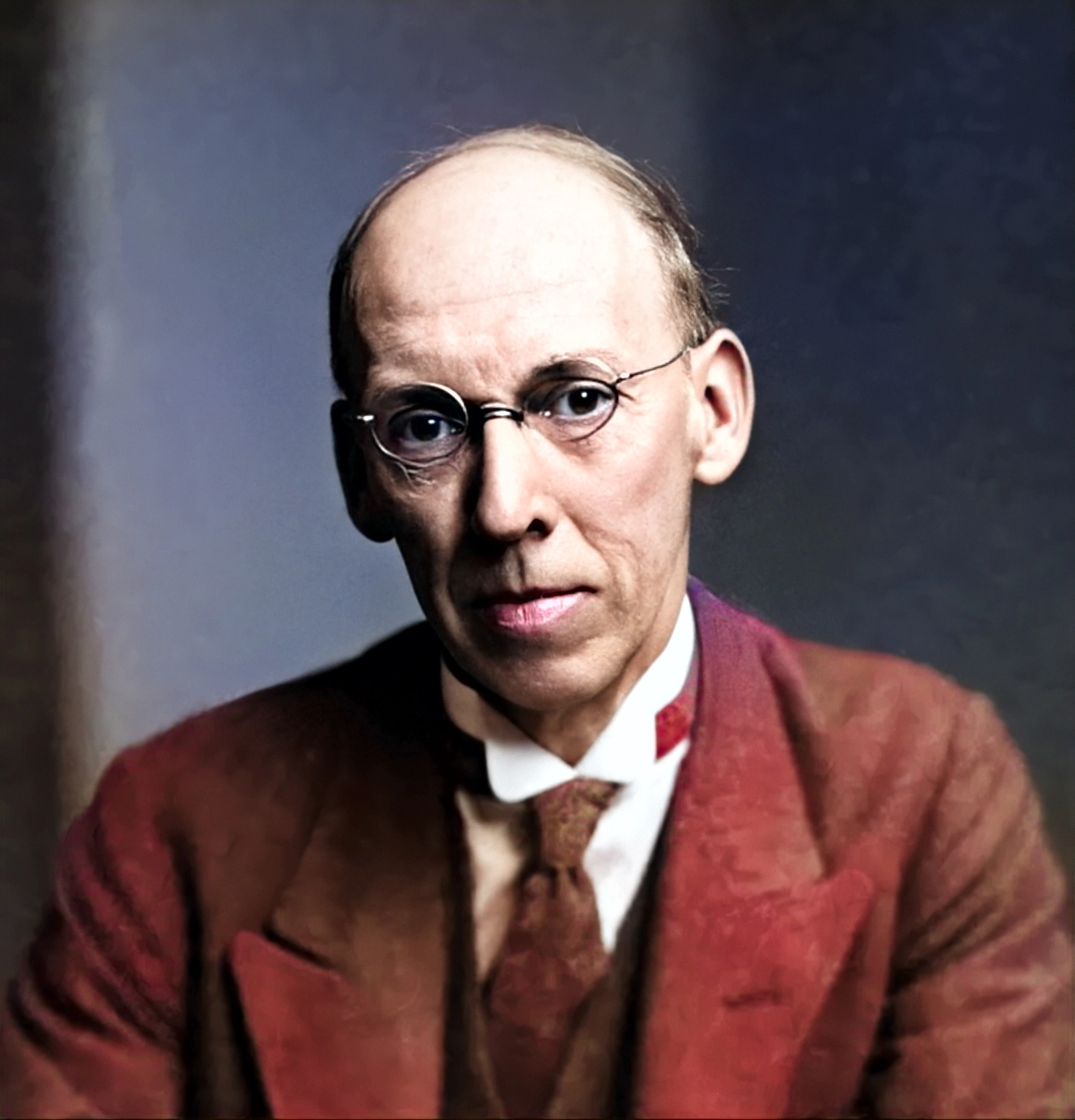
| 4 Quotes | |
| Born as | Ernest Bramah Smith |
| Occup. | Writer |
| From | England |
| Born | March 20, 1868 Manchester, England |
| Died | June 27, 1942 Hammersmith, London, England |
| Aged | 74 years |
| Cite | |
Citation Formats
APA Style (7th ed.)
Ernest bramah biography, facts and quotes. (2026, February 24). FixQuotes. https://fixquotes.com/authors/ernest-bramah/
Chicago Style
"Ernest Bramah biography, facts and quotes." FixQuotes. February 24, 2026. https://fixquotes.com/authors/ernest-bramah/.
MLA Style (9th ed.)
"Ernest Bramah biography, facts and quotes." FixQuotes, 24 Feb. 2026, https://fixquotes.com/authors/ernest-bramah/. Accessed 26 Mar. 2026.
Early Life and Background
Ernest Bramah Smith was born on March 20, 1868, in England, into a late-Victorian world confident in industry and empire yet restless with new anxieties about class, labor, and the pace of modern life. The rhythms of provincial respectability - chapel-going seriousness, apprenticeship thinking, and the social observation that comes from watching people perform their roles - formed the background to a writer who would later make a career of exposing pretension with a light, exacting touch.Illness early in life proved decisive. Bramah suffered a severe affliction that left him with lasting impairment, narrowing his physical horizons while sharpening his inward ones. That constraint did not simply push him toward books; it trained him in patience, in the comedy and cruelty of how strangers treat bodily difference, and in the discipline of constructing whole landscapes from a chair and a window. The result was a temperament both skeptical and humane, quick to puncture cant but reluctant to abandon the consolations of craft.
Education and Formative Influences
Bramah was largely self-educated in the way many late-19th-century English men of letters were: by omnivorous reading, by absorbing popular journalism and the cadence of public speech, and by studying narrative mechanics in the booming marketplace of magazines and serialized fiction. He lived through the transition from high-Victorian certainty to Edwardian irony, with the short story becoming a prime vehicle for wit, satire, and the controlled revelation of character - forms well suited to a writer whose imagination favored precision, setup, and sudden moral twist.Career, Major Works, and Turning Points
Before his name was associated with cultivated whimsy and pseudo-oriental elegance, Bramah worked in journalism and contributed widely to periodicals, learning how to land a paragraph and how to make a voice instantly legible. He published his first major book, The Wallet of Kai Lung (1900), an inventive cycle of tales framed as storytelling in an imagined China - a setting filtered through Edwardian fantasy rather than ethnographic reality, but one that gave him distance from English pieties and a stage for aphorism, paradox, and moral comedy. He followed it with further Kai Lung volumes, and broadened his range with the Max Carrados stories, beginning with The Max Carrados (1914), featuring a blind gentleman-detective whose heightened perception turned disability into narrative advantage. The First World War, and later the interwar years, darkened English humor with fatigue and disillusion, yet Bramah maintained a controlled brightness, using stylized settings and puzzle structures to keep despair at bay while still acknowledging human folly.Philosophy, Style, and Themes
Bramah wrote like a man who distrusted grand declarations but trusted the slow accumulation of telling detail. His style is compact, proverb-friendly, and engineered for reversal: a confident character is gently guided into a contradiction; a neat plan ends by revealing the planner. That moral geometry appears in his cautionary, almost stoic sense that intentions and outcomes diverge: “He who thinks he is raising a mound may only in reality be digging a pit”. Behind the epigram is an autobiographical psychology - the awareness that effort can be punished by circumstance, and that the safest wisdom is provisional.His comedy is also an ethics of attention. Bramah repeatedly targets the social reflex to reduce a person to one trait, one wound, one story others prefer to tell about them. “Although there exist many thousand subjects for elegant conversation, there are persons who cannot meet a cripple without talking about feet”. The line is funny, but its sting suggests lived experience: it reads like a private rebuke turned into public art. That same internal discipline informs his fascination with careful conduct and the high stakes of small choices: “A reputation for a thousand years may depend upon the conduct of a single moment”. In both his faux-Chinese moral fables and his detective work, character is not abstract - it is behavior under pressure, often revealed in an instant.
Legacy and Influence
Ernest Bramah died on June 27, 1942, in wartime Britain, but his work survived as a durable minor classic: Kai Lung endures as an emblem of turn-of-the-century storytelling craft, while Max Carrados remains an important early example of disability in detective fiction handled with ingenuity rather than pity. Modern readers also approach him with a double vision: admiring his formal elegance and aphoristic wit while recognizing that his "China" is a Western invention shaped by the orientalist conventions of his era. Even so, his lasting contribution is the same across modes - a disciplined, gently barbed intelligence that insists people are most truly known not by what they claim, but by the small, consequential ways they see, speak, and choose.Our collection contains 4 quotes written by Ernest, under the main topics: Witty One-Liners - Wisdom - Legacy & Remembrance.
Ernest Bramah Famous Works
- 1923 The Eyes of Max Carrados (Short Stories)
- 1922 Kai Lung's Golden Hours (Novel)
- 1914 Max Carrados (Short Stories)
- 1907 The Secret of the League (Novel)
- 1905 The Mirror of Kong Ho (Novel)
- 1900 The Wallet of Kai Lung (Novel)
Source / external links