
Evander Holyfield Biography Quotes 6 Report mistakes
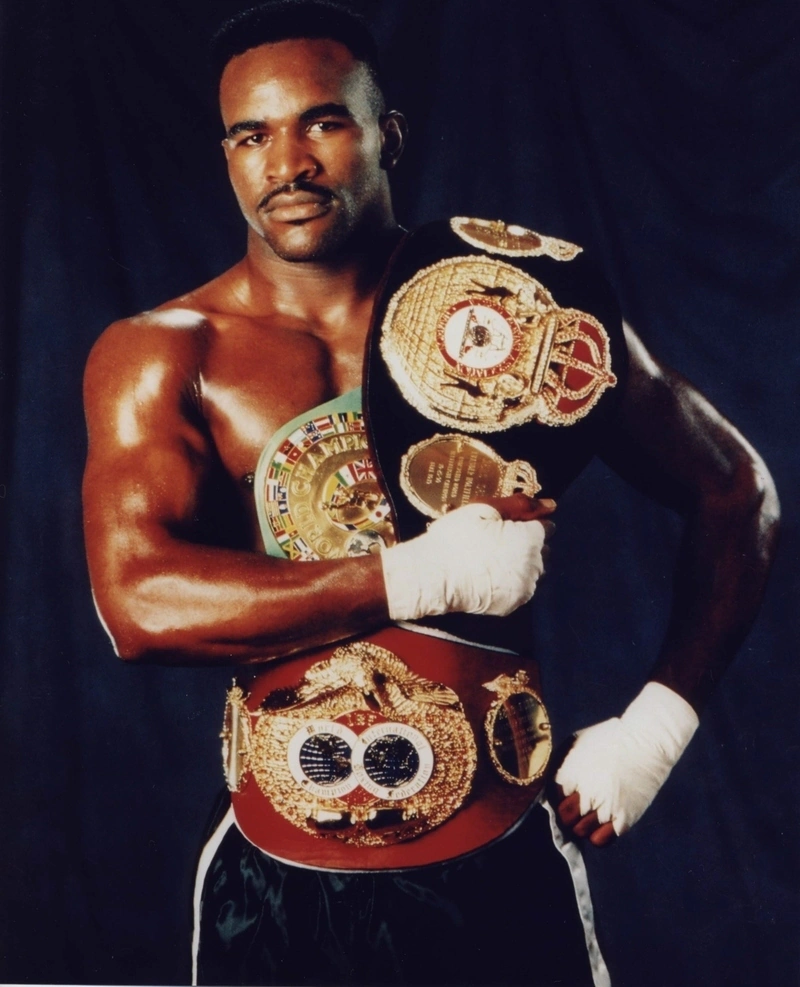
| 6 Quotes | |
| Occup. | Athlete |
| From | USA |
| Born | October 19, 1962 Atmore, Alabama, USA |
| Age | 63 years |
| Cite | |
Citation Formats
APA Style (7th ed.)
Evander holyfield biography, facts and quotes. (2026, February 11). FixQuotes. https://fixquotes.com/authors/evander-holyfield/
Chicago Style
"Evander Holyfield biography, facts and quotes." FixQuotes. February 11, 2026. https://fixquotes.com/authors/evander-holyfield/.
MLA Style (9th ed.)
"Evander Holyfield biography, facts and quotes." FixQuotes, 11 Feb. 2026, https://fixquotes.com/authors/evander-holyfield/. Accessed 5 Mar. 2026.
Early Life and Background
Evander "The Real Deal" Holyfield was born on October 19, 1962, in Atmore, Alabama, and raised in the projects of Atlanta, Georgia, in a large, tightly knit family shaped by Southern church culture and the hard arithmetic of urban survival. His mother, Annie, became the moral center of his early life - strict, protective, and relentlessly insistent that her son carry himself with dignity in a world eager to take it away.Holyfield grew up small for his age, a detail that mattered in neighborhoods where size could decide the day. Boxing offered a paradoxical refuge: a controlled violence with rules, coaches, and a ladder out. The gyms of Atlanta became his second home, and the ring - equal parts danger and order - gave him a vocabulary for self-control. Long before titles, he learned that reputation was built not only on winning but on how you behaved when the outcome was uncertain.
Education and Formative Influences
Holyfield trained through local amateur programs in Atlanta and emerged as a national prospect in the early 1980s, when American boxing still functioned as a public proving ground and the Olympics were a cultural megaphone. Coaches and the disciplined routines of amateur boxing formed him: early mornings, repetition, and the idea that faith and preparation were not abstractions but daily practices. His breakthrough came at the 1984 Los Angeles Olympics, where he won a bronze medal at light heavyweight after a controversial disqualification in the semifinal - an early lesson in how institutions could overrule effort, and how a fighter had to keep going anyway.Career, Major Works, and Turning Points
Turning professional in 1984, Holyfield rose through the cruiserweight division with uncommon intensity, culminating in becoming the undisputed cruiserweight champion in 1988 before moving to heavyweight - then still the sport's most mythic class. He defeated James "Buster" Douglas in 1990 to become heavyweight champion, then traded the title in an era-defining upset to Riddick Bowe in 1992, beginning a trilogy that showcased both his vulnerabilities and his resolve. His 1996 victory over Mike Tyson and the 1997 rematch - remembered as much for the ear-biting disqualification as for Holyfield's steadiness amid chaos - cemented his public identity as boxing's durable moral counterweight to spectacle. After heart-related concerns and a brief retirement, he returned repeatedly, chasing one more run at relevance, and in 2000 he fought Lennox Lewis in two bouts that many observers felt underscored how politics and scoring could shape legacies as much as fists.Philosophy, Style, and Themes
Holyfield's inner life was built around willpower as a moral discipline. His most revealing statements do not romanticize violence; they frame competition as a test of character, measured in endurance, sacrifice, and the ability to stay composed when the body wants to quit. “My goal is to be the undisputed Heavyweight Champion of the World”. In Holyfield, ambition reads less like ego than as a vow: a promise to match the sport's harshest standard, even when the division was crowded with giants and the business side of boxing could be as punishing as any opponent.In the ring he was not a natural heavyweight in size, so his style became a psychology - pressure, short combinations, physical clinch work, and a willingness to fight through fatigue and damage. That approach matched his guiding maxim: “It is not the size of a man but the size of his heart that matters”. His public stance on performance enhancement also aligned with the same ethics of earned advantage, not purchased edge: “Well, when I think of steroids I think of an image. You have the advantage over someone, which is a form of cheating. I guess it wouldn't be right unless it was legal for everybody. Reason it's not legal for everybody is because it can hurt people seriously”. Taken together, these lines reveal a man who wanted victory to mean something - spiritually, socially, and physically - and feared a world where winning was detached from responsibility.
Legacy and Influence
Holyfield remains one of the defining heavyweights of the late 20th century: a former undisputed champion at cruiserweight and a multi-time heavyweight champion who repeatedly fought elite opposition across shifting eras. His influence is felt in how smaller heavyweights approach the division - through conditioning, tactical pressure, and mental resilience - and in the way he carried himself during boxing's most chaotic moments, especially in the Tyson saga, where his composure became as memorable as the result. If some later comebacks complicated the final shape of his career, the core narrative endures: an athlete who made faith, discipline, and heart into a competitive method, and who helped keep the heavyweight championship tied to the idea of character rather than mere size.Our collection contains 6 quotes written by Evander, under the main topics: Motivational - Ethics & Morality - Freedom - Kindness - Goal Setting.
Other people related to Evander: Mike Tyson (Athlete), Don King (Celebrity), Lennox Lewis (Athlete), Larry Holmes (Athlete), Lou Duva (Coach)
Source / external links