
Evelyn Ashford Biography Quotes 2 Report mistakes
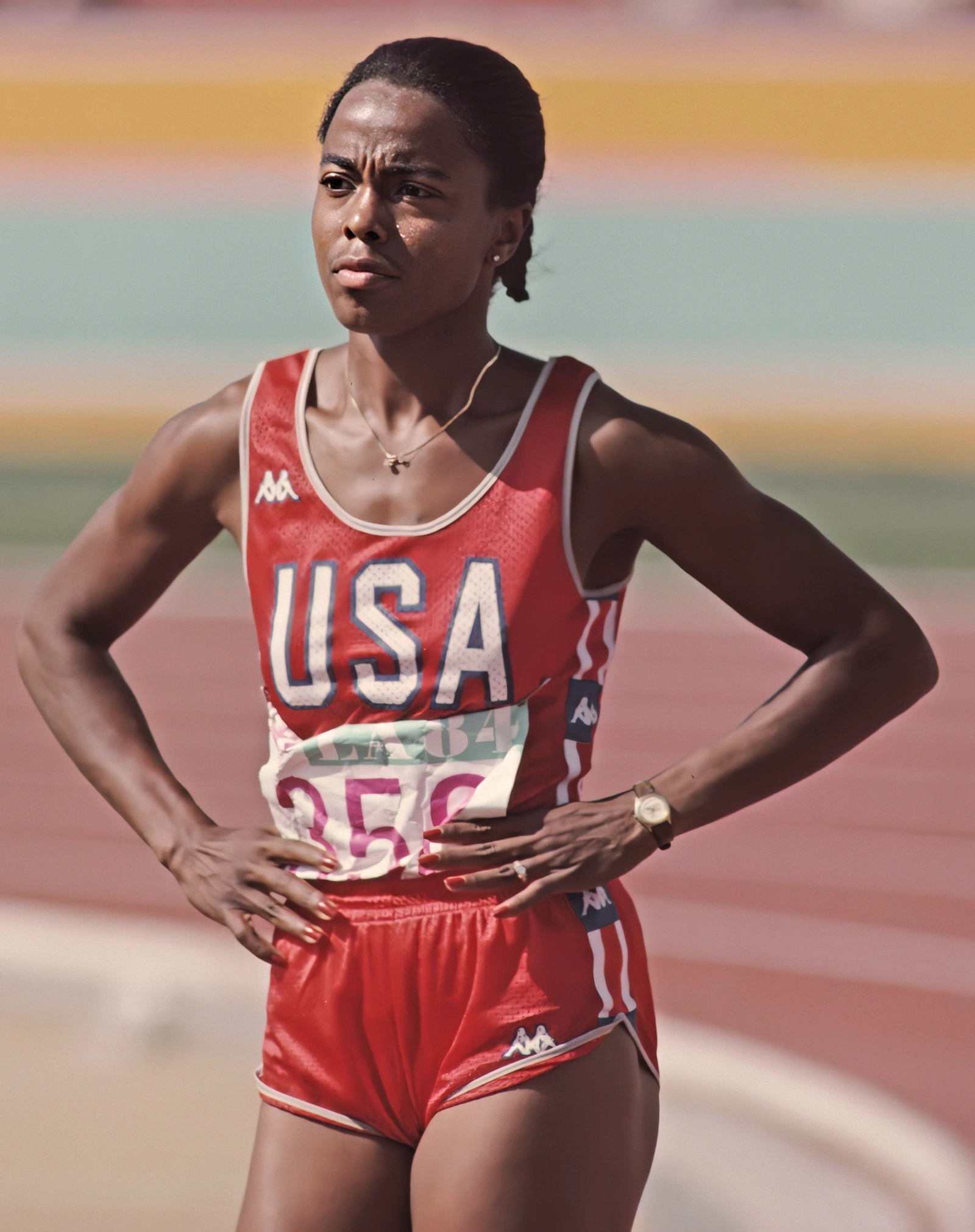
| 2 Quotes | |
| Occup. | Athlete |
| From | USA |
| Born | April 15, 1957 Shreveport, Louisiana, USA |
| Age | 68 years |
| Cite | |
Citation Formats
APA Style (7th ed.)
Evelyn ashford biography, facts and quotes. (2026, February 11). FixQuotes. https://fixquotes.com/authors/evelyn-ashford/
Chicago Style
"Evelyn Ashford biography, facts and quotes." FixQuotes. February 11, 2026. https://fixquotes.com/authors/evelyn-ashford/.
MLA Style (9th ed.)
"Evelyn Ashford biography, facts and quotes." FixQuotes, 11 Feb. 2026, https://fixquotes.com/authors/evelyn-ashford/. Accessed 5 Mar. 2026.
Early Life and Background
Evelyn Ashford was born April 15, 1957, in Shreveport, Louisiana, and grew up in a region where opportunity for Black girls in sport was widening but still tightly policed by custom and resources. Track was one of the few arenas where a stopwatch could briefly outrun social assumptions, and Ashford learned early to treat performance as a kind of proof. Family stability, church-and-school routines, and the disciplined cadence of Southern life shaped her sense that excellence was not a personality trait but a habit practiced in public.When she moved through youth competition, the United States itself was changing - Title IX was opening pathways for women athletes, while the Cold War turned international sport into a stage for national identity. Ashford came of age in that tension: intensely personal goals pursued under a spotlight that made every win and loss feel symbolic. She developed a reputation for composure and competitiveness, carrying herself like someone who had decided that calm could be an advantage as real as speed.
Education and Formative Influences
Ashford attended Madison High School in Los Angeles after her family relocated to California, and her talent accelerated in the state's deep sprinting culture. She competed at UCLA, where the university's tradition in track and field and the professionalism of top collegiate programs sharpened her mechanics and mental approach. The late 1970s collegiate circuit exposed her to international-caliber rivals and to the emerging science of sprint training - starts, stride length, relaxation under strain - while also teaching her how to navigate expectations placed on women athletes newly visible on television and in Olympic marketing.Career, Major Works, and Turning Points
Ashford's career became a long argument against the idea that sprinting primes burn out quickly. She won Olympic gold in the 100 meters at Los Angeles in 1984, anchoring her fame in a home Games charged with political meaning after the Soviet-led boycott. She also helped the United States win relay gold and remained an essential relay closer across multiple Olympic cycles, including the 4x100 meters victory at Seoul in 1988 and later contributions that culminated in another relay gold at Atlanta in 1996, making her one of the rare track athletes to span four Olympics with podium-level impact. Along the way she set world records in the 100 meters and in relay splits, and she endured the pressures that defined elite sprinting in the 1980s - rising professionalism, suspicion around performance enhancement, and the relentless scrutiny that followed any dominant American runner. A major turning point was her ability to return after motherhood and continue at world-class level, extending her career into an era when many assumed a sprinter's peak had passed.Philosophy, Style, and Themes
Ashford's public persona often sounded like a private vow: effort would be her only explanation. “Whatever muscles I have are the product of my own hard work and nothing else”. The sentence is revealing not merely as a training credo but as a psychological boundary. In an era when women's strength was routinely questioned and sprinting was increasingly haunted by doping rumors, she framed the body as testimony - a record of hours, repetitions, and self-command. It also hints at a fiercely internal locus of control: when the world tried to narrate her success for her, she insisted on authorship.Her running style was marked by aggressive acceleration and a powerful, economical top-end, but she described sprinting in sensory terms rather than technical jargon. “I can feel the wind go by when I run. It feels good. It feels fast”. That line captures a theme that recurs in interviews and race footage alike: speed as joy, not only as outcome. It also suggests how she managed pressure - by returning to the bodily present, the immediate feedback of motion - a strategy that can steady nerves in championships where hundredths decide history. Ashford's best performances balance intensity with relaxation, as if she understood that the fastest sprint is not the one most violently forced, but the one most completely inhabited.
Legacy and Influence
Ashford endures as one of the defining American sprinters of the late 20th century: Olympic champion, multiple-time relay gold medalist, and a model of longevity in a sport that punishes time. She helped normalize the idea that women could build long careers with distinct chapters - collegiate dominance, Olympic stardom, setbacks, return, and reinvention - and her insistence on work ethic and embodied confidence offered a counter-story to cynicism about elite performance. For younger sprinters, especially American women, her example remains both technical and moral: win with execution, last with discipline, and let the body's honest labor speak loudest.Our collection contains 2 quotes written by Evelyn, under the main topics: Sports - Fitness.
Source / external links