
Evelyn Beatrice Hall Biography Quotes 1 Report mistakes
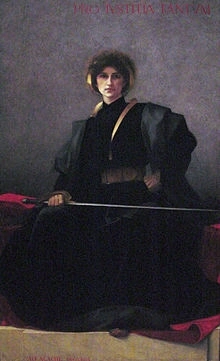
| 1 Quotes | |
| Occup. | Author |
| From | England |
| Born | 1868 England |
| Died | 1939 England |
| Cite | |
Citation Formats
APA Style (7th ed.)
Evelyn beatrice hall biography, facts and quotes. (2026, February 11). FixQuotes. https://fixquotes.com/authors/evelyn-beatrice-hall/
Chicago Style
"Evelyn Beatrice Hall biography, facts and quotes." FixQuotes. February 11, 2026. https://fixquotes.com/authors/evelyn-beatrice-hall/.
MLA Style (9th ed.)
"Evelyn Beatrice Hall biography, facts and quotes." FixQuotes, 11 Feb. 2026, https://fixquotes.com/authors/evelyn-beatrice-hall/. Accessed 27 Mar. 2026.
Early Life and Background
Evelyn Beatrice Hall was born in England in 1868, in the late-Victorian world of expanding literacy, widening suffrage debates, and a print culture that made reputations quickly and sometimes brutally. She grew up in a society that prized moral seriousness yet devoured political scandal and intellectual controversy, and she would later turn that tension into method: presenting public quarrels as a way to examine private conscience.Hall moved within the educated, secular-leaning middle class that could treat books not merely as diversion but as a civic instrument. Her adulthood unfolded through the shift from Victorian certainties to the anxious, argumentative climate of the early 20th century - a period that tested inherited beliefs with the pressures of empire, war, and modern politics. She died in 1939, as Europe tipped again into catastrophe, a timing that makes her lifelong preoccupation with tolerance and dissent feel less like posture than foreboding.
Education and Formative Influences
Details of Hall's formal schooling are sparse, but her intellectual formation is visible in the breadth and tone of her work: she read deeply in 18th-century French history and Enlightenment polemic, trained herself in the close handling of letters and memoir, and absorbed the British tradition of argumentative prose shaped by journalism and biography. The age in which she came of intellectual maturity rewarded writers who could translate difficult ideas for general readers, and Hall learned to write with the brisk authority of someone who expected to be challenged.Career, Major Works, and Turning Points
Hall wrote under her own name and the pseudonym S. G. Tallentyre, producing biographical and historical studies that brought French intellectual life to English audiences; her best-known book is The Friends of Voltaire (1906), a portrait of Voltaire's circle that uses social relationships to explain how ideas survive censorship, fashion, and faction. A turning point in her public afterlife came from a sentence not originally designed as a slogan: in discussing the Enlightenment writer Helvetius, Hall summarized the spirit of Voltairean toleration in a line that would later be endlessly attributed to Voltaire himself, binding her name - sometimes invisibly - to a modern creed of free speech.Philosophy, Style, and Themes
Hall's central subject was not simply the Enlightenment but the emotional machinery that produces intolerance: vanity, fear of ridicule, the desire for moral certainty, and the pleasures of belonging to a righteous crowd. Her prose favors the biographer's trick of making a public controversy feel intimate, as if the reader is overhearing the private calculations behind a pamphlet war or a salon dispute. She wrote about reason, but she was attentive to temperament - how charm can launder cruelty, and how moral fervor can become a substitute for thought.Her most famous formulation captures that psychological stance: “I disapprove of what you say, but I will defend to the death your right to say it”. In Hall's usage the line is less a heroic vow than a test of character, separating principled toleration from the easier tolerance that costs nothing. It implies that the true strain arrives when speech disgusts us, when the speaker is socially inconvenient, when defending the right to speak threatens one's standing. The sentence also reveals Hall's self-discipline as a writer: she preferred the ethic of fair hearing to the seduction of easy denunciation, and she framed liberty not as abstract doctrine but as a daily practice of restraint - a refusal to let contempt harden into persecution.
Legacy and Influence
Hall's legacy operates on two tracks: as a serious popularizer of Enlightenment lives and as the inadvertent author of one of the modern era's most repeated defenses of free expression, often detached from her name. That misattribution can obscure her achievement, yet it also proves her effectiveness: she distilled a complex historical sensibility into a sentence sturdy enough to travel across decades, ideologies, and crises. In an age still wrestling with censorship, propaganda, and the social cost of dissent, Hall endures as a biographer who treated tolerance as an inner victory - won not by liking every idea, but by resisting the urge to silence the ones we hate.Our collection contains 1 quotes written by Evelyn, under the main topics: Freedom.
Evelyn Beatrice Hall Famous Works
- 1912 The Life of Voltaire (Book)
- 1906 The Friends of Voltaire (Book)
Source / external links