
Evelyn Underhill Biography Quotes 16 Report mistakes
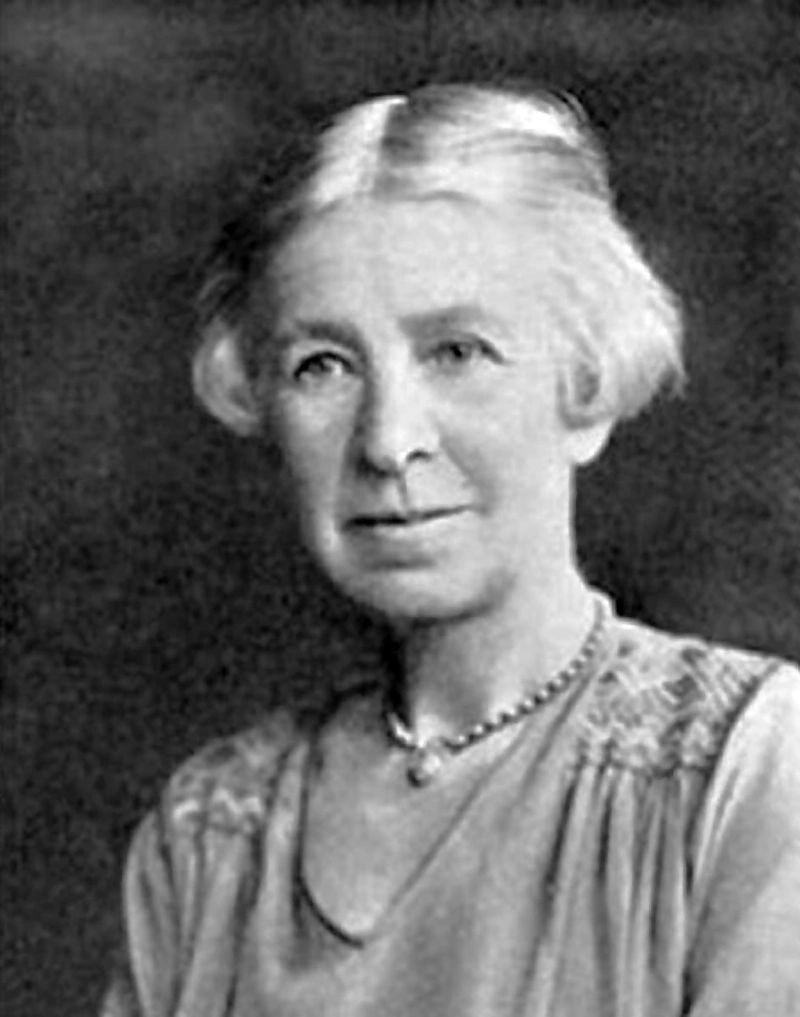
Attr: Photographer unknown
| 16 Quotes | |
| Born as | Evelyn May Underhill |
| Occup. | Writer |
| From | England |
| Born | December 6, 1875 Wolverhampton, England |
| Died | June 15, 1941 London, England |
| Aged | 65 years |
| Cite | |
Citation Formats
APA Style (7th ed.)
Evelyn underhill biography, facts and quotes. (2026, February 11). FixQuotes. https://fixquotes.com/authors/evelyn-underhill/
Chicago Style
"Evelyn Underhill biography, facts and quotes." FixQuotes. February 11, 2026. https://fixquotes.com/authors/evelyn-underhill/.
MLA Style (9th ed.)
"Evelyn Underhill biography, facts and quotes." FixQuotes, 11 Feb. 2026, https://fixquotes.com/authors/evelyn-underhill/. Accessed 5 Mar. 2026.
Early Life and Education
Evelyn May Underhill was born in 1875 in England into a cultivated, professional household that prized learning and public service. Her father, Arthur Underhill, a barrister and noted legal scholar, and her mother, Alice Lucy (nee Ironmonger), supported their only child's wide-ranging intellectual interests from an early age. Raised in London after an early childhood in the Midlands, she received a solid education that combined the humanities and the natural sciences. As a young woman she studied at institutions associated with King's College in London, where she deepened her literary and historical knowledge while also fostering a lifelong fascination with medieval culture and Christian art. Extended travels on the Continent, especially in France and Italy, introduced her to the cathedrals, paintings, and liturgy that would orient her imagination and later scholarly work.Emergence as a Writer and Scholar
Underhill began her literary career with novels and poetry that hinted at the themes that would preoccupy her: the hidden life of the spirit, the nearness of transcendence, and the ethical demands of love. Early fiction such as The Grey World explored mystical experience through narrative. Her decisive breakthrough came with Mysticism (1911), an ambitious synthesis of history, psychology, and theology that surveyed the great Christian mystics and set their experiences within a coherent framework. The book's range, touching on Dionysius the Areopagite, Meister Eckhart, Jan van Ruysbroeck, Teresa of Avila, John of the Cross, and many others, immediately established her as the leading English-language interpreter of mysticism. She followed it with The Mystic Way (1913) and the concise Practical Mysticism (1914), which argued that contemplation was not a specialist's privilege but a human vocation.Spiritual Development and Influences
While her scholarship gained public recognition, Underhill's inner life moved along a parallel path guided by relationships that proved decisive. Her marriage in 1907 to Hubert Stuart Moore, a barrister, gave her a stable and affectionate home life that quietly undergirded her vocation as a writer and spiritual guide. A still more formative influence was the Austrian-born Catholic lay theologian Baron Friedrich von Hugel, who became her spiritual mentor. Von Hugel's insistence on historical realism, disciplined prayer, the sacraments, and the inseparability of love and truth reshaped Underhill's approach. She retained a deep attraction to Roman Catholic spirituality yet, under his counsel, remained within the Church of England, working to renew its devotional life from within. In conversation and sometimes friendly debate with contemporaries such as William Ralph Inge, she refined a view of mysticism that was both critical and pastoral: rigorous in its sources, cautious about excess, and oriented toward charity.Retreats, Direction, and Public Ministry
From the 1920s onward, Underhill increasingly devoted herself to spiritual direction, retreats, and practical theology. She became one of the most sought-after retreat conductors in the English church, speaking to laypeople and clergy alike with a rare blend of learning and warmth. The Chelmsford Diocesan House of Retreat at Pleshey figured prominently in her ministry; there she shaped generations of retreatants through addresses that joined meditation on Scripture with guidance on daily discipleship. Her public voice reached still more readers through essays and reviews for British periodicals, including The Spectator. Books such as The Life of the Spirit and the Life of To-day and The Essentials of Mysticism gathered her shorter pieces into accessible collections. A major later work, Worship (1936), surveyed Christian prayer and liturgy across traditions and epochs, distilling decades of study into a wise, generous account of the church's common prayer.Underhill's circle of friends and colleagues supported and amplified her efforts. Lucy Menzies, a close friend and collaborator who often accompanied her in retreat work, shared both practical burdens and spiritual insight; Menzies later helped preserve Underhill's legacy with a sensitive memoir. After Underhill's death, the poet and critic Charles Williams edited her correspondence in Letters of Evelyn Underhill, revealing the delicate, incisive voice she brought to individual guidance. Through these relationships, her influence radiated beyond her own books, shaping the pastoral imagination of Anglicans and readers far beyond Anglicanism.
Convictions, Style, and Public Stance
Underhill's writing combined a scholar's command of sources with a contemplative's attentiveness to experience. She resisted purely psychological or purely dogmatic accounts of mysticism, insisting that authentic contemplation is anchored in worship, ethical conversion, and service to neighbor. Her prose, at once lucid and lyrical, aimed to open the reader's attention to God rather than to impress with erudition. In the anxious decades between the world wars she urged the church to recover a life of prayer as the deepest remedy for cultural disarray. Though never strident in public controversies, she increasingly emphasized reconciliation and the demands of Christian peace, a stance that placed her among those voices calling for spiritual depth rather than ideological heat.Final Years and Legacy
In her final years, Underhill's health declined even as her authority as a guide grew. She continued to write prefaces, introductions, and retreat addresses, and sustained a heavy correspondence with those seeking counsel. She died in 1941, leaving behind a body of work that had already begun to reshape the study and practice of spirituality in the English-speaking world. The pattern of her life, scholarship disciplined by prayer, friendship, and the ordinary fidelity of marriage, became an implicit argument for the integration she commended in print.Underhill stands today as a bridge-builder: between academic theology and devotional practice; between medieval sources and modern seekers; between the riches of Catholic spiritual tradition and the life of the Anglican church. The people closest to her, Arthur Underhill, whose professional clarity modeled intellectual honesty; Hubert Stuart Moore, whose steady companionship freed her to work; Friedrich von Hugel, whose direction anchored her quest; Lucy Menzies and Charles Williams, who tended her legacy, illustrate the profoundly relational character of her achievement. Through Mysticism, Practical Mysticism, Worship, and many essays and retreats, Evelyn Underhill helped countless readers and hearers to recognize the hidden yet insistent presence of God in the midst of ordinary life, and to respond with love, perseverance, and joy.
Our collection contains 16 quotes written by Evelyn, under the main topics: Love - Deep - Kindness - Self-Discipline - God.