
Evelyn Waugh Biography Quotes 32 Report mistakes
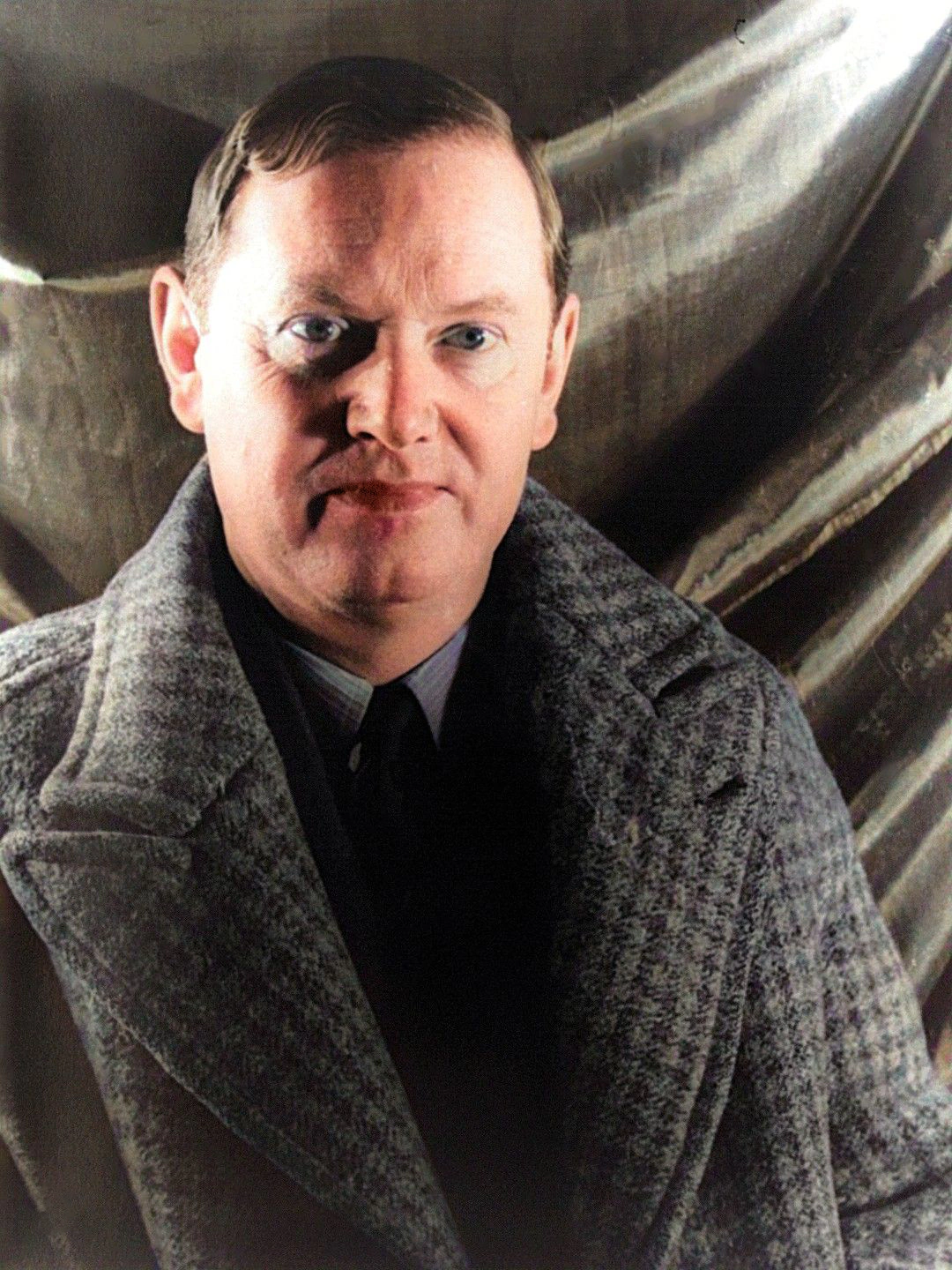
Attr: Carl Van Vechten, Public domain
| 32 Quotes | |
| Born as | Arthur Evelyn St. John Waugh |
| Occup. | Author |
| From | United Kingdom |
| Born | October 28, 1903 London, England |
| Died | April 10, 1966 Combe Florey, Somerset, England |
| Cause | Heart attack |
| Aged | 62 years |
| Cite | |
Citation Formats
APA Style (7th ed.)
Evelyn waugh biography, facts and quotes. (2026, February 11). FixQuotes. https://fixquotes.com/authors/evelyn-waugh/
Chicago Style
"Evelyn Waugh biography, facts and quotes." FixQuotes. February 11, 2026. https://fixquotes.com/authors/evelyn-waugh/.
MLA Style (9th ed.)
"Evelyn Waugh biography, facts and quotes." FixQuotes, 11 Feb. 2026, https://fixquotes.com/authors/evelyn-waugh/. Accessed 23 Mar. 2026.
Early Life and Background
Arthur Evelyn St. John Waugh was born on 1903-10-28 in London, into an educated, bookish middle-class world that nevertheless looked upward, alert to the signals of status. His father, Arthur Waugh, was a publisher and man of letters; his mother, Catherine, provided the ordered domestic frame within which two very different sons grew. Waugh would later sharpen his social gaze into satire, but its raw material was first collected in childhood: the rituals of respectability, the minute gradations of accent and school tie, and the quiet pressure to become, at minimum, presentable.The family story carried a built-in wound. His elder brother, Alec Waugh, achieved early literary notice, and Evelyn grew up with the sense of being measured against a rival who was also kin. That mixture of competitiveness and prickly self-protection hardened into a persona - cold, amused, easily bored, and yet privately hungry for solidity. Even before his conversion and fame, he was already rehearsing a lifelong pattern: to mock the world he wanted admission to, and to punish himself for wanting it.
Education and Formative Influences
He was educated at Lancing College, where discipline and high-church atmosphere left a lingering imprint, then went up to Hertford College, Oxford. Oxford gave him the intoxicant of talk, drink, costume, and clique - an undergraduate theater of masks in which he learned how quickly sophistication decays into pose. He left without taking a degree, and the abrupt exit mattered: it framed his twenties as a scramble for definition, and taught him to treat social success as both irresistible and fraudulent. The young Waugh also absorbed modernist technique at a distance and, closer to home, the Edwardian comic tradition; he would fuse them into prose that looked light but carried moral freight.Career, Major Works, and Turning Points
After brief, unhappy stints as a schoolmaster and would-be craftsman, Waugh turned to journalism and then fiction, transforming his own missteps into art. Decline and Fall (1928) announced his method: farce plotted with near-mathematical control, exposing institutions - school, church, aristocracy - as theaters of self-interest. Vile Bodies (1930) caught the Bright Young Things at the edge of the crash, its speed mirroring an age living on credit; A Handful of Dust (1934) brought the joke to the lip of tragedy. His conversion to Roman Catholicism in 1930 reoriented his work toward the supernatural and the sacramental, most fully in Brideshead Revisited (1945). World War II, in which he served with the Royal Marines and Commandos and witnessed the disarray of wartime bureaucracy, became material for the Sword of Honour trilogy (Men at Arms, Officers and Gentlemen, Unconditional Surrender). Late fame arrived with a sharper edge: ill health, increasing irascibility, and a sense that modern England was discarding the very forms that had once restrained chaos.Philosophy, Style, and Themes
Waughs comedy is often mistaken for mere snobbery; in fact, it is a metaphysical alarm system. He wrote as if manners were not ornaments but defenses against the void - hence his fascination with the rich, whose self-protection looks like prudence until it reveals its cowardice. “He was gifted with the sly, sharp instinct for self-preservation that passes for wisdom among the rich”. The sentence is not only social diagnosis but self-portrait in negative: Waugh feared that cleverness without grace becomes a survival reflex, and he punished that fear by making it funny.His Catholic imagination made him suspicious of utopias and sentimental consolation. “The human mind is inspired enough when it comes to inventing horrors; it is when it tries to invent a Heaven that it shows itself cloddish”. This skepticism shaped his endings, where solutions are partial, worldly victories hollow, and yet the possibility of redemption remains real precisely because it is not engineered by human optimism. Even his aesthetics carry a moral claim: “There are no poetic ideas; only poetic utterances”. For Waugh, style was not decoration but discipline - a way to force unruly experience into exact statement, and to expose cant by refusing to write it loosely. The clipped cadence, the merciless dialogue, the sudden shift from frivolity to dread: all are techniques of spiritual realism.
Legacy and Influence
Waugh died on 1966-04-10 in Somerset, leaving a body of work that has only grown more readable as the world he mocked has vanished. He remains the great anatomist of English interwar speed and postwar disillusion, a novelist who could make a dinner party feel like an apocalypse in miniature. Brideshead Revisited helped define the modern Catholic novel in English, while Sword of Honour stands among the sharpest fictions of World War II bureaucracy and moral compromise. His influence runs through later satirists and stylists - from writers of campus farce to chroniclers of class anxiety - but his deeper bequest is the insistence that comedy can bear theology, and that the sharpest laughter may be a form of mourning.Our collection contains 32 quotes written by Evelyn, under the main topics: Witty One-Liners - Art - Sarcastic - Writing - Learning.
Other people related to Evelyn: P. G. Wodehouse (Writer), Cyril Connolly (Journalist), Auberon Waugh (Author), Diana Cooper (Celebrity), Harold Acton (Historian)
Evelyn Waugh Famous Works
- 1961 Unconditional Surrender (Novel)
- 1955 Officers and Gentlemen (Novel)
- 1952 Men at Arms (Novel)
- 1948 The Loved One (Novella)
- 1945 Brideshead Revisited (Novel)
- 1938 Scoop (Novel)
- 1934 A Handful of Dust (Novel)
- 1930 Vile Bodies (Novel)
- 1928 Decline and Fall (Novel)
Source / external links