
Everett Dirksen Biography Quotes 12 Report mistakes
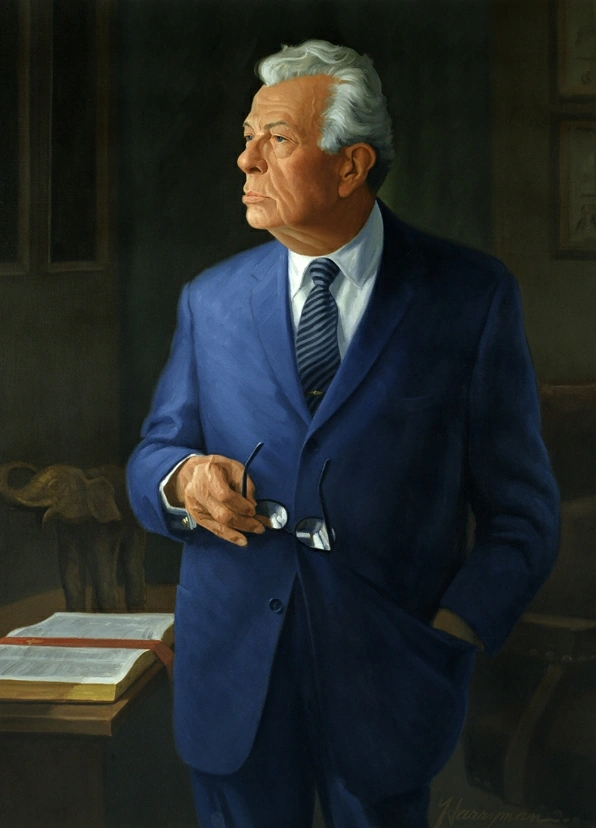
| 12 Quotes | |
| Born as | Everett McKinley Dirksen |
| Occup. | Politician |
| From | USA |
| Born | January 4, 1896 Pekin, Illinois |
| Died | September 7, 1969 Washington, D.C. |
| Cause | Lung cancer |
| Aged | 73 years |
| Cite | |
Citation Formats
APA Style (7th ed.)
Everett dirksen biography, facts and quotes. (2026, February 11). FixQuotes. https://fixquotes.com/authors/everett-dirksen/
Chicago Style
"Everett Dirksen biography, facts and quotes." FixQuotes. February 11, 2026. https://fixquotes.com/authors/everett-dirksen/.
MLA Style (9th ed.)
"Everett Dirksen biography, facts and quotes." FixQuotes, 11 Feb. 2026, https://fixquotes.com/authors/everett-dirksen/. Accessed 12 Feb. 2026.
Early Life and Background
Everett McKinley Dirksen was born on January 4, 1896, in Pekin, Illinois, a river-town in the industrializing Midwest where German-American neighborhoods, Protestant civic life, and the rhythms of the Illinois River shaped daily experience. His parents, William and Jennie Dirksen, were modest, churchgoing, and culturally German; music and community performance were not luxuries but a kind of social glue. Dirksen grew up learning how a public voice carries - first in local halls and ensembles, later from a podium.The era that formed him was one of hard bargains: the Progressive years, then the shock of World War I, then the long shadow of the Depression. Dirksen enlisted during World War I and served with the U.S. Army, an experience that sharpened his patriotism and gave him the lifelong habit of translating national questions into personal duty. Returning to Pekin, he entered the practical worlds of family responsibility, local business, and civic clubs, becoming a recognizable figure in the small-city public square before he ever reached Washington.
Education and Formative Influences
Dirksen attended local schools and briefly studied at the University of Minnesota, but he was more made by apprenticeship than by diplomas: retail work, community theater, and relentless self-education in speechcraft and lawmaking by observation. He cultivated a performer's instinct for timing and audience - not merely to entertain, but to render politics legible - while the Republican tradition of the Midwest (skeptical of centralized power yet comfortable with national purpose in war) gave him an ideological home that would be tested repeatedly by the New Deal and Cold War.Career, Major Works, and Turning Points
Dirksen won election to the U.S. House in 1932, entered Congress as Franklin Roosevelt remade the federal state, and moved to the U.S. Senate in 1950; by 1959 he was Republican leader, a post he held until his death on September 7, 1969, in Washington, D.C. His great turning point was not a single bill but a role: becoming the broker who could deliver Republican votes when the Senate required supermajorities. He supported the 1964 Civil Rights Act and the 1965 Voting Rights Act after long negotiation, using his authority to craft workable coalitions, even as he remained a fiscal and constitutional hawk in other fights. In the televised age, his sonorous, slightly theatrical style made him a national character; in the Senate's private arithmetic, he was a vote-counter with a feel for ego, procedure, and the price of delay.Philosophy, Style, and Themes
Dirksen's inner life was a blend of moral language and tactical realism. He was conservative in temperament - wary of administrative expansion and enamored of the Senate as a brake - yet he believed politics existed to translate feeling into law. That tension appears in his insistence that "The mind is no match with the heart in persuasion; constitutionality is no match with compassion". For Dirksen, compassion was not a repudiation of constitutional argument but a rival claim on legitimacy; the leader's task was to keep them from becoming enemies, especially in civil rights, where procedure could become an alibi and sentiment could become an excuse.His public persona leaned on wit as a weapon and a shield, a way to soften conflict without surrendering the point. When he joked, "A billion here, a billion there, and pretty soon you're talking about real money". , he was not merely performing; he was exposing how scale distorts conscience, how democratic accountability falters when numbers grow too large to picture. At the same time, his most candid self-portrait admitted the essential flexibility of governing: "I am a man of fixed and unbending principles, the first of which is to be flexible at all times". The line captures his psychology - a man who needed to believe in principle in order to compromise, and who treated compromise not as weakness but as the craft by which a plural nation avoids fracture.
Legacy and Influence
Dirksen remains a template for the Senate party leader as coalition engineer: disciplined enough to speak for a caucus, supple enough to bargain across the aisle, and publicly vivid enough to make the institution feel consequential. His support for landmark civil rights legislation helped define the possibility of bipartisan moral action in a polarized chamber, even as his suspicion of unchecked federal growth anticipated later conservative critiques of Washington. The Dirksen Senate Office Building, completed the year of his death, fixed his name in the daily geography of governance; his greater memorial is the idea that leadership in a divided republic is measured less by purity than by the ability to move history when the votes are scarce and the stakes are human.Our collection contains 12 quotes written by Everett, under the main topics: Witty One-Liners - Wisdom - Puns & Wordplay - Freedom - Kindness.
Other people related to Everett: Howard Baker (Statesman), John Sherman Cooper (Politician), John William McCormack (Politician)
Source / external links