
Evita Peron Biography Quotes 22 Report mistakes
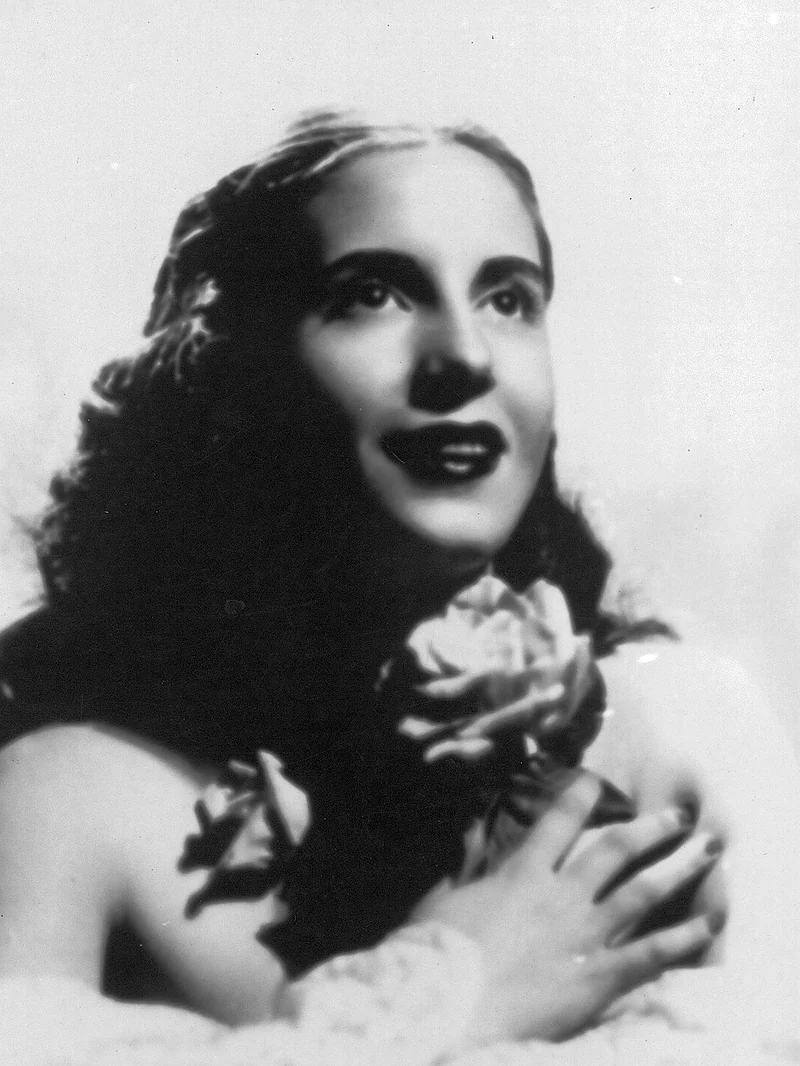
| 22 Quotes | |
| Born as | Maria Eva Duarte |
| Known as | Evita; Eva Peron |
| Occup. | Statesman |
| From | Argentina |
| Born | May 7, 1919 Los Toldos, Buenos Aires Province, Argentina |
| Died | July 26, 1952 Buenos Aires, Argentina |
| Cause | cervical cancer |
| Aged | 33 years |
| Cite | |
Citation Formats
APA Style (7th ed.)
Evita peron biography, facts and quotes. (2026, February 2). FixQuotes. https://fixquotes.com/authors/evita-peron/
Chicago Style
"Evita Peron biography, facts and quotes." FixQuotes. February 2, 2026. https://fixquotes.com/authors/evita-peron/.
MLA Style (9th ed.)
"Evita Peron biography, facts and quotes." FixQuotes, 2 Feb. 2026, https://fixquotes.com/authors/evita-peron/. Accessed 5 Mar. 2026.
Early Life and Background
Maria Eva Duarte was born on 1919-05-07 in Los Toldos, Buenos Aires Province, the youngest of five children of Juana Ibarguren. Her father, Juan Duarte, maintained a second household in nearby Chivilcoy; when he died in 1926, the stigma of illegitimacy and the abrupt loss of support hardened the familys precarious position. The early drama of being turned away from spaces of respectability - and the mothers insistence on dignity anyway - became the emotional template for the adult "Evita": a politics built from humiliation remembered in detail.In the early 1930s the Duartes moved to Junin, where Eva finished school while absorbing the sharp class lines of small-town Argentina: landowners and professionals on one side, domestic work and insecure wages on the other. She cultivated an intense, theatrical self-command, learning that attention could be converted into leverage. At 15 she left for Buenos Aires, a poor provincial girl with an iron conviction that proximity to power was itself a form of survival.
Education and Formative Influences
Eva had no university education; her formative schooling was the city itself in the decade of Argentinas "Infamous Decade" of election fraud, oligarchic patronage, and the cultural pull of radio, cinema, and tango. She worked as an actress and radio performer, joined the Asociacion Radial Argentina, and learned how mass emotion could be choreographed through voice, repetition, and narrative. Those years trained her to read an audience like a precinct map and to treat empathy as a political instrument rather than a private mood.Career, Major Works, and Turning Points
A decisive turning point came in January 1944, when Eva met Colonel Juan Domingo Peron at a benefit for the San Juan earthquake; by October 1945 she was at the center of the crisis that followed his arrest, helping mobilize the working-class demonstration of 17 October that forced his release and made Peronism a mass movement. After their marriage in 1945 and Perons election in 1946, Evita became the regimes most visible moral voice, visiting factories, unions, and shantytowns while mastering the new language of state publicity. Her European "Rainbow Tour" in 1947 sought international legitimacy. At home she built the Eva Peron Foundation (1948), distributing housing, schools, hospitals, pensions, and direct aid with a speed that bypassed old bureaucracies and enraged traditional elites. She was central to the push for womens suffrage (Law 13.010, 1947) and organized the Partido Peronista Femenino (1949), creating an electoral machine of female delegates loyal to her. In 1951 labor leaders urged her vice-presidential candidacy; she declined after the "renunciamiento", as cancer advanced. She died on 1952-07-26, 33 years old, after a final period of extreme discipline in public and escalating pain in private.Philosophy, Style, and Themes
Evitas inner life fused grievance with vocation. She never wrote an abstract theory so much as a moral drama in which the "descamisados" were the protagonists and the old oligarchy the antagonist. Her language was direct, polarizing, and intimate - a style shaped by radio and by an almost physical need to be heard over the noise of contempt. The line “When the rich think about the poor, they have poor ideas”. captures her suspicion that elite charity concealed ignorance, and that redistribution required power, not pity. That suspicion was personal as well as political: she spoke as someone who had been inspected, judged, and dismissed.Her themes were speed, sacrifice, and identification. “Time is my greatest enemy”. reads as more than a phrase from illness; it reveals a psyche that treated delay as betrayal, pushing her to act with relentless urgency and to measure love in results delivered. Her feminism was similarly experiential and combative: “I demanded more rights for women because I know what women had to put up with”. She framed rights not as an academic demand but as repayment for endurance, and she asked supporters for something close to devotion. Admirers heard sanctity; opponents heard fanaticism. Both were responding to the same core: a woman who converted private wounds into a public mission and demanded that the state take sides.
Legacy and Influence
Evita became Argentinas most potent political icon - part saint, part agitator, part martyr - and her image outlived the government that created it. After the 1955 coup, the military regime banned Peronist symbols and even hid her embalmed body for years, an act that confirmed her mythic status. Her foundation model of direct, charismatic welfare and her mobilization of women reshaped how Argentine politics imagined the poor as a sovereign constituency. Across Latin America she remains a template for populist legitimacy, proving how voice, spectacle, and genuine material relief can fuse into a durable mass identity; in global culture she persists through memoir, film, and musical adaptations, but in Argentina her meaning remains contested precisely because she still touches the countrys deepest argument about who the nation is for.Our collection contains 22 quotes written by Evita, under the main topics: Witty One-Liners - Motivational - Wisdom - Freedom - Kindness.