
Eyvind Johnson Biography Quotes 6 Report mistakes
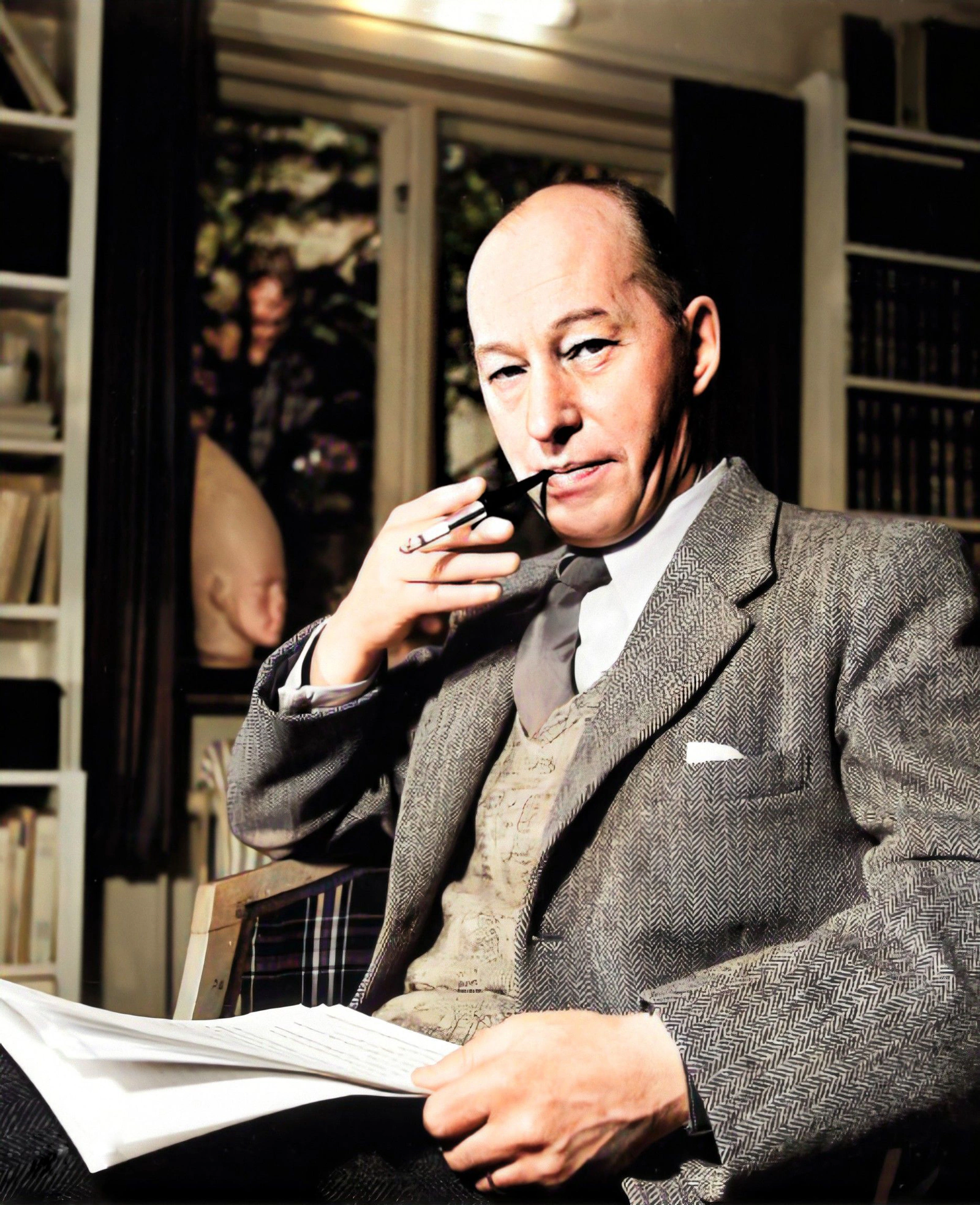
| 6 Quotes | |
| Born as | Olof Edvin Verner Jonsson |
| Occup. | Author |
| From | Sweden |
| Born | July 29, 1900 Boden, Sweden |
| Died | August 25, 1976 Stockholm, Sweden |
| Aged | 76 years |
| Cite | |
Citation Formats
APA Style (7th ed.)
Eyvind johnson biography, facts and quotes. (2026, February 11). FixQuotes. https://fixquotes.com/authors/eyvind-johnson/
Chicago Style
"Eyvind Johnson biography, facts and quotes." FixQuotes. February 11, 2026. https://fixquotes.com/authors/eyvind-johnson/.
MLA Style (9th ed.)
"Eyvind Johnson biography, facts and quotes." FixQuotes, 11 Feb. 2026, https://fixquotes.com/authors/eyvind-johnson/. Accessed 27 Mar. 2026.
Early Life and Background
Eyvind Johnson, born Olof Edvin Verner Jonsson in 1900 in northern Sweden, came of age in the forests and river districts of Norrbotten. His childhood was modest and marked by the realities of seasonal labor, migration, and the sparse opportunities of a peripheral province. He left formal schooling early, gravitating toward self-education through libraries and the cultural life he could reach from afar. In his teens and early twenties he held a series of jobs, learning firsthand about the working lives that would later inform his fiction. The adoption of the pen name Eyvind Johnson signaled a commitment to writing and a wish to distinguish himself from the many Swedish Jonssons of his time.Emergence as a Writer
Johnson began publishing in the early 1920s, as Swedish literature was opening to European modernism. His earliest works revealed a keen ear for voices from the margins and a willingness to experiment with point of view and time. He aligned himself with writers who believed the novel could bear witness to social change while exploring the complexity of consciousness. That balance between narrative innovation and ethical engagement became his signature.European Years and Influences
Extended stays on the Continent, especially in Germany and France during the late 1920s, sharpened Johnsons sense of the novel as a transnational form. Encounters with modernist techniques, urban life, and debates about democracy and authoritarianism deepened his craft. He followed the European discussion about the responsibilities of writers in an age of ideological struggle, a question that would recur across his career.The Olof Sequence
In the mid-1930s Johnson published a cycle of semi-autobiographical novels often grouped as Romanen om Olof (The Novel about Olof). Through the figure of Olof, a boy from the north moving toward adulthood and the city, Johnson braided memory, social observation, and interior monologue into a broad portrait of early twentieth-century Sweden. These books did more than recount a personal apprenticeship; they mapped the transformation of a country and a class, showing how reading, work, and friendship forged a life in letters.War Years: The Krilon Trilogy
During the Second World War Johnson wrote the Krilon trilogy, an ambitious allegory of moral steadfastness under pressure. By creating a circle of Stockholm businessmen and intellectuals who resist manipulation and intimidation, he staged a defense of civil society against the seductions of totalitarian ideology. The books, published during the war years, resonated as a call to clarity and courage. Swedish readers recognized that the trilogy spoke to the immediate crisis while also asking enduring questions about freedom and truth.Postwar Work and Historical Imagination
After 1945 Johnson expanded his range with historical novels that reflected on power, exile, and the fate of individuals in turbulent times. In Strandernas svall (often known in English as Return to Ithaca), he reimagined the Odyssey to probe the uncertainties of homecoming after long conflict. In Drommar om rosor och eld (Dreams of Roses and Fire), he turned to a notorious seventeenth-century case to examine hysteria, authority, and the vulnerability of justice. These works fused meticulous structure with an ethical vision, illustrating Johnsons belief that historical distance could sharpen insight into the present.Critic and Public Voice
Alongside his novels, Johnson served as a critic and essayist, contributing to major Swedish newspapers and journals. He championed international literature, argued for intellectual openness, and kept faith with a democratic ideal that rejected both fascism and Stalinism. His lucid criticism helped introduce Swedish readers to new currents while clarifying the stakes of literary form. Colleagues in the press and publishing, particularly in Stockholm, became essential interlocutors, and his exchanges with critics and editors shaped the reception of his books.Circles and Collaborations
Johnson stood in sustained dialogue with contemporaries who drove the modern breakthrough in Swedish letters. Artur Lundkvist, a powerful advocate for modernism, and Harry Martinson, whose prose and poetry captured both landscapes and cosmic scale, were among the most visible figures in that generation, and their conversations with Johnson, public and private, enriched the field. He was also close to younger and older peers in the literary community who tested ideas with him in salons, editorial offices, and Academy meetings. These relationships contributed not only to his own development but to the evolving standards of Swedish prose.Swedish Academy and the Nobel Prize
Elected to the Swedish Academy in the mid-twentieth century, Johnson took on duties that included evaluating international literature and participating in the institutional life of Swedish letters. In 1974 he was awarded the Nobel Prize in Literature, a distinction he shared with Harry Martinson. The decision drew attention both for the literary justification and because both laureates were sitting Academy members, a circumstance that prompted public debate about procedure and conflict of interest. The award cited Johnsons mastery of narrative art with wide historical and geographical reach and his steadfast commitment to freedom, themes that had defined his career since the interwar years.Style and Themes
Johnson cultivated a prose that could move from intimate recollection to broad historical tableau without losing clarity. He explored memory as a layered structure, used shifting viewpoints to test moral claims, and favored narrative architectures that drew readers into active judgment. His books return to questions of belonging and estrangement, the pressures of ideology, the dignity of work, and the fragile gains of democratic society. The northern landscapes of his youth, the streets of Stockholm, and imagined ancient or early modern settings all served as stages for these concerns.Later Years and Legacy
Johnson continued to write and to speak as a public intellectual into the 1960s and 1970s. He remained attentive to European debates and to the place of the novel in a media-saturated culture. His death in 1976 closed a career that had spanned the transformation of Sweden from a poor, rural country to a modern welfare state. In the decades since, his books have endured in Swedish schools and universities, and translations have carried his voice abroad. Scholars often place him alongside Martinson and Lundkvist as central to the twentieth-century Swedish canon, emphasizing his synthesis of formal innovation and civic conscience. For readers and writers, his work remains a model of how narrative art can hold together individual experience and the large movements of history, bearing witness to the perils and possibilities of modern life.Our collection contains 6 quotes written by Eyvind, under the main topics: Justice - Writing - Poetry - Peace - Legacy & Remembrance.
Eyvind Johnson Famous Works
- 1960 The Days of His Grace (Novel)
- 1949 Dreams of Roses and Fire (Novel)
- 1946 Return to Ithaca (Novel)
- 1934 Here's Your Life (Novel)
Source / external links