
Ezra Pound Biography Quotes 49 Report mistakes
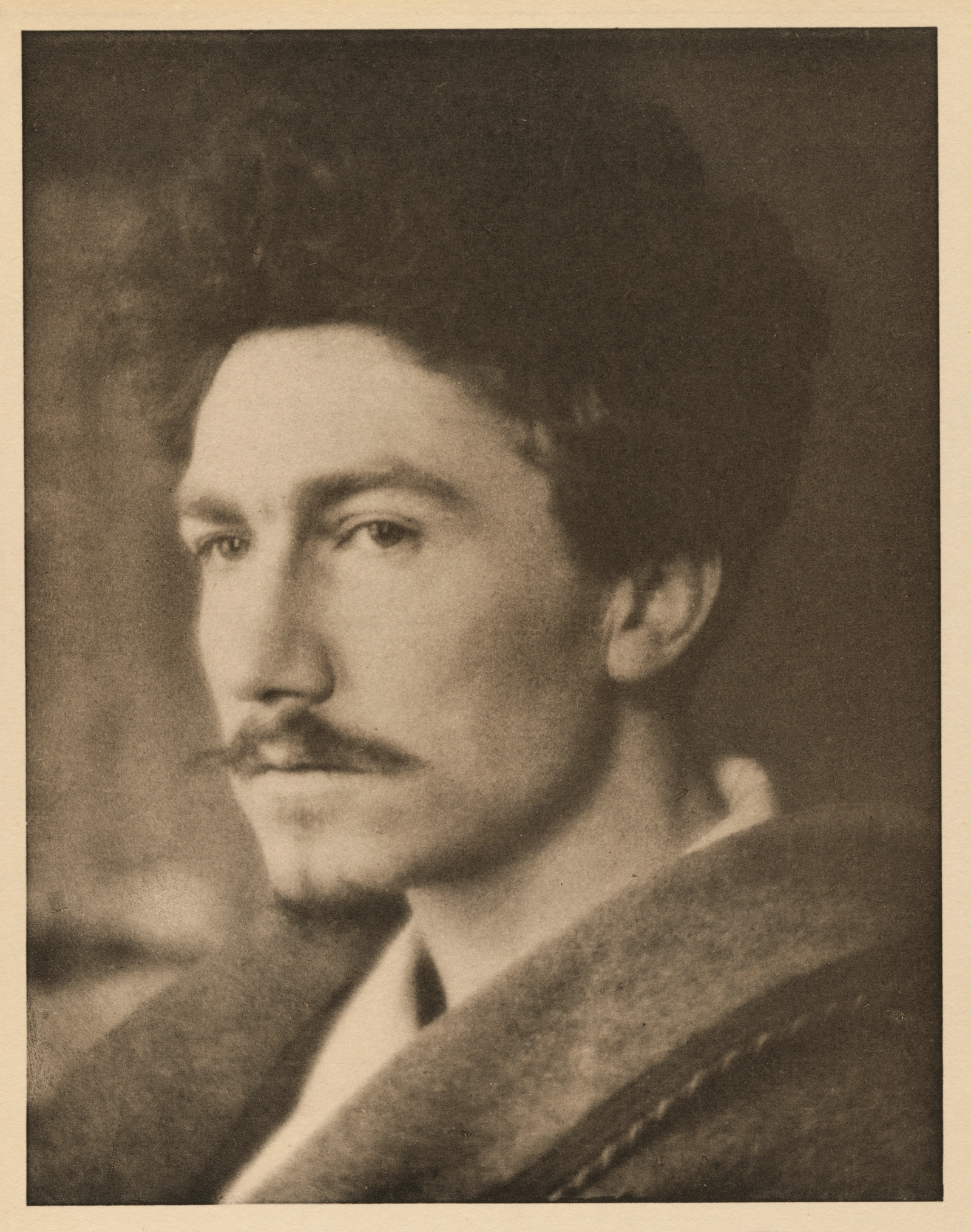
| 49 Quotes | |
| Born as | Ezra Weston Loomis Pound |
| Occup. | Poet |
| From | USA |
| Born | October 30, 1885 Hailey, Idaho Territory, USA |
| Died | November 1, 1972 Venice, Italy |
| Aged | 87 years |
| Cite | |
Citation Formats
APA Style (7th ed.)
Ezra pound biography, facts and quotes. (2026, February 11). FixQuotes. https://fixquotes.com/authors/ezra-pound/
Chicago Style
"Ezra Pound biography, facts and quotes." FixQuotes. February 11, 2026. https://fixquotes.com/authors/ezra-pound/.
MLA Style (9th ed.)
"Ezra Pound biography, facts and quotes." FixQuotes, 11 Feb. 2026, https://fixquotes.com/authors/ezra-pound/. Accessed 25 Mar. 2026.
Early Life and Background
Ezra Weston Loomis Pound was born on October 30, 1885, in Hailey, Idaho Territory, into a family shaped by westward opportunity and the new bureaucratic America. His father, Homer Loomis Pound, worked for the federal land office; his mother, Isabel Weston, came from a more settled Eastern background. When Ezra was still a child the family moved to Pennsylvania, and he grew up in the Philadelphia area, where industry, banks, and the rhythms of modern commerce pressed in on daily life. The contrast between the raw frontier of his birthplace and the clipped propriety of the East mattered to him - he would spend his career arguing that culture had to be made, not inherited, and that institutions could both preserve and suffocate.From early on he cultivated a persona of voracious confidence, part scholar, part provocateur. He read widely, mimicked archaic diction, and set himself the grand task of remaking English poetry by force of will and knowledge. That ambition carried a defensive edge: he wanted to be not merely a poet but a standard-setter, the kind of artist who could command attention by commanding history. Even in youth, his letters and early verse show a mind attracted to systems - of sound, of translation, of economics, of moral accounting - and prone to impatience with what he saw as complacency.
Education and Formative Influences
Pound studied at the University of Pennsylvania and then Hamilton College, absorbing Romance languages, medieval literature, and the idea of the artist as craftsman rather than mere inspirer. He encountered fellow students and faculty who would later intersect with modernism, and he trained himself on Provencal poets, Dante, and the troubadour tradition, which offered a model of lyric precision joined to intellectual ardor. These years fed his later conviction that poetic renewal required technical discipline, historical range, and the nerve to discard what no longer worked.Career, Major Works, and Turning Points
In 1908 he left the United States for Europe, determined to enter the cultural center he felt America lacked, first in Venice and soon in London. There he became an organizing intelligence of early modernism - championing W.B. Yeats, promoting James Joyce, discovering and editing T.S. Eliot, and pushing the Imagist and Vorticist movements toward hard-edged clarity. His own early books, including "Personae" (1909) and "Ripostes" (1912), led to the doctrinal insistence on exact image and musical line, while "Cathay" (1915), drawn from Ernest Fenollosa's notes, showed his gift for translation as creative re-creation. The long poem "The Cantos" (begun 1915) became his life project: a collage of history, economics, myth, and lyric, seeking an alternative canon of cultural sanity. After settling in Italy in the 1920s, his obsession with monetary reform hardened into political conviction; during World War II he broadcast for Italian radio, delivering anti-Allied, anti-Semitic talks that later defined his public infamy. Arrested in 1945, he was held in a U.S. Army detention camp near Pisa, where he wrote "The Pisan Cantos" (published 1948), then was declared mentally unfit to stand trial and confined to St. Elizabeths Hospital in Washington, D.C., from 1946 to 1958. Released at last, he returned to Italy, increasingly silent, dying on November 1, 1972, in Venice.Philosophy, Style, and Themes
Pound's aesthetic began with a moral claim about accuracy: the artist must name what is there, not what convention permits. His famous insistence that “Technique is the test of sincerity. If a thing isn't worth getting the technique to say, it is of inferior value”. was less a classroom maxim than a self-discipline meant to ward off sentimentality and cant. In practice this became an ethic of compression, sharp cadence, and quotation as method: he treated the past as usable material, cutting and splicing languages and epochs to make a poem that argued with history while living inside it. His best work turns scholarship into sensation - luminous detail, sudden tenderness, and an ear trained on the energizing friction between diction and rhythm.Yet the inner life that powered his precision also fed his failures: a hunger for total explanation, a distrust of liberal institutions, and a combustible certainty that culture could be repaired by exposing hidden causes. He rejected the idea of art as private decoration, insisting instead that “Literature does not exist in a vacuum. Writers as such have a definite social function exactly proportional to their ability as writers. This is their main use”. That sense of mission, fused to economic paranoia and a crusader's temperament, pushed him toward propaganda and conspiracy, including virulent anti-Semitism that cannot be separated from the historical consequences of his broadcasts. Still, his ideal of lasting urgency - “Literature is news that stays news”. - explains both the magnetism of his program and the way his work continues to demand judgment, not merely admiration.
Legacy and Influence
Pound helped invent the infrastructure of modernism: he edited, introduced, cajoled, placed manuscripts, raised money, and articulated principles that shaped English-language poetry for a century. His impact is measurable in the cleaned line of Imagism, the documentary ambition of long poems after "The Cantos", and the modern practice of translation as a generative art rather than a dutiful one. At the same time, his political record stands as a cautionary emblem of artistic brilliance unmoored from ethical responsibility, forcing later readers to confront how aesthetic rigor can coexist with moral disaster. The result is a legacy both foundational and radioactive - a poet who changed what poetry could do, and a public figure whose errors remain part of the meaning of his work.Our collection contains 49 quotes written by Ezra, under the main topics: Witty One-Liners - Motivational - Ethics & Morality - Truth - Wisdom.
Other people related to Ezra: Ernest Hemingway (Novelist), Walt Whitman (Poet), T. S. Eliot (Poet), Natalie Clifford Barney (Author), George Oppen (Poet), W. S. Merwin (Poet), Stan Brakhage (Director), Amiri Baraka (Poet), Margaret Anderson (Editor), Basil Bunting (Poet)
Ezra Pound Famous Works
- 1956 Rock-Drill (Poetry)
- 1948 The Pisan Cantos (Poetry)
- 1938 Guide to Kulchur (Non-fiction)
- 1934 ABC of Reading (Non-fiction)
- 1920 Hugh Selwyn Mauberley (Poetry)
- 1919 Homage to Sextus Propertius (Poetry)
- 1917 The Cantos (Poetry)
- 1916 Gaudier-Brzeska: A Memoir (Biography)
- 1916 Lustra (Poetry)
- 1915 Cathay (Poetry)
- 1912 Ripostes (Poetry)
- 1910 The Spirit of Romance (Non-fiction)
- 1909 Personae (Poetry)
- 1908 A Lume Spento (Poetry)