
Fannie Lou Hamer Biography Quotes 7 Report mistakes
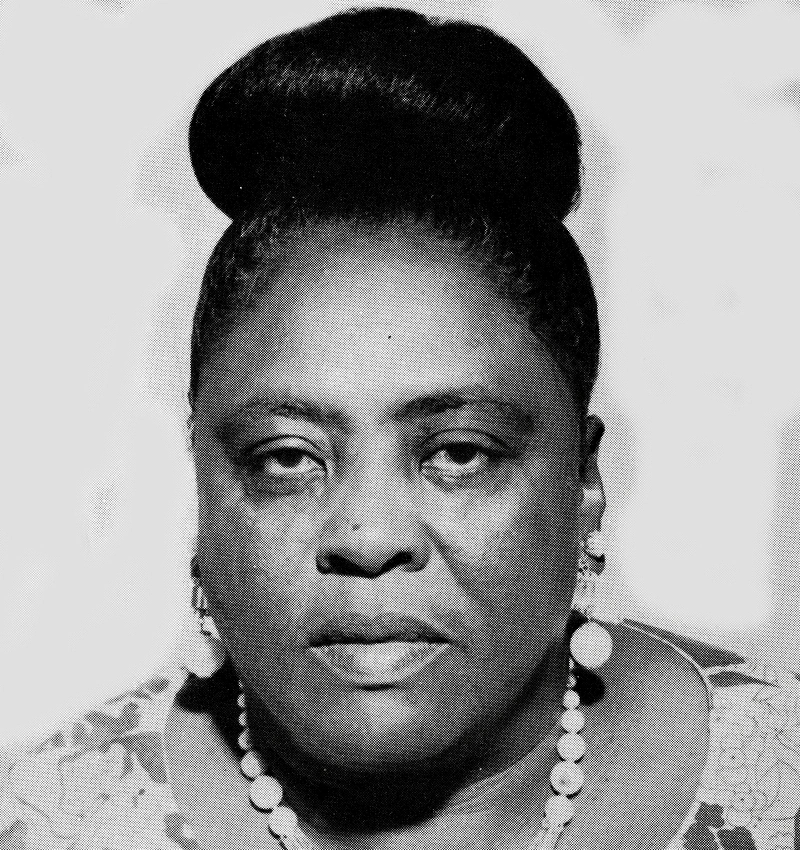
| 7 Quotes | |
| Born as | Fannie Lou Townsend |
| Known as | Fannie Lou Townsend Hamer |
| Occup. | Activist |
| From | USA |
| Born | October 6, 1917 Montgomery County, Mississippi, USA |
| Died | March 14, 1977 Mound Bayou, Mississippi, USA |
| Aged | 59 years |
| Cite | |
Citation Formats
APA Style (7th ed.)
Fannie lou hamer biography, facts and quotes. (2026, February 11). FixQuotes. https://fixquotes.com/authors/fannie-lou-hamer/
Chicago Style
"Fannie Lou Hamer biography, facts and quotes." FixQuotes. February 11, 2026. https://fixquotes.com/authors/fannie-lou-hamer/.
MLA Style (9th ed.)
"Fannie Lou Hamer biography, facts and quotes." FixQuotes, 11 Feb. 2026, https://fixquotes.com/authors/fannie-lou-hamer/. Accessed 26 Mar. 2026.
Early Life and Background
Fannie Lou Hamer was born Fannie Lou Townsend on October 6, 1917, in Montgomery County, Mississippi, and raised in the Delta in Sunflower County near Ruleville, a landscape shaped by cotton, debt, and white supremacy enforced at gunpoint and in courtrooms. The youngest of 20 children in a family of sharecroppers, she learned early that survival depended on work that began before dawn and ended after dark, and on the small protections of kinship, church, and hard-won reputation. The Delta also taught her the everyday psychology of domination - how intimidation could be delivered with a smile, how poverty could be made to feel like personal failure, and how political exclusion could be normalized as "the way things are".As a young woman she married Perry "Pap" Hamer and became a sharecropper and plantation timekeeper, a role that gave her a sharp view of how labor was recorded, wages were shaved, and Black families were kept perpetually vulnerable. Her body carried the era's violence: in 1961, during treatment for a uterine tumor, a white doctor performed a nonconsensual hysterectomy - the "Mississippi appendectomy" common in segregated hospitals - ending her ability to have children and deepening her understanding that racial power reached into the most intimate spaces. She poured that grief into community life, especially the Black church, where gospel cadence, moral clarity, and collective testimony trained the voice that would later shake the nation.
Education and Formative Influences
Hamer's formal schooling was limited by the demands of plantation labor, yet she was intellectually formed by the institutions that remained open to poor Black Mississippians: the church, mutual-aid networks, and the oral culture of sermons and spirituals. In the early 1960s, workshops and mass meetings linked to the Student Nonviolent Coordinating Committee (SNCC) and local organizers such as Bob Moses reframed what she already sensed - that humiliation was political, that fear was learned, and that citizenship could be practiced before it was granted. She absorbed the discipline of nonviolent direct action, but also the hard pragmatism of rural people who understood that rights on paper meant little without protection, organization, and economic leverage.Career, Major Works, and Turning Points
In August 1962 Hamer attended a voter registration meeting in Ruleville and joined an attempt to register at the Sunflower County courthouse; soon after, the plantation owner forced her off the land, and she entered the movement as a full-time organizer with SNCC. Her life became a sequence of escalating confrontations: constant threats, shootings at homes where she stayed, and the notorious June 1963 beating in the Winona, Mississippi jail, where police and inmates brutally assaulted her, leaving lasting damage to her kidneys, eyes, and spine. Rather than silence her, the beating clarified her public mission. She helped build the Mississippi Freedom Democratic Party (MFDP) to challenge the all-white Mississippi delegation at the 1964 Democratic National Convention; her nationally televised testimony exposed the cost of Black citizenship in the South and embarrassed a Democratic establishment trying to manage civil rights without surrendering power. After the MFDP was denied full seating, she continued organizing - from Freedom Summer canvassing to later efforts in economic justice and community development, including Freedom Farm Cooperative (founded 1969) and the Head Start program work in the Delta - insisting that political rights and material survival were inseparable.Philosophy, Style, and Themes
Hamer's philosophy fused Christian moral witness with a realist's understanding of institutions. She believed freedom was not divisible - a claim both ethical and strategic - and she said it in a line that became her signature: “Nobody's free until everybody's free”. The sentence reveals her inner life: she refused the false comfort of individual escape, perhaps because sharecropping had taught her how one family's "advance" could be canceled by a landlord's ledger. For Hamer, liberation required a broadened sense of self, a willingness to carry other people's fear as if it were your own - and then to act anyway.Her style was plainspoken, musical, and unsparing, built to cut through euphemism. When she mocked civic mythology - “With the people, for the people, by the people. I crack up when I hear it; I say, with the handful, for the handful, by the handful, cause that's what really happens”. - she was diagnosing a system that used democracy as a costume for oligarchy, especially in places where registrars, sheriffs, and party bosses could decide who counted as "the people". Yet she was not cynical; she was demanding. Her famous cry, “I am sick and tired of being sick and tired”. , was less a complaint than a psychological turning point - the moment exhaustion becomes resolve, when suffering is converted into an unshakable refusal to cooperate with your own erasure. Across speeches and organizing, her themes returned to voting as dignity, bodily autonomy as civil rights, and economic self-determination as the only security a hostile state could not easily revoke.
Legacy and Influence
Hamer died on March 14, 1977, in Mound Bayou, Mississippi, after years of illness compounded by injuries from violence and the stresses of organizing, but her influence outlived the headlines that first made her famous. She helped redefine the civil rights movement's public face: not only lawyers and ministers, but poor rural Black women whose authority came from lived truth. Her MFDP challenge pushed the Democratic Party toward reforms that reshaped delegate selection, while her cooperative work anticipated later movements for food sovereignty, community land control, and health justice. In memory and in quotation, Hamer endures as a model of democratic seriousness - someone who understood that rights are not simply requested, but built, defended, and made real in the everyday lives of people who were never supposed to speak for the nation.Our collection contains 7 quotes written by Fannie, under the main topics: Equality - Human Rights - Team Building.
Other people related to Fannie: James Hal Cone (Theologian)