
Fanny Crosby Biography Quotes 3 Report mistakes
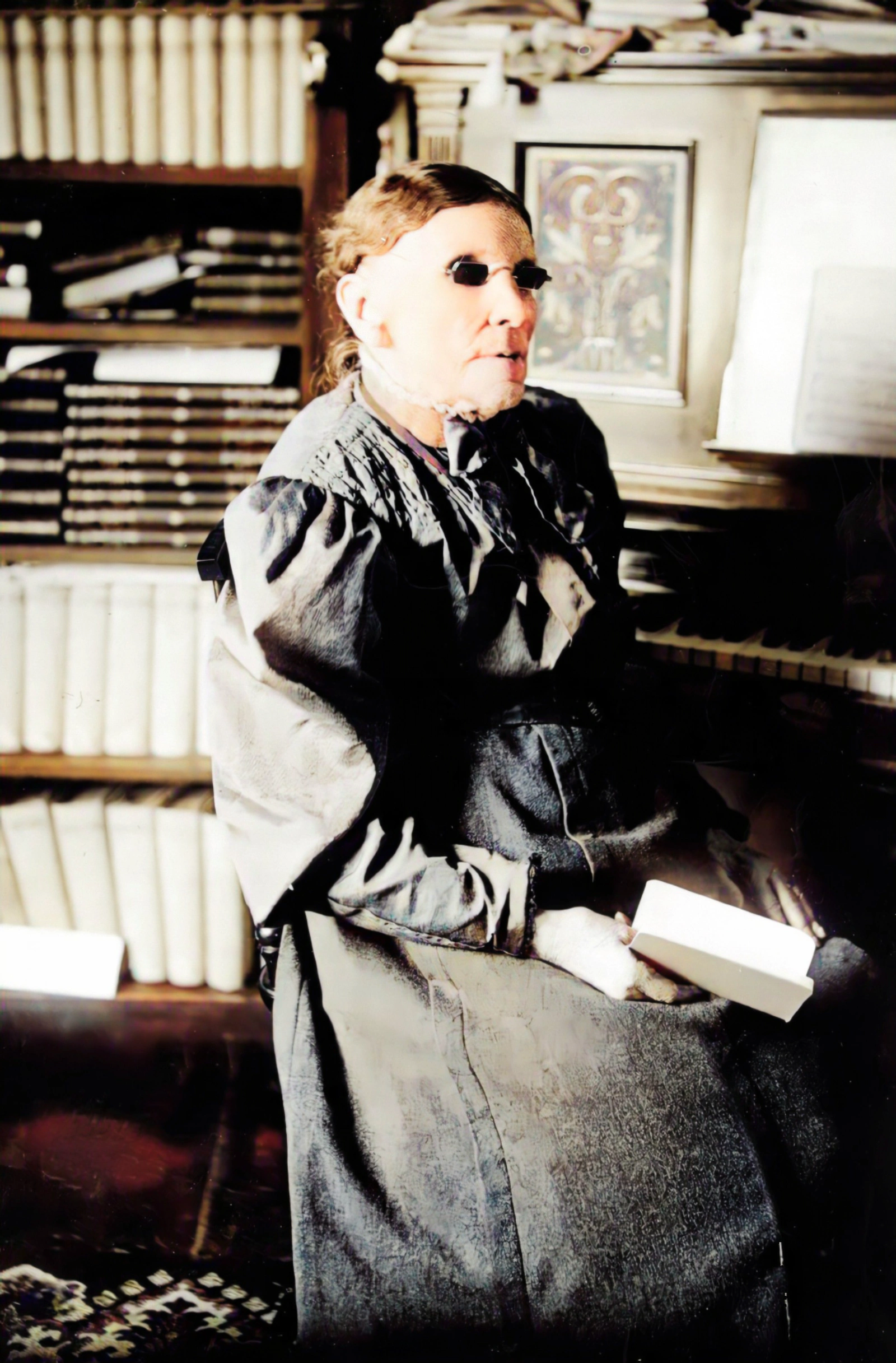
| 3 Quotes | |
| Born as | Frances Jane Crosby |
| Known as | Frances Jane van Alstyne |
| Native name | Fanny J. Crosby |
| Occup. | Poet |
| From | USA |
| Spouse | Alexander van Alstyne Jr. (1858-1902) |
| Born | March 24, 1820 Brewster, New York, USA |
| Died | February 12, 1915 Bridgeport, Connecticut, USA |
| Cause | Natural causes |
| Aged | 94 years |
| Cite | |
Citation Formats
APA Style (7th ed.)
Fanny crosby biography, facts and quotes. (2026, February 11). FixQuotes. https://fixquotes.com/authors/fanny-crosby/
Chicago Style
"Fanny Crosby biography, facts and quotes." FixQuotes. February 11, 2026. https://fixquotes.com/authors/fanny-crosby/.
MLA Style (9th ed.)
"Fanny Crosby biography, facts and quotes." FixQuotes, 11 Feb. 2026, https://fixquotes.com/authors/fanny-crosby/. Accessed 25 Mar. 2026.
Early Life and Background
Frances Jane Crosby was born on March 24, 1820, in the hamlet of Brewster in Putnam County, New York, at the edge of a young republic whose religious life was being reshaped by revival, reform, and print. Her father, John Crosby, died when she was an infant, leaving her mother, Mercy Crosby, to support the household through domestic work. That early absence, and the practical austerity it imposed, later surfaced in Crosby's lifelong preoccupation with consolation and steadfastness - virtues prized in a culture that expected women to carry grief quietly while sustaining others.She was blinded in infancy after an eye inflammation was treated improperly, and she grew up navigating the world through memory, sound, and the cadences of speech. In the Crosby home, her grandmother Eunice read the Bible aloud until its phrasing became a mental architecture for the child, and visitors remarked on her ability to recite long passages by ear. Before fame, her inward life was already trained: the discipline of memorization, the intimacy of spoken scripture, and the emotional weather of early loss combined to make language not a decoration but a form of refuge and power.
Education and Formative Influences
In 1835 she entered the New York Institution for the Blind in New York City, first as a student and later as a teacher, remaining connected to the school for well over a decade. There she studied literature, history, rhetoric, and music in an environment that treated blindness as compatible with intellectual ambition, and she encountered a dense network of clergy, philanthropists, and civic leaders who visited the institution as part of the era's reform-minded culture. Crosby read widely, practiced public recitation, and absorbed the period's confidence in moral uplift through art; this was also where she learned to write for audiences beyond the parlor, shaping poems meant to be heard, remembered, and repeated.Career, Major Works, and Turning Points
Crosby began publishing as a young woman and gained national notice with her book "The Blind Girl and Other Poems" (1844), which positioned her as a public literary figure at a time when sentiment and oratory could create celebrity. She appeared in civic and political contexts, even meeting U.S. presidents, but her most consequential turn came after the Civil War when she shifted from general verse to hymn texts, working within New York City's religious and musical publishing world. Collaborations with composers and publishers - among them William B. Bradbury in earlier song work and later figures such as Ira D. Sankey in the gospel-song boom - helped her write at astonishing speed, often under pen names to avoid saturating hymnals with "Fanny Crosby". The result was a vast devotional output that included enduring hymns such as "Blessed Assurance", "Safe in the Arms of Jesus", "Pass Me Not, O Gentle Savior", and "To God Be the Glory", works that braided simple meters to melodies designed for congregational singing and mass circulation.Philosophy, Style, and Themes
Crosby's inner world was built around transmuting limitation into vocation. She resisted being framed as an emblem of tragedy and instead used blindness as a lens for spiritual immediacy - a way to emphasize hearing, memory, and the felt presence of the unseen. The best of her writing is not abstract theology but emotional engineering: she writes to carry the singer from fear to steadiness, from bereavement to a usable hope. Even when she addresses vastness and peril, the intent is not to terrify but to stage the human soul before immensities it cannot control: “Can ye fathom the ocean, dark and deep, where the mighty waves and the grandeur sweep?” The question is rhetorical, a confession of finitude that makes room for trust.Her style favors clear nouns, strong verbs, and images a working congregation could inhabit - home, arms, harbor, voice, light - arranged with the mnemonic logic of oral culture. The sentimentality critics sometimes note is also a strategy: she aims for emotional accessibility so that doctrine can be carried in the body through song. Her poems and hymns repeatedly return to repair after fracture, implying a psychology acquainted with loss but unwilling to surrender to it: “Chords that were broken will vibrate once more”. Grief, too, is made speakable, and death is pictured less as annihilation than as relational transition, a continuation of love in another key: “The angel of mercy, the child of love, together had flown to the realms above”. In such lines, Crosby's consolation is not denial; it is a practiced art of re-seeing suffering as part of a larger narrative of care.
Legacy and Influence
By the time of her death on February 12, 1915, Crosby had become one of the most prolific and widely sung poets in American history, her words embedded in Protestant worship across denominations and revived repeatedly in evangelistic movements, radio hymn-sings, and contemporary hymnals. Her influence lies not only in famous titles but in a template: the hymn as intimate testimony, linguistically plain yet emotionally exact, made for ordinary voices. In an era that alternately pitied and patronized disabled people, she asserted authorship and public authority; in a century of upheaval - market revolution, civil war, urbanization - she offered durable language for reassurance without requiring privilege. The enduring Crosby effect is that her lines continue to function as portable comfort, carried by melody into moments when people most need words that will hold.Our collection contains 3 quotes written by Fanny, under the main topics: Hope - Faith - Ocean & Sea.
Frequently Asked Questions
- Who was Fanny Crosby family? Fanny Crosby's family included her husband, Alexander Van Alstyne, and her daughter Frances.
- What was Fanny Crosby cause of death? Fanny Crosby passed away due to arteriosclerosis and heart failure.
- Did Fanny Crosby have a child? Yes, Fanny Crosby had one child, a daughter named Frances.
- Fanny Crosby hymns: Fanny Crosby is known for writing over 8,000 hymns, including 'Blessed Assurance', 'Pass Me Not O Gentle Savior', and 'To God Be the Glory'.
- How did Fanny Crosby go blind? Fanny Crosby went blind due to a medical malpractice during an eye infection treatment when she was an infant.
- How old was Fanny Crosby? She became 94 years old
Fanny Crosby Famous Works
- 1906 Memories of Eighty Years (Autobiography)
- 1897 Bells at Evening and Other Verses (Poetry)
Source / external links