
Fatos Nano Biography Quotes 2 Report mistakes
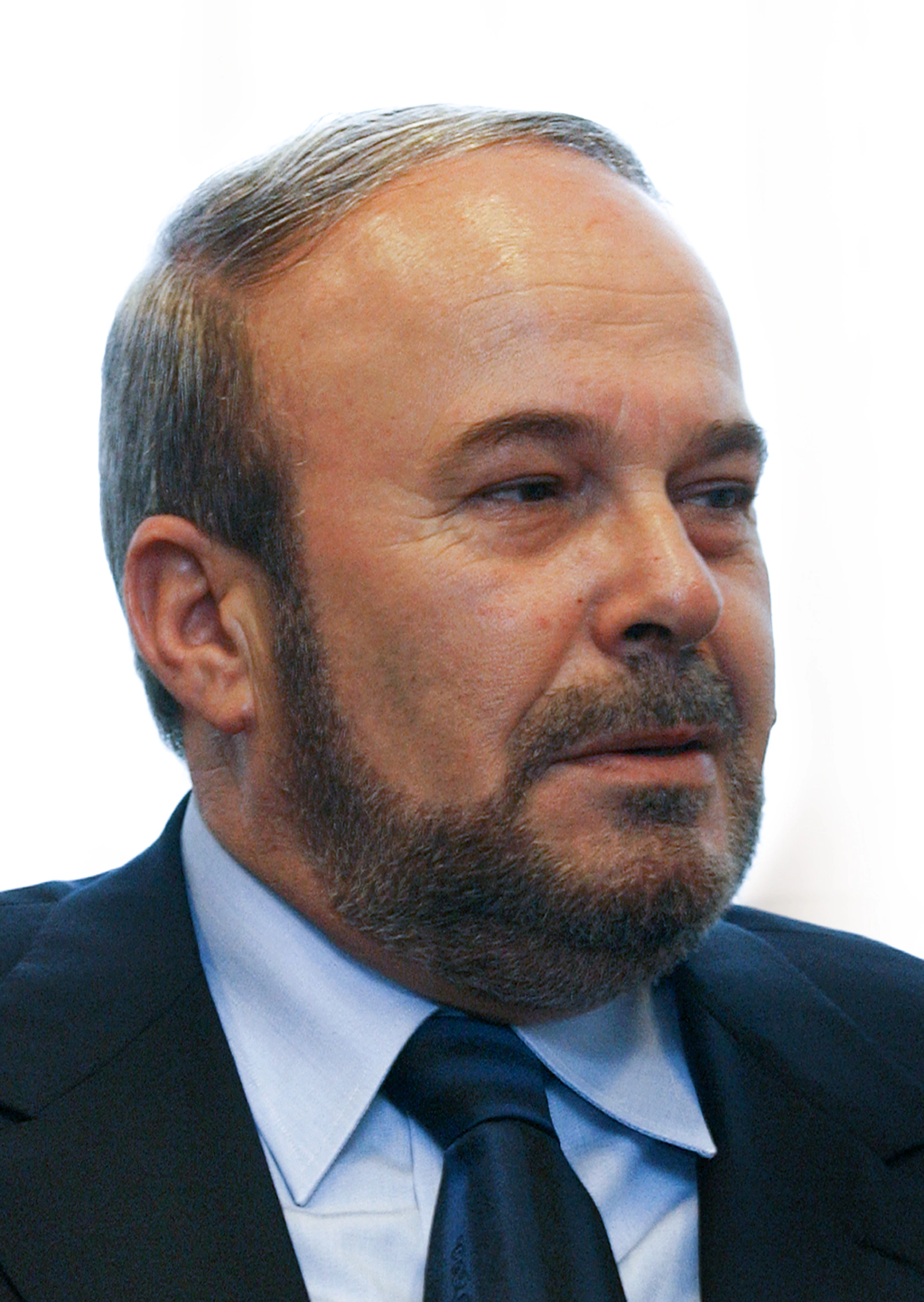
Attr: Jock Fistick / European Communities, Attribution
| 2 Quotes | |
| Born as | Fatos Thanas Nano |
| Occup. | Statesman |
| From | Albania |
| Born | September 16, 1952 Tiranë, Albania |
| Age | 73 years |
| Cite | |
Citation Formats
APA Style (7th ed.)
Fatos nano biography, facts and quotes. (2026, February 11). FixQuotes. https://fixquotes.com/authors/fatos-nano/
Chicago Style
"Fatos Nano biography, facts and quotes." FixQuotes. February 11, 2026. https://fixquotes.com/authors/fatos-nano/.
MLA Style (9th ed.)
"Fatos Nano biography, facts and quotes." FixQuotes, 11 Feb. 2026, https://fixquotes.com/authors/fatos-nano/. Accessed 29 Mar. 2026.
Early Life and Background
Fatos Thanas Nano was born on September 16, 1952, in Tirana, in the tightly controlled Albania of Enver Hoxha. His childhood unfolded inside a hermetic political culture that mixed partisan mythology, pervasive surveillance, and a self-reliant economic model that kept ordinary Albanians materially poor and intellectually fenced in. That environment produced a distinctive Albanian political psychology: public conformity paired with private calculation, and a constant reading of power signals as a form of civic literacy.Nano came of age as a technocrat in a one-party state that prized administrative competence but punished independent networks. The elite world of Tirana offered limited social mobility, yet it also created a cadre of managers and economists who learned to speak in the state language of plans, quotas, and "reform" while quietly recognizing the system's brittleness. Those contradictions - ideological rigidity at the top, improvisation underneath - later shaped Nano's habit of bargaining across factions and his belief that politics was, above all, an art of stabilizing fragile transitions.
Education and Formative Influences
He trained as an economist, studying in Tirana and entering the managerial strata of late communist Albania, where policy was discussed in technical terms even when decisions were ultimately political. The 1980s, marked by stagnation after Hoxha's death and the subsequent rule of Ramiz Alia, were formative: the regime sought limited adjustments without surrendering control, and young officials like Nano learned how incrementalism could both delay collapse and deepen public cynicism. By the time mass protests and emigration pressures hit in the early 1990s, he was equipped to speak the language of modernization to international audiences while understanding the domestic fear of disorder.Career, Major Works, and Turning Points
Nano became a leading figure of the reconstituted Socialist Party of Albania (successor to the Party of Labor) and served as prime minister in multiple, discontinuous stretches during the 1990s and early 2000s, with short terms amid turbulence and a longer tenure from 2002 to 2005. His career pivoted on three turning points: the post-communist struggle to redefine the left as democratic rather than totalitarian; his imprisonment in the mid-1990s under the Democratic Party government of Sali Berisha, which Nano and his supporters portrayed as politically motivated and which burnished his status as a persecuted rival; and the 1997 state breakdown after pyramid schemes collapsed, when Albania slid into armed chaos and his party returned to power amid a broader effort to rebuild institutions and re-anchor the country toward Euro-Atlantic integration. In office, he cultivated ties with Western capitals, pushed for state consolidation, and often governed through elite pacts - a method that created stability at moments but also fed perceptions of a closed, transactional political class.Philosophy, Style, and Themes
Nano's governing philosophy was shaped by transition-era triage: prevent relapse into violence, normalize the state, and move Albania closer to Europe, even if reforms were uneven and compromises unpopular. He tended to see identity conflicts as manipulable and, therefore, preventable - not erased by slogans but managed through incentives, dialogue, and integration. “If we follow the traditional way of thought, there will always be traditional enemies”. In practice, this was both a warning and a self-portrait: he read Balkan politics as a theater where inherited narratives could be activated by "extremist circles" to mobilize fear, and he positioned himself as the broker who could lower the temperature by changing the frame.His style mixed pragmatism with a capacity for provocation, projecting personal confidence while insisting that history could be renegotiated through new regional arrangements. “Today in the era of globalization there is no such issue as borders between states of the same nation”. The sentence reveals a psychological through-line: a technocrat's faith that structural forces - markets, migration, European institutions - dilute the old certainties, and that leaders can ride those currents to domesticate nationalism. Yet the same belief exposed him to criticism, because in a region where borders are trauma as much as geometry, speaking of their irrelevance can sound like strategic ambiguity. Nano's recurring theme was that Albania's future lay in de-escalation and connectivity, but his opponents argued that his dealmaking sometimes substituted for deep institutional trust and allowed corruption narratives to flourish.
Legacy and Influence
Nano remains one of the defining statesmen of Albania's post-communist era: a leader who helped reposition the Socialist Party as a governing force after dictatorship, who navigated the country through periods of acute fragility, and who framed Albania's strategic horizon in European and regional terms rather than autarkic isolation. His legacy is contested - credited for stabilization and diplomatic normalization, blamed for reinforcing a closed political elite and for reforms that lagged behind rhetoric - but his enduring influence lies in how he embodied the transition's central dilemma: building a new state with old personnel, and trying to make reconciliation and integration credible in a society still haunted by both authoritarian memory and the chaos of collapse.Our collection contains 2 quotes written by Fatos, under the main topics: Freedom - Peace.
Source / external links