
Ferdinand Foch Biography Quotes 9 Report mistakes
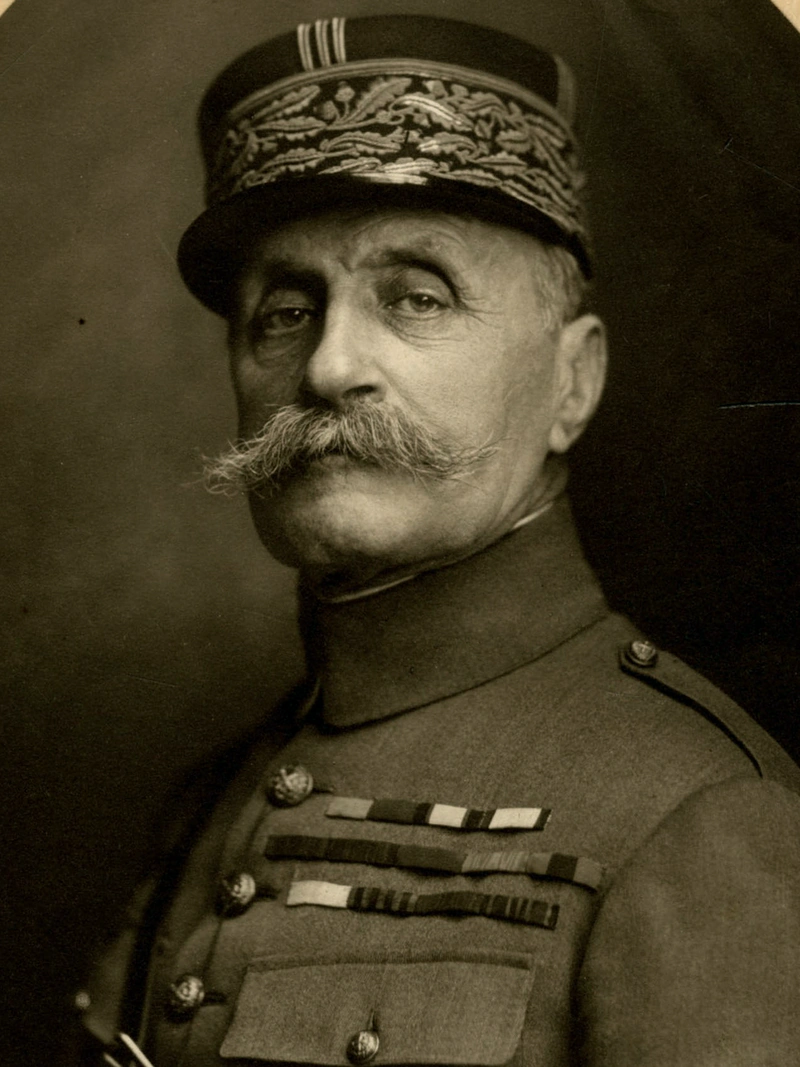
| 9 Quotes | |
| Born as | Ferdinand Jean-Marie Foch |
| Known as | Marshal Foch |
| Occup. | Soldier |
| From | France |
| Born | October 2, 1851 Tarbes, France |
| Died | March 20, 1929 Paris, France |
| Aged | 77 years |
| Cite | |
Citation Formats
APA Style (7th ed.)
Ferdinand foch biography, facts and quotes. (2026, February 11). FixQuotes. https://fixquotes.com/authors/ferdinand-foch/
Chicago Style
"Ferdinand Foch biography, facts and quotes." FixQuotes. February 11, 2026. https://fixquotes.com/authors/ferdinand-foch/.
MLA Style (9th ed.)
"Ferdinand Foch biography, facts and quotes." FixQuotes, 11 Feb. 2026, https://fixquotes.com/authors/ferdinand-foch/. Accessed 27 Mar. 2026.
Early Life and Background
Ferdinand Jean-Marie Foch was born on 2 October 1851 in Tarbes, in the Hautes-Pyrenees, into a France still haunted by the Revolution and reshaped by Napoleon III's Second Empire. His family was Catholic and provincial, part of the serious, educated middle class that valued discipline and public service. The rhythms of the south - parish life, school, and the memory of older frontier wars - formed his early sense that national survival rested on character as much as on resources.The defining shock of his youth was the Franco-Prussian War of 1870-1871, ending in French defeat, the fall of the Empire, the trauma of the Paris Commune, and the loss of Alsace-Lorraine. For the generation coming of age in the new Third Republic, the army became both a profession and a civic mission. Foch absorbed this atmosphere of national recovery: order after upheaval, study after humiliation, and a private conviction that France would return to the front rank only by rebuilding its will.
Education and Formative Influences
Foch entered the Ecole Polytechnique in 1871 and chose the artillery, a branch that rewarded mathematical clarity and a taste for systems. He later attended and then taught at the Ecole Superieure de Guerre (War College), where he forged his reputation as a thinker as well as an officer. Steeped in Napoleon's campaigns and the modern lessons of firepower, he wrote and lectured on operations and command, crystallized in works such as Des principes de la guerre and De la conduite de la guerre, arguing that doctrine must serve decision, not replace it.Career, Major Works, and Turning Points
Commissioned in the post-1871 army, Foch rose steadily through staff and command appointments, combining intellectual authority with a capacity to inspire. At the outbreak of World War I he commanded XX Corps, then the Ninth Army, playing a central role in the First Battle of the Marne (September 1914), where Allied maneuver halted the German advance toward Paris. He later coordinated army groups in northern France, endured the grinding attrition of 1915-1917, and in March 1918 - amid the German Spring Offensive - was appointed Allied Generalissimo, charged with integrating British, French, American, and other forces into a single operational will. He oversaw the coordinated counteroffensives of the Hundred Days, culminating in the Armistice of 11 November 1918, and served as a prominent French voice in the contentious peace settlement.Philosophy, Style, and Themes
Foch's inner life as a commander fused Catholic moral seriousness with a near-volcanic belief in will. His teaching insisted that war is decided by human energy organized toward a clear aim: “The will to conquer is the first condition of victory”. That emphasis was not mere rhetoric; it was his method of countering the paralyzing uncertainty that mass industrial war imposed on decision-makers. He demanded that staffs translate chaos into purpose, returning again and again to the primacy of a defined end-state: “In whatever position you find yourself determine first your objective”. For Foch, the objective was psychological as well as geographic - to impose a tempo that the enemy must answer.His style could appear severe, even theatrical, but it was rooted in the belief that morale is a weapon. The famous report attributed to him at the Marne captures how he used language to keep initiative alive at the moment it seemed to collapse: “My center is giving way, my right is in retreat; situation excellent. I shall attack”. This was not denial of danger but a disciplined reframing of it - treating setbacks as information and attack as the means to recover coherence. Yet his worldview also carried limits: like many senior officers of his era, he underestimated new technology early (his skepticism about aircraft is often quoted) and tended to see machines as secondary to spirit. His lasting contribution was the insistence that command is the art of binding plans, men, and moments into a single decision that moves faster than fear.
Legacy and Influence
Foch died on 20 March 1929 in Paris and was buried at Les Invalides, a symbolic resting place among France's military dead. In the interwar years he was celebrated as the architect of victory and criticized as a hard-line advocate of security against Germany, most famously warning that the Treaty of Versailles was "not peace but an armistice for twenty years" - an assessment later read as prophetic. His writings shaped French and Allied staff education, and his career became a case study in coalition command: how to align national armies without dissolving their differences. In memory, Foch endures less as a tactician of any single battle than as an embodiment of the Third Republic's belief that national catastrophe could be answered by study, discipline, and the deliberate ignition of collective will.Our collection contains 9 quotes written by Ferdinand, under the main topics: Motivational - Leadership - Victory - War - Decision-Making.