
Ferguson Jenkins Biography Quotes 3 Report mistakes
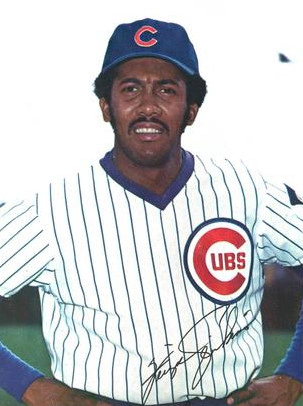
| 3 Quotes | |
| Occup. | Athlete |
| From | Canada |
| Born | December 13, 1943 Chatham, Ontario, Canada |
| Age | 82 years |
| Cite | |
Citation Formats
APA Style (7th ed.)
Ferguson jenkins biography, facts and quotes. (2026, February 11). FixQuotes. https://fixquotes.com/authors/ferguson-jenkins/
Chicago Style
"Ferguson Jenkins biography, facts and quotes." FixQuotes. February 11, 2026. https://fixquotes.com/authors/ferguson-jenkins/.
MLA Style (9th ed.)
"Ferguson Jenkins biography, facts and quotes." FixQuotes, 11 Feb. 2026, https://fixquotes.com/authors/ferguson-jenkins/. Accessed 27 Mar. 2026.
Early Life and Background
Ferguson Arthur Jenkins was born December 13, 1943, in Chatham, Ontario, a small industrial city in Southwestern Canada shaped by rail lines, factories, and a tight-knit Black community with deep roots in the region. In mid-20th-century Canada, Black athletes often encountered subtler but persistent barriers: limited access to elite coaching, fewer scouts, and the social pressure to be exemplary simply to be considered. Jenkins grew up in a household that prized steadiness and personal responsibility, traits that would later surface in the way he carried himself on the mound - controlled, workmanlike, rarely theatrical.Sports were his early language. He excelled in multiple disciplines, including baseball, basketball, and track and field, and the breadth mattered: it built coordination and competitive calm, and it offered him a route out of a narrow set of local expectations. Chatham did not have the glamour of U.S. baseball hotbeds, but it did offer something Jenkins would lean on for decades - an ethic of showing up daily, doing the job, and letting results speak.
Education and Formative Influences
Jenkins developed as a pitcher in an era when durability was not a myth but a job requirement, and when Black players, even after integration, still carried the weight of representation. Signed by the Philadelphia Phillies organization as a teenager in the early 1960s, he learned professional baseball through the grind of the minors, where travel, segregated accommodations in parts of the United States, and constant evaluation hardened his focus. He reached the majors with Philadelphia in 1965, but his formative crucible was learning how to turn raw talent into repeatable mechanics - a craft refined through observation, bullpen discipline, and the willingness to pitch inside the strike zone without fear.Career, Major Works, and Turning Points
A defining turning point came when Jenkins was traded to the Chicago Cubs in 1966, a move that placed him at the center of a proud but pressure-filled franchise and, later, the emotional storm of the 1969 season. With Chicago he became one of baseball's premier workhorses, combining efficiency with stamina: between 1967 and 1972 he won at least 20 games in six straight seasons, routinely completing games and logging heavy innings with remarkably low walk totals. In 1971 he won the National League Cy Young Award, and his excellence turned him into a Canadian sports landmark as well as a Major League standard-bearer. Later stints with the Texas Rangers, Boston Red Sox, and a return to Chicago and Philadelphia extended his career into the early 1980s. When he retired, he owned 284 wins, more than 3, 000 strikeouts, and a reputation for command-first pitching that made hitters earn everything. In 1991, he became the first Canadian inducted into the National Baseball Hall of Fame in Cooperstown.Philosophy, Style, and Themes
Jenkins pitched with an engineer's logic: establish the zone, change speeds, and let impatience do the damage. The core of his self-understanding was mental, not mythical. “Mental attitude and concentration are the keys to pitching”. That sentence reads like a personal doctrine forged in long summers when fatigue and distraction were the real opponents. His control - famously low walk rates for a power-era starter - was not merely technical; it was psychological risk management, a refusal to donate baserunners, and a belief that composure could be trained into muscle memory.His public voice also reveals an athlete who saw baseball as history and obligation, not just entertainment. “I would love to see as many of the black players as possible in today's Major League Baseball make every effort to go to the Negro Leagues Museum and get a first-hand view of how it all started”. Jenkins came of age close enough to the integration era to understand that opportunity had a lineage - and that forgetting it weakens a player's sense of purpose. That same grounding appears in his civic life: “All of the charities we're involved with have touched me in one way or another on a personal level. There are about eight or nine charities that I support”. The phrasing is matter-of-fact, almost managerial, consistent with a temperament that preferred steady commitments over grandstanding - and suggests empathy shaped by personal encounters rather than abstract branding.
Legacy and Influence
Jenkins endures as a template for the durable, thinking ace and as a hinge figure in Canadian baseball identity: proof that a pitcher from Ontario could dominate the game's highest level with intellect, command, and relentless availability. His Hall of Fame status validated generations of Canadian players and widened the imaginative map for scouts and kids north of the border. Just as important, his emphasis on concentration, historical memory, and service positioned him as more than a stat line - a figure who treated excellence as a daily practice and success as something to steward for those coming after.Our collection contains 3 quotes written by Ferguson, under the main topics: Kindness - Training & Practice - Legacy & Remembrance.
Source / external links