
Fernand Leger Biography Quotes 5 Report mistakes
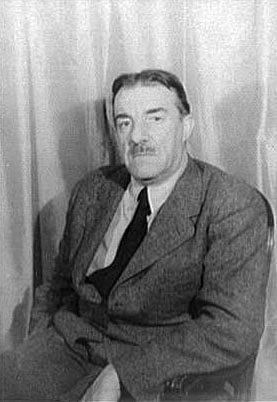
| 5 Quotes | |
| Born as | Joseph Fernand Henri Léger |
| Occup. | Artist |
| From | France |
| Born | February 4, 1881 Argentan, Orne, France |
| Died | August 17, 1955 Gif-sur-Yvette, France |
| Aged | 74 years |
| Cite | |
Citation Formats
APA Style (7th ed.)
Fernand leger biography, facts and quotes. (2026, February 11). FixQuotes. https://fixquotes.com/authors/fernand-leger/
Chicago Style
"Fernand Leger biography, facts and quotes." FixQuotes. February 11, 2026. https://fixquotes.com/authors/fernand-leger/.
MLA Style (9th ed.)
"Fernand Leger biography, facts and quotes." FixQuotes, 11 Feb. 2026, https://fixquotes.com/authors/fernand-leger/. Accessed 27 Mar. 2026.
Early Life and Formation
Joseph Fernand Henri Leger, known as Fernand Leger, was born in 1881 in Argentan, in the Normandy region of France. He grew up far from the established centers of art, and his early experiences included practical work as a draftsman, especially in architectural offices. That discipline sharpened his sense of structure, proportion, and clarity, qualities that would become hallmarks of his mature style. Arriving in Paris at the turn of the century, he supported himself with technical drawing while pursuing art studies on his own terms. He looked closely at the French tradition and at the modern movements then reshaping pictorial language. The retrospective of Paul Cezanne in 1907 proved decisive: Cezanne's method of building form from solid, simplified units showed Leger how modern painting could be both rigorous and radical.Paris and the Avant-Garde
In the years before the First World War, Leger entered the lively circles of the Parisian avant-garde. He became associated with artists who were testing the limits of representation, among them Pablo Picasso, Georges Braque, Juan Gris, Albert Gleizes, Jean Metzinger, and Robert and Sonia Delaunay. Critics such as Guillaume Apollinaire took note of his bold experiments. While often grouped with Cubism, Leger developed an emphatic, cylindrical language of volume that contemporaries sometimes called "tubism". His figures and objects were built from rounded, mechanically precise forms, as if engineered, and often set in dynamic, urban compositions. He exhibited in major Paris salons, where he stood out for the forceful geometry and striking tonal contrasts that distinguished his canvases.War and the Machine Aesthetic
Mobilized during the First World War, Leger served as a sapper at the front and endured the shock of modern warfare. He was wounded during the conflict and spent time in hospital. The experience left a lasting mark. After the war he redirected his art toward the vocabulary of the machine age: pistons, cogs, ladders, pipes, and scaffolds became emblems of a new reality. The human figure, too, took on a solid, engineered presence, integrated into urban and industrial settings. In these years he formed connections with figures who were thinking about modernity across disciplines, including the painter Amedee Ozenfant and the architect Le Corbusier. Although Leger followed his own path, their exchange around clarity, order, and the beauty of everyday objects shaped the era's discourse.The Twenties: Cinema, Design, and Public Art
The 1920s were a decade of invention for Leger. He explored film and collaborated with the director Dudley Murphy on Ballet mecanique, a landmark of experimental cinema in which the rhythms of machines, fragmented objects, and human gestures were orchestrated visually; the composer George Antheil would become associated with the film's bold sound conception. Leger also contributed to stage and costume design and pursued large-scale mural painting, convinced that modern art should address collective spaces, not only private salons. Working with progressive dealers such as Leonce Rosenberg, he reached an international audience. His circle extended across the arts, intersecting with poets like Blaise Cendrars and with photographers and filmmakers such as Man Ray, reflecting the porous boundaries between media in Paris at the time.Teaching and Influence
Alongside his studio work, Leger taught and maintained a busy atelier, welcoming younger artists and designers interested in his constructive approach to form and color. He emphasized legibility, robust contours, and the expressive power of primary colors set against neutral grounds. He believed that modern life, factories, streets, signs, and tools, offered inexhaustible material for art. His methods, rooted in drawing and in clear compositional scaffolding, resonated with architects, designers, and painters working toward a synthesis of the arts. Exchanges with Le Corbusier and Ozenfant, while not diminishing his independence, kept him at the center of debates about the relationship between painting, architecture, and the everyday object.Depression, Commitment, and the 1930s
In the 1930s Leger intensified his engagement with public art and the applied arts. He made murals, worked with ceramic and mosaic, and advocated for an art accessible to a broad public. The decade's political tensions drew him toward social themes, and he created images celebrating workers, builders, and the collective spirit of construction. He collaborated with architects and took part in international exhibitions that brought together artists, designers, and engineers. He remained in dialogue with many peers from the Paris scene, even as the political situation in Europe darkened.Exile in the United States and the War Years
With the outbreak of the Second World War and the occupation of France, Leger spent several years in the United States. Based in New York and traveling within the country, he taught, lectured, and continued to paint. The American cityscape, with its billboards, bridges, and industrial forms, affirmed his long-standing interest in the modern metropolis. He came into contact with American artists and patrons, carrying forward the transatlantic exchange that had begun in the 1910s. During this period he maintained ties with European colleagues in exile and with friends back in France, remaining a visible figure in the broader community of displaced artists and intellectuals.Return to France and Postwar Work
After the war, Leger returned to France and reestablished his studio practice. He joined the conversation around reconstruction and participated in projects that integrated art into architecture through stained glass, mosaic, and painted walls. He aligned himself with the hopes of the period and with movements for social renewal, and his paintings of the late 1940s and early 1950s frequently depicted laborers and builders, monumentalizing the dignity of human work amid cranes, beams, and ladders. In these years his personal life also shaped his legacy: he married the artist Nadia Leger, a close companion and collaborator who would become a key guardian of his estate. Together they envisioned ways to bring his work into public view, reflecting his life-long commitment to art as a civic presence.Style and Themes
Leger's art is distinguished by a few constant features. He simplified forms into strong, rounded units modeled with crisp shading; he used black contours to lock shapes into place; and he set saturated reds, blues, and yellows against whites, grays, and blacks for maximum clarity. Rather than dissolve the object, he clarified it, extracting from machinery and the city the archetypal shapes of modern life. He found allies among peers exploring similar terrain, Picasso and Braque in their construction of form, the Delaunays in their chromatic dynamism, and Le Corbusier in the architectural ordering of space, yet he preserved a singular tone that combined humanism with an unapologetic embrace of the mechanical.Reception and Legacy
During his lifetime Leger moved from the margins of avant-garde experimentation to broad international recognition. Museums and collectors sought his work, and exhibitions charted his development from early Cubist-inflected experiments to the postwar celebrations of work and urbanity. Writers and critics, from Apollinaire onward, framed his achievement within the larger narrative of modernism. He died in 1955 in the Paris region, leaving behind an extensive body of paintings, drawings, films, and public projects. After his death, Nadia Leger played a crucial role in preserving and presenting his oeuvre, contributing to the creation of a dedicated museum and to the visibility of his work in public collections. Today his influence can be traced in later movements that looked to industry, signage, and popular imagery, and in the ongoing dialogue between painting, architecture, and design. His career stands as a testament to an artist who found poetry in the engineered world and gave it a lasting visual form.Our collection contains 5 quotes written by Fernand, under the main topics: Art.
Source / external links