
Fiorello LaGuardia Biography Quotes 2 Report mistakes
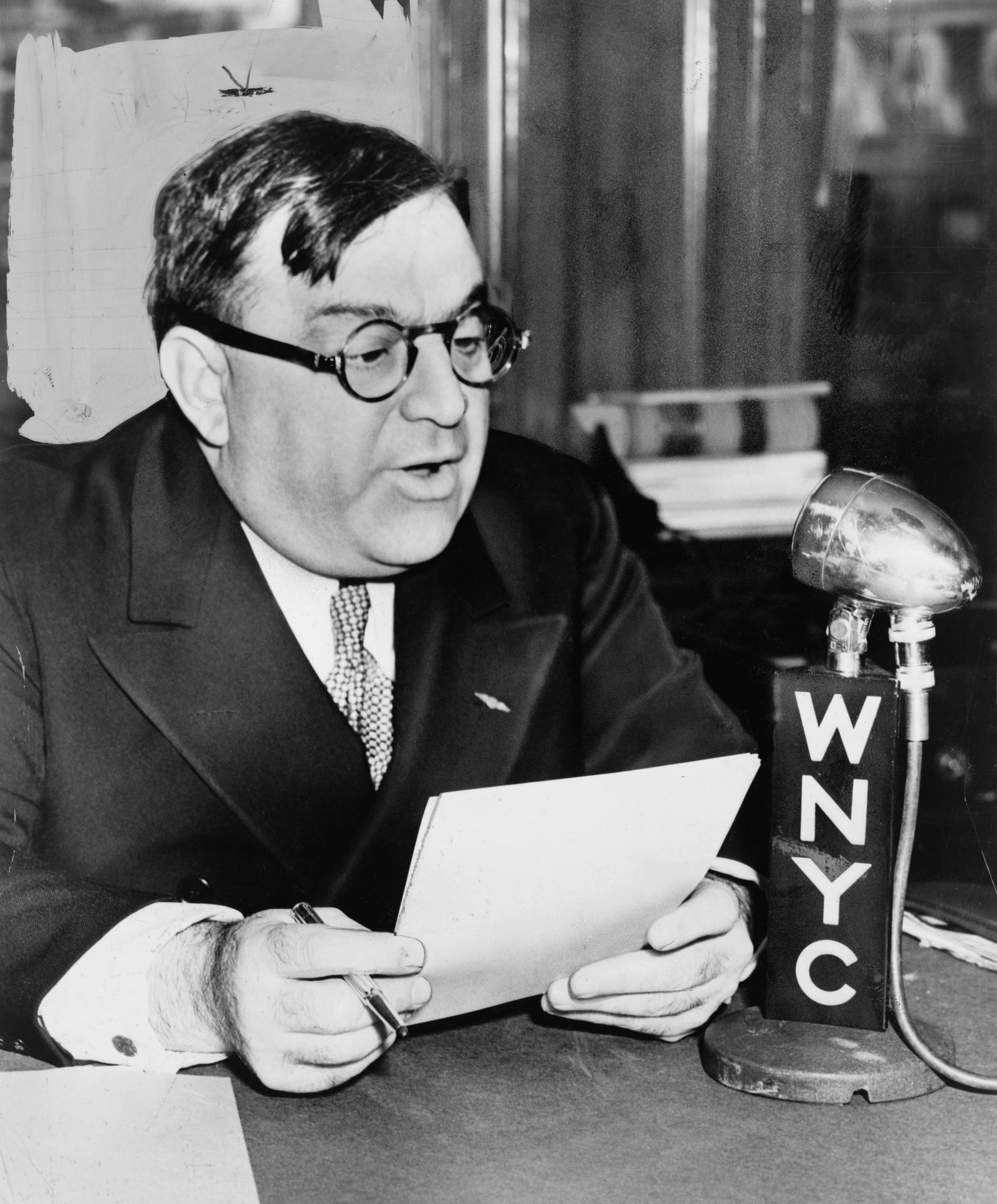
| 2 Quotes | |
| Born as | Fiorello Enrico La Guardia |
| Known as | Little Flower |
| Occup. | Politician |
| From | USA |
| Born | December 11, 1882 Greenwich Village, Manhattan, New York |
| Died | September 20, 1947 Bronx, New York |
| Aged | 64 years |
| Cite | |
Citation Formats
APA Style (7th ed.)
Fiorello laguardia biography, facts and quotes. (2026, February 11). FixQuotes. https://fixquotes.com/authors/fiorello-laguardia/
Chicago Style
"Fiorello LaGuardia biography, facts and quotes." FixQuotes. February 11, 2026. https://fixquotes.com/authors/fiorello-laguardia/.
MLA Style (9th ed.)
"Fiorello LaGuardia biography, facts and quotes." FixQuotes, 11 Feb. 2026, https://fixquotes.com/authors/fiorello-laguardia/. Accessed 25 Mar. 2026.
Early Life and Background
Fiorello Enrico La Guardia was born on December 11, 1882, in New York City to an Italian father, Achille La Guardia, and an Italian-Jewish mother, Irene Coen. The family moved often with Achille's U.S. Army band assignments, and La Guardia spent key boyhood years in the American Southwest, including Prescott, Arizona Territory. That borderland mix of languages, migrants, and hard-edged federal authority shaped a child who felt American patriotism and immigrant vulnerability at the same time - a combination that later made him both a fierce moralist and a street-level pragmatist.Small in stature, quick-tempered, and theatrically direct, he learned early how power worked in crowded institutions: the military post, the ethnic neighborhood, the schoolyard. He spoke several languages and absorbed the customs of Catholics, Protestants, and Jews without belonging neatly to any single box. That sense of being slightly outside the room - and therefore responsible for policing it - became central to his inner life: he prized clean rules, distrusted machine patronage, and cultivated a personal style that made politics feel like a public argument in plain sight.
Education and Formative Influences
Returning to New York, La Guardia finished schooling and studied at New York University, earning a law degree in 1910. Before that credential, he built his political education as an interpreter and clerk at Ellis Island and later as a U.S. consul in Europe, experiences that exposed him to the legal machinery deciding who could enter the country and on what terms. Watching families plead their cases taught him that government could be intimate and terrifying - and that the state, when honest, could protect the weak; when corrupted, it could crush them.Career, Major Works, and Turning Points
La Guardia entered Congress in 1917, serving multiple terms as a Republican allied with progressive reformers, labor advocates, and anti-corruption crusaders. He supported workplace protections and opposed Prohibition, building a reputation as a combative outsider against Tammany Hall and against nativist currents that treated immigrants as a problem to be solved. The Great Depression created the opening he had long sought: elected mayor of New York City in 1933, he led the "Fusion" coalition that united Republicans, Democrats, and independents around good government and relief. His three mayoral terms (1934-1945) remade the city through aggressive use of New Deal funds, partnerships with Robert Moses on parks and infrastructure, and hard fights against rackets and political patronage. He expanded public works, stabilized finances, improved health and housing efforts, and projected a new model of the mayor as a national figure - famously reading the newspaper funnies on radio during a 1945 newspaper strike to keep children company and to steady civic morale.Philosophy, Style, and Themes
At the core of La Guardia's politics was an almost moral impatience with factional excuses. He treated administration as a civic ethic, insisting that basic services were the true test of democracy: “There is no Democratic or Republican way of cleaning the streets”. The line was not just a slogan but a psychological self-portrait - a man who sought emotional relief in the concreteness of sanitation, budgets, and enforcement because they could be measured, audited, and improved. In an era of breadlines, gang power, and machine dealmaking, he tried to make the city feel governable by making it legible.His style fused performance with discipline. He was loud, accessible, and relentlessly personal, yet he believed compromise should never look like surrender. The same temperament that made him a beloved scold also made him a risky ally, because he demanded loyalty to principles more than to people. His willingness to antagonize machines, racketeers, and comfortable elites showed in his own credo: “It makes no difference if I burn my bridges behind me - I never retreat”. Beneath the bravado was a fear of backsliding into the old city - the city where favors replaced rights - and so he governed as if momentum itself were a moral resource.
Legacy and Influence
La Guardia died on September 20, 1947, after serving as director general of the United Nations Relief and Rehabilitation Administration, extending his civic mission to a devastated postwar world. He endures as the prototype of the activist urban executive: a mayor who treated city hall as both a service bureau and a moral pulpit, using federal partnerships to modernize local government while insisting that corruption was not a cultural inevitability. Airports, schools, and a continuing reform tradition bear his name, but his deeper influence is the expectation he helped cement - that a mayor can be simultaneously administrator, advocate, and national conscience, and that the most radical thing in public life can be competence applied without fear.Our collection contains 2 quotes written by Fiorello, under the main topics: Never Give Up - Servant Leadership.
Other people related to Fiorello: Joan Chen (Actress)
Source / external links