
Frances Wright Biography Quotes 15 Report mistakes
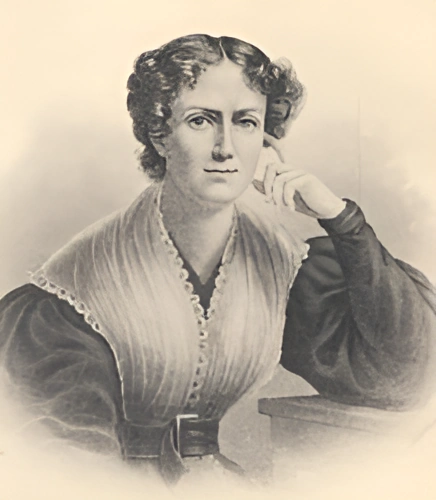
| 15 Quotes | |
| Occup. | Writer |
| From | Scotland |
| Born | September 6, 1795 |
| Died | December 13, 1852 |
| Aged | 57 years |
| Cite | |
Citation Formats
APA Style (7th ed.)
Frances wright biography, facts and quotes. (2026, March 3). FixQuotes. https://fixquotes.com/authors/frances-wright/
Chicago Style
"Frances Wright biography, facts and quotes." FixQuotes. March 3, 2026. https://fixquotes.com/authors/frances-wright/.
MLA Style (9th ed.)
"Frances Wright biography, facts and quotes." FixQuotes, 3 Mar. 2026, https://fixquotes.com/authors/frances-wright/. Accessed 31 Mar. 2026.
Early Life and Background
Frances Wright was born on September 6, 1795, in Dundee, Scotland, into the anxieties and possibilities of the post-Enlightenment Atlantic world. Orphaned young after the deaths of her parents, she and her sister were reared under guardianship amid the lingering tremors of the French Revolution and the tightening discipline of British respectability. The early loss of family security sharpened her suspicion of inherited power and her impatience with social arrangements that treated dependency as destiny.As a teenager she absorbed the contrasts of Scottish commercial modernity - literacy, debate societies, and the moral earnestness of Presbyterian culture - while also sensing how easily "virtue" could be used to police women and the poor. The result was a temperament both romantic and combative: she wanted improvement that could be measured in lives changed, not merely preached. Her Scottish origin mattered less as nationalism than as a training in argument - a habit of reasoning that she would carry into American reform circles with unusual audacity for a woman of her time.
Education and Formative Influences
Wright's education was largely self-directed, steeped in the rational dissent and liberal currents that followed David Hume and Adam Smith, and in the radical legacy of Mary Wollstonecraft and Thomas Paine. She read history and political economy with the appetite of someone trying to locate the machinery behind suffering, and she practiced writing early, publishing verse and travel observations before she was twenty. The decisive formative influence, however, was the Atlantic itself: Britain offered the language of rights, but the United States offered a stage on which those rights could be tested against slavery, religion, and the new mass politics of the 1820s.Career, Major Works, and Turning Points
Wright first gained notice with Views of Society and Manners in America (1821), drawn from her travels in the young republic; she admired its energy while warning that slavery and inequality mocked its democratic claims. In 1825 she launched her most controversial experiment, Nashoba, a Tennessee community meant to educate enslaved people and prepare them for emancipation, financed in part by her lecture earnings; the project collapsed under debt, illness, hostile rumor, and the sheer difficulty of marrying ideal theory to plantation realities, and she ultimately helped relocate several participants to Haiti. In the late 1820s and early 1830s she became one of the first famous female public lecturers in the United States, speaking on abolition, women's rights, birth control, universal education, labor, and secularism; she allied with the Workingmen's movement and edited the New York paper The Free Enquirer with Robert Dale Owen. Public vilification was intense - "Fanny Wrightism" became a catchword for infidelity and social disorder - yet she continued to publish and speak in Britain and America, later living part-time in France, enduring a troubled marriage to Guillaume Phiquepal d'Arusmont, and finishing her life in Cincinnati, where she died on December 13, 1852, after injuries from a fall.Philosophy, Style, and Themes
Wright's inner life was driven by a bracing moral logic: liberty was not a mood but a structure, and any freedom that rested on hierarchy was counterfeit. Her most quoted claim, “Equality is the soul of liberty; there is, in fact, no liberty without it”. , summarizes her habit of reducing political rhetoric to first principles and then pressing those principles into the body of everyday life - the schoolroom, the factory, the marriage contract, the pulpit. She wrote and spoke as a synthesizer, bringing together political economy, education theory, and a hard-edged compassion for the dispossessed; her prose favors declarative force, building momentum through assertion and antithesis, because she believed the central struggle was against the narcotic of custom.Her feminism was neither an ornament nor a separate cause, but a diagnostic tool for judging civilization. "However novel it may appear, I shall venture the assertion, that, until women assume the place in society which good sense and good feeling alike assign to them, human improvement must advance but
Our collection contains 15 quotes written by Frances, under the main topics: Witty One-Liners - Ethics & Morality - Truth - Freedom - Knowledge.
Frances Wright Famous Works
- 1829 Course of Popular Lectures (Book)
- 1822 A Few Days in Athens (Novel)
- 1821 Views of society and manners in America (Book)
- 1819 Altorf: A Tragedy (Play)
Source / external links