
Francis Bacon Biography Quotes 105 Report mistakes
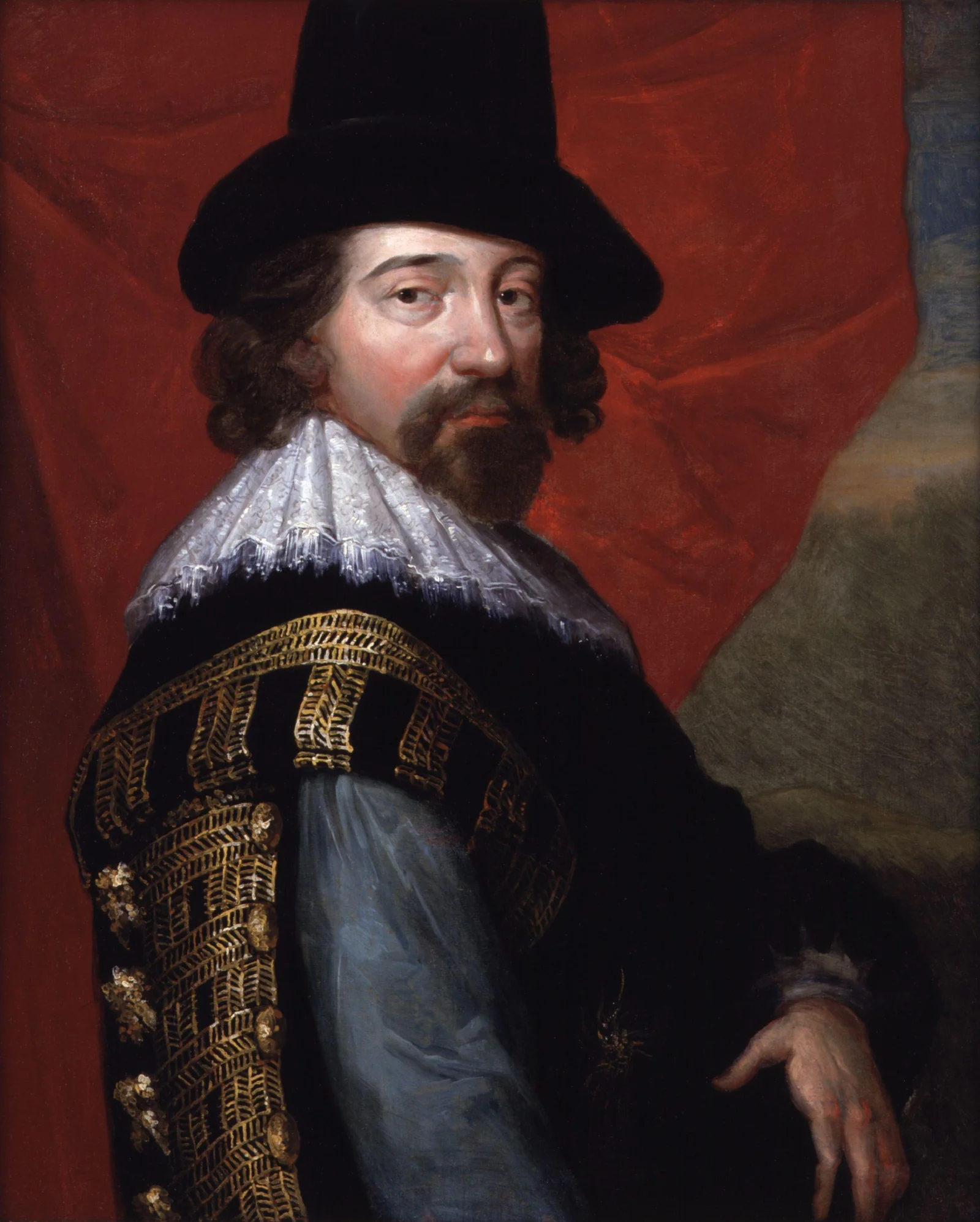
| 105 Quotes | |
| Occup. | Philosopher |
| From | England |
| Born | January 21, 1561 England |
| Died | April 9, 1626 Highgate, London, England |
| Cause | Pneumonia |
| Aged | 65 years |
| Cite | |
Citation Formats
APA Style (7th ed.)
Francis bacon biography, facts and quotes. (2026, February 1). FixQuotes. https://fixquotes.com/authors/francis-bacon/
Chicago Style
"Francis Bacon biography, facts and quotes." FixQuotes. February 1, 2026. https://fixquotes.com/authors/francis-bacon/.
MLA Style (9th ed.)
"Francis Bacon biography, facts and quotes." FixQuotes, 1 Feb. 2026, https://fixquotes.com/authors/francis-bacon/. Accessed 25 Mar. 2026.
Early Life and Background
Francis Bacon was born 21 January 1561 in London into the nerve center of Elizabethan power. His father, Sir Nicholas Bacon, was Lord Keeper of the Great Seal; his mother, Anne Cooke Bacon, was a formidable scholar and translator shaped by Protestant humanism. The household joined courtly pragmatism to austere learning, and it taught the boy early that ideas and policy were not separate worlds but adjacent rooms with a thin door between them.That proximity to authority also sharpened a lifelong anxiety about dependence and patronage. Bacon grew up watching how favor moved, how quickly it could reverse, and how reputation was both weapon and shield. The England of his youth was an island kingdom consolidating state power, testing religious settlement, and expanding trade - conditions that made administrative competence and intellectual novelty equally valuable, yet equally dangerous for anyone who misjudged the temper of the times.
Education and Formative Influences
Bacon entered Trinity College, Cambridge, in 1573, and later Gray's Inn, absorbing classical rhetoric and scholastic logic while increasingly distrusting the latter as sterile disputation. A short diplomatic posting in France during the Wars of Religion exposed him to continental statecraft and the fragility of political order; when his father died in 1579, Bacon returned to England with reduced means and a sharpened determination to rise through law and service. Humanist reading, legal training, and the era's reverence for Aristotle formed his early intellectual furniture - and also the target he would later dismantle.Career, Major Works, and Turning Points
Bacon sat in Parliament from 1584 and built a legal career that culminated under James I: Solicitor General (1607), Attorney General (1613), Lord Keeper (1617), and Lord Chancellor (1618), when he was raised to Baron Verulam and later Viscount St Alban. Parallel to office, he pursued his "Great Instauration", a program to rebuild knowledge on new foundations: The Advancement of Learning (1605), Novum Organum (1620), and the fragmentary New Atlantis (published 1627). His ascent ended abruptly in 1621 when he was charged with bribery, confessed, and was sentenced (then quickly pardoned) but permanently disgraced; the fall forced him into concentrated authorship, turning humiliation into a final burst of methodological ambition. He died 9 April 1626 after an illness contracted during an experiment with preserving meat using snow - a story later polished into emblem, whether or not the details were as neat as the moral.Philosophy, Style, and Themes
Bacon's inner life reads as a struggle between courtier and reformer: he wanted office not merely for vanity but because power offered leverage to fund and legitimize intellectual renovation. His philosophy begins with a psychological diagnosis. The mind, he argued, is crowded with "idols" - habitual distortions rooted in human nature, personal temperament, language, and inherited systems - and the first task of knowledge is self-suspicion. Hence his insistence that “Truth is the daughter of time, not of authority”. The sentence is not only epistemology; it is autobiography from a man who saw how readily institutions sanctify convenient error, and how slowly reality yields its verdict.Method, for Bacon, was moral discipline as much as technique. He urged investigators to proceed by careful experiment and gradual induction, obeying phenomena rather than commanding them with premature theory: “We cannot command Nature except by obeying her”. That posture mirrors his political experience - a sensitivity to constraint, timing, and the costs of overreaching. Even his aphoristic style, compressed and tactical, resembles the memorandum of a statesman: knowledge should be actionable, portable, and testable, not decorative.
Yet Bacon never reduces learning to mere utility; he is acute about how reading and inquiry reshape the self. “Some books are to be tasted, others to be swallowed, and some few to be chewed and digested”. The metaphor reveals a psychology of appetite and assimilation: the mind is not a warehouse but a metabolism, prone to indulgence, malnutrition, and false fullness. Across the Essays (1597-1625), he anatomized ambition, counsel, revenge, empire, and custom with a cold brilliance that can feel like self-interrogation - the tone of someone both fascinated and wary of the engines that moved him.
Legacy and Influence
Bacon did not "invent" modern science, but he helped give it a public creed: organized inquiry, collaborative experiment, and the reform of knowledge for the relief of human suffering. His call for institutional research anticipated the ethos later associated with the Royal Society, while his critique of mental idols became a permanent tool for philosophers of science and skeptics of propaganda alike. The paradox of his life - architect of intellectual integrity, undone by the compromises of office - only sharpened his afterlife: he remains a central figure in the story of how early modern Europe tried to replace inherited certainty with disciplined doubt, and how a mind trained in power attempted to make power answer to evidence.Our collection contains 105 quotes written by Francis, under the main topics: Witty One-Liners - Motivational - Ethics & Morality - Truth - Wisdom.
Other people related to Francis: Alberto Giacometti (Sculptor), Bill Brandt (Photographer), Daniel Craig (Actor), Lord Chandos (Writer), George Villiers (Politician), Roger Bacon (Philosopher), John Morton (Clergyman), John Aubrey (Writer), Gilles Deleuze (Philosopher), David Mallet (Dramatist)
Francis Bacon Famous Works
- 1627 The New Atlantis (Fictional work)
- 1620 The Great Instauration (Philosophical work)
- 1620 Novum Organum (Philosophical work)
- 1605 The Advancement of Learning (Philosophical work)
- 1597 Essays (Essay Collection)
Source / external links