
Francis Ford Coppola Biography Quotes 37 Report mistakes
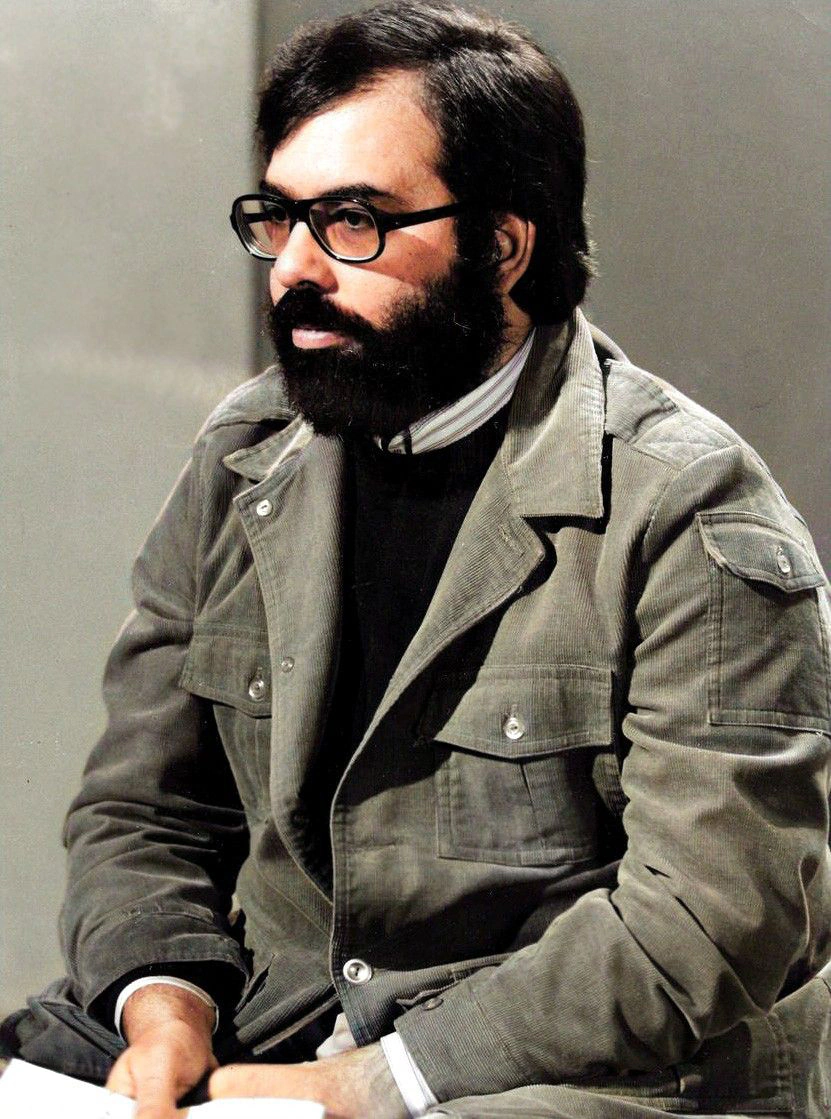
| 37 Quotes | |
| Occup. | Director |
| From | USA |
| Spouse | Eleanor Coppola |
| Born | April 7, 1939 Detroit, Michigan, USA |
| Age | 87 years |
| Cite | |
Citation Formats
APA Style (7th ed.)
Francis ford coppola biography, facts and quotes. (2026, February 11). FixQuotes. https://fixquotes.com/authors/francis-ford-coppola/
Chicago Style
"Francis Ford Coppola biography, facts and quotes." FixQuotes. February 11, 2026. https://fixquotes.com/authors/francis-ford-coppola/.
MLA Style (9th ed.)
"Francis Ford Coppola biography, facts and quotes." FixQuotes, 11 Feb. 2026, https://fixquotes.com/authors/francis-ford-coppola/. Accessed 8 Apr. 2026.
Early Life and Background
Francis Ford Coppola was born on April 7, 1939, in Detroit, Michigan, into an Italian American family whose center of gravity was music. His father, Carmine Coppola, was a flutist and arranger who later worked with the NBC Symphony; his mother, Italia Pennino Coppola, had been an actress. The household eventually settled in Queens, New York, where art was not a hobby but a language, and where the postwar American dream sat beside immigrant memory. Coppola grew up watching how creative work could be both vocation and inheritance, an idea that later became inseparable from his devotion to family-centered production and his interest in building an alternative studio system.Childhood also trained him in solitude and improvisation. At nine he contracted polio and spent long stretches isolated at home, absorbing early television and staging miniature dramas with whatever tools were available. “When I was about 9, I had polio, and people were very frightened for their children, so you tended to be isolated. I was paralyzed for a while, so I watched television”. That confinement sharpened his fascination with machines and image-making, and it seeded a temperament that could swing between meticulous control and risk-seeking escape.
Education and Formative Influences
Coppola studied theater at Hofstra University, then earned an MFA in film production at UCLA, arriving as Hollywood was beginning to loosen its old studio grammar. He learned classical craft while absorbing the insurgent energy of European art cinema and the emerging American counterculture, and he found mentors who valued ingenuity over pedigree. In the early 1960s he apprenticed in the fast, unsentimental world of Roger Corman, where resource limits forced narrative clarity and technical daring. “Roger Corman exploited all of the young people who worked for him, but he really gave you responsibility and opportunity. So it was kind of a fair deal”. The combination of academic rigor and grindhouse pragmatism became his lifelong pattern: romantic ambition executed with a mechanic's understanding of how movies are actually made.Career, Major Works, and Turning Points
After early directing and screenwriting, Coppola helped define the New Hollywood era that emerged from the late 1960s collapse of the old studio order. He co-wrote Patton (1970), winning an Academy Award, then transformed Mario Puzo's novel into The Godfather (1972), a critical and commercial event that reframed the gangster film as American epic; The Conversation (1974) captured Watergate-era paranoia with clinical intimacy and won the Palme d'Or; The Godfather Part II (1974) deepened the Corleone saga into a study of power and legacy. His greatest pivot came with Apocalypse Now (1979), a production so troubled - typhoons, illness, rewriting, spiraling costs - that it became a parable of artistic obsession, yet it arrived as a fever-dream synthesis of war, spectacle, and moral collapse. In the 1980s he alternated between bold experiments (One from the Heart, 1981) and crowd-pleasers (The Outsiders, 1983; Rumble Fish, 1983; Bram Stoker's Dracula, 1992), while building and risking an independent infrastructure through American Zoetrope. Later work such as The Rainmaker (1997), Youth Without Youth (2007), and Tetro (2009) returned to intimate themes of guilt, invention, and family mythmaking, even as his influence increasingly outpaced his box-office footprint.Philosophy, Style, and Themes
Coppola's cinema is powered by a double faith: that movies are engineering and that they are enchantment. He treats filmmaking as a craft of assembly in which meaning is manufactured, not merely recorded. “The essence of cinema is editing. It's the combination of what can be extraordinary images of people during emotional moments, or images in a general sense, put together in a kind of alchemy”. That word - alchemy - captures his psychology: a believer in transformation who nonetheless obsesses over process, structure, and the hidden joints where emotion is constructed. Even his most operatic sequences are often built from precise intercutting and sound design that turns private dread into public ritual.His recurring subjects are power's corrosion, the seductions of family loyalty, and the thin membrane between artistry and self-destruction. Coppola is unusually candid about how scale can intoxicate a director and deform judgment. “We had access to too much money, too much equipment, and little by little, we went insane”. Yet he also insists that certain films should not merely depict an era but embody its psychic weather. “My film is not a movie; it's not about Vietnam. It is Vietnam”. That claim is less bravado than confession: he pursued a cinema that risks becoming the thing it portrays, where production mirrors narrative and the director's own extremity becomes part of the text. Across genres, he stages moral collapse as pageant - weddings, baptisms, parades, military spectacle - then cuts beneath the ceremony to show the costs paid in conscience.
Legacy and Influence
Coppola endures as a defining architect of late-20th-century American film, not only for a run of masterpieces that reset the possibilities of popular cinema, but for a model of the director as entrepreneur, auteur, and patriarch of a creative clan. The Godfather films normalized Shakespearean seriousness inside mass entertainment; The Conversation became a template for surveillance thrillers; Apocalypse Now remains a touchstone for war cinema and for the mythology of impossible productions. He helped open doors for peers and successors, championed younger artists through American Zoetrope, and pushed the industry toward director-centered filmmaking even as he warned, through lived experience, how ambition can overtake prudence. His work persists because it is both intimate and monumental: stories about families, made at a scale large enough to reveal how nations, corporations, and empires behave like families too.Our collection contains 37 quotes written by Francis, under the main topics: Motivational - Wisdom - Art - Friendship - Writing.
Other people related to Francis: Al Pacino (Actor), Monica Bellucci (Actress), Godfrey Reggio (Director), Tom Waits (Musician), Nicolas Cage (Actor), Jason Schwartzman (Actor), Pauline Kael (Critic), S. E. Hinton (Writer), George Lucas (Director), James Caan (Actor)