
Francis I of France Biography Quotes 7 Report mistakes
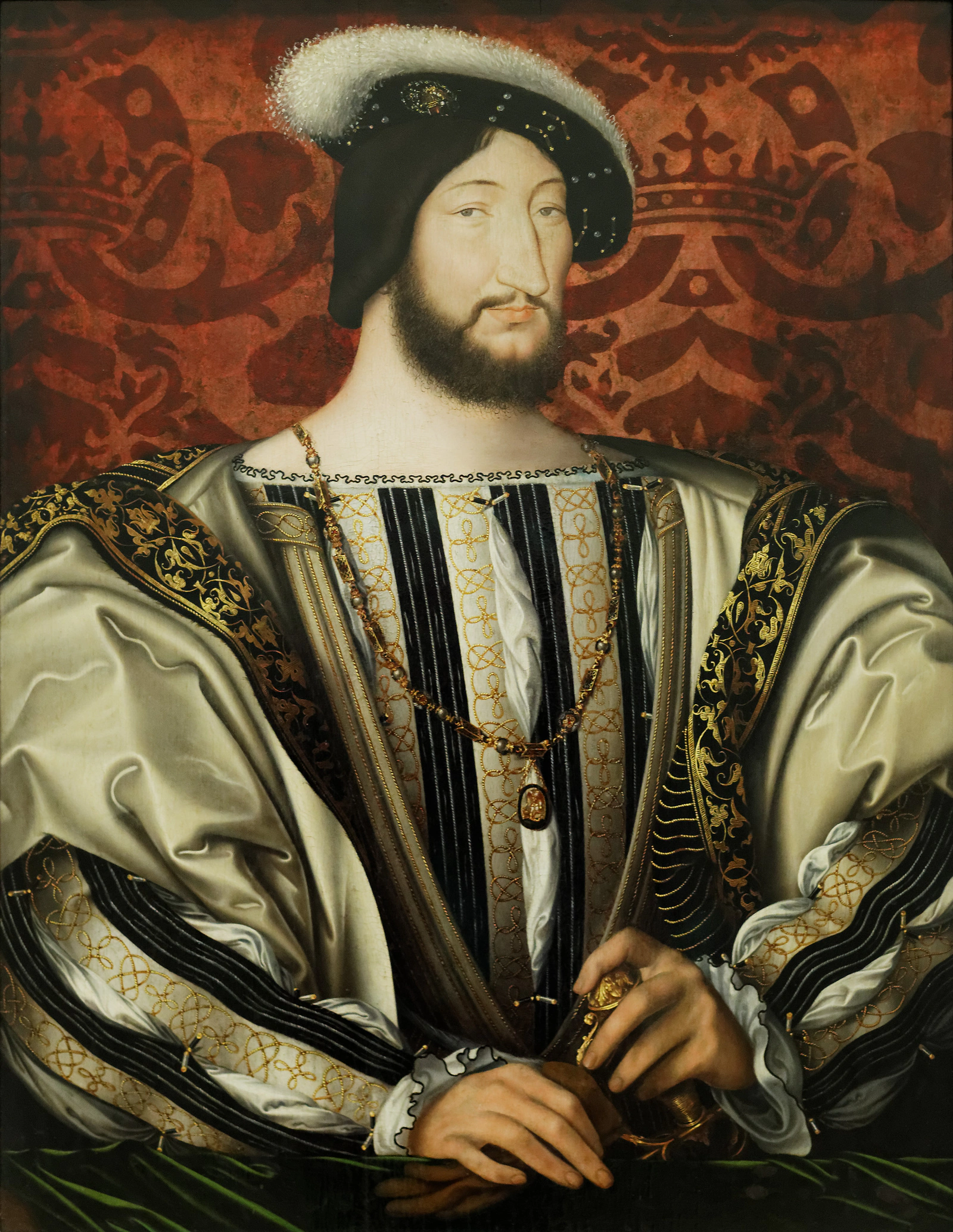
| 7 Quotes | |
| Born as | Francis of Angoulême |
| Known as | Francis I |
| Occup. | Royalty |
| From | France |
| Spouses | Claude Duchess of Brittany (1514-1524) Eleanor of Austria (1530) |
| Born | September 12, 1494 Château de Cognac, Cognac, France |
| Died | March 31, 1547 Château de Rambouillet, France |
| Cause | Sepsis |
| Aged | 52 years |
| Cite | |
Citation Formats
APA Style (7th ed.)
Francis i of france biography, facts and quotes. (2026, February 11). FixQuotes. https://fixquotes.com/authors/francis-i-of-france/
Chicago Style
"Francis I of France biography, facts and quotes." FixQuotes. February 11, 2026. https://fixquotes.com/authors/francis-i-of-france/.
MLA Style (9th ed.)
"Francis I of France biography, facts and quotes." FixQuotes, 11 Feb. 2026, https://fixquotes.com/authors/francis-i-of-france/. Accessed 5 Apr. 2026.
Early Life and Background
Francis of Angouleme was born on September 12, 1494, at Cognac in western France, the only son of Charles of Orleans, Count of Angouleme, and Louise of Savoy. When his father died in 1496, the boy grew up under his mother's vigilant direction, shaped by her ambition and by the precariousness of a cadet branch poised near the throne. The Valois monarchy of his childhood was still consolidating after the Hundred Years' War, while Italy glittered as both cultural magnet and military temptation.His destiny changed in 1498 when Louis XII, lacking a son, became king and drew the young Francis into the orbit of succession. Francis was made Duke of Valois and treated increasingly as heir presumptive, a role that trained him early in display, negotiation, and the management of noble egos. In 1514 Louis XII married him to Claude of France, daughter of Anne of Brittany, binding Brittany more tightly to the crown and tying Francis to a realm where dynastic marriage was statecraft rather than sentiment.
Education and Formative Influences
Francis was educated as a Renaissance prince: chivalric exercise, courtly speech, and a humanist curriculum that emphasized Latin letters, history, and the arts as instruments of rule. His mother cultivated his sense of vocation, while the court's writers and clerics taught him that magnificence could be policy. Early exposure to Italian ambitions under Louis XII, and the prestige attached to Milan and Naples, formed the imaginative backdrop for a reign that would pursue glory abroad while refashioning authority at home.Career, Major Works, and Turning Points
Crowned in 1515, Francis immediately sought the laurels of Italy, winning a spectacular victory at Marignano (1515) and entering Milan as the model of a warrior-king. His rivalry with Charles V defined his era: the Habsburg encirclement of France turned the Italian Wars into a contest for European primacy, culminating in disaster at Pavia (1525), where Francis was captured and forced into the harsh Treaty of Madrid (1526). Back in France he repudiated its terms, allied pragmatically with the Ottoman sultan Suleiman, and fought on through the Peace of Cambrai (1529) and later campaigns that never secured lasting Italian dominion. At home he strengthened royal administration, expanded the role of royal officers, and issued the Ordinance of Villers-Cotterets (1539), requiring French in legal documents and tightening central justice. His reign also contained darker turns: the Affair of the Placards (1534) hardened policy against Protestants, and late years were marked by financial strain, factional court politics, and the steady pressure of Habsburg war.Philosophy, Style, and Themes
Francis styled himself as the exemplar of honor, splendor, and cultivated power - a king who believed that majesty was not merely inherited but performed. The psychological core of his self-presentation lay in the code of chivalry, tested brutally at Pavia. In captivity he distilled his identity into the line, “All is lost save honor”. The sentence is not only bravado but coping mechanism: it compresses defeat into a moral victory, preserving a stable self when fortune collapses. A closely related formulation - “There is nothing left to me but honor, and my life, which is saved”. - reveals a mind balancing the irreconcilable, admitting material loss while insisting on an inner residue no enemy can confiscate.His cultural politics followed the same logic: if battle could fail, memory could be engineered. He built and transformed royal residences - most famously Chambord and Fontainebleau - into stone manifestos of dynastic confidence, importing Italianate forms and fostering a court aesthetic that made France a competitor to the Italian city-states he coveted. In this, he voiced a theory of prestige that placed art alongside sovereignty: “Persons famous in the arts partake of the immortality of princes, and are upon a footing with them”. The remark exposes his keen understanding that artists were not decoration but instruments of time - allies against oblivion - and it helps explain his patronage of figures such as Leonardo da Vinci in his final French years.
Legacy and Influence
Francis I left a double legacy: the glamorous archetype of the French Renaissance monarch and the administrative groundwork of a more centralized state. His patronage and architectural program helped shift France's cultural center of gravity, making the royal court a generator of style and intellectual ambition; his language ordinance helped standardize governance and identity. Yet his wars drained the treasury and fixed France in a long struggle with Habsburg power, while his repression after 1534 narrowed the space for religious dissent. Enduringly, he is remembered as a king who tried to convert personal charisma into national greatness - and who, even when history refused him Italy, ensured that his image, buildings, and cultural policies kept speaking for him long after his death on March 31, 1547.Our collection contains 7 quotes written by Francis, under the main topics: Witty One-Liners - Art - Honesty & Integrity - Heartbreak - Travel.
Other people related to Francis: Charles V (Royalty), Francois Rabelais (Clergyman), Joachim du Bellay (Poet)
Frequently Asked Questions
- King Francis and Queen Mary: Refers to Francis II and Mary, Queen of Scots; Francis I was his grandfather.
- What is Francis I famous for: Renaissance patronage and the Italian Wars; strengthened royal power; brought Leonardo da Vinci to France; built Chambord and Fontainebleau.
- Francis I of France cause of death: Sepsis (blood infection) after a fever, at Rambouillet in 1547.
- Francis I of France and Henry VIII: They met at the Field of the Cloth of Gold (1520) and shifted between alliance and rivalry, often against Charles V.
- Francis II of France: Francis I's grandson; king 1559-1560; married Mary, Queen of Scots.
- Francis I of France children: Henry II; Francis, Dauphin (d. 1536); Madeleine of Valois; Charles, Duke of Orléans; Margaret of France; plus daughters Louise and Charlotte (died young).
- How old was Francis I of France? He became 52 years old
Source / external links