
Francis Scott Key Biography Quotes 4 Report mistakes
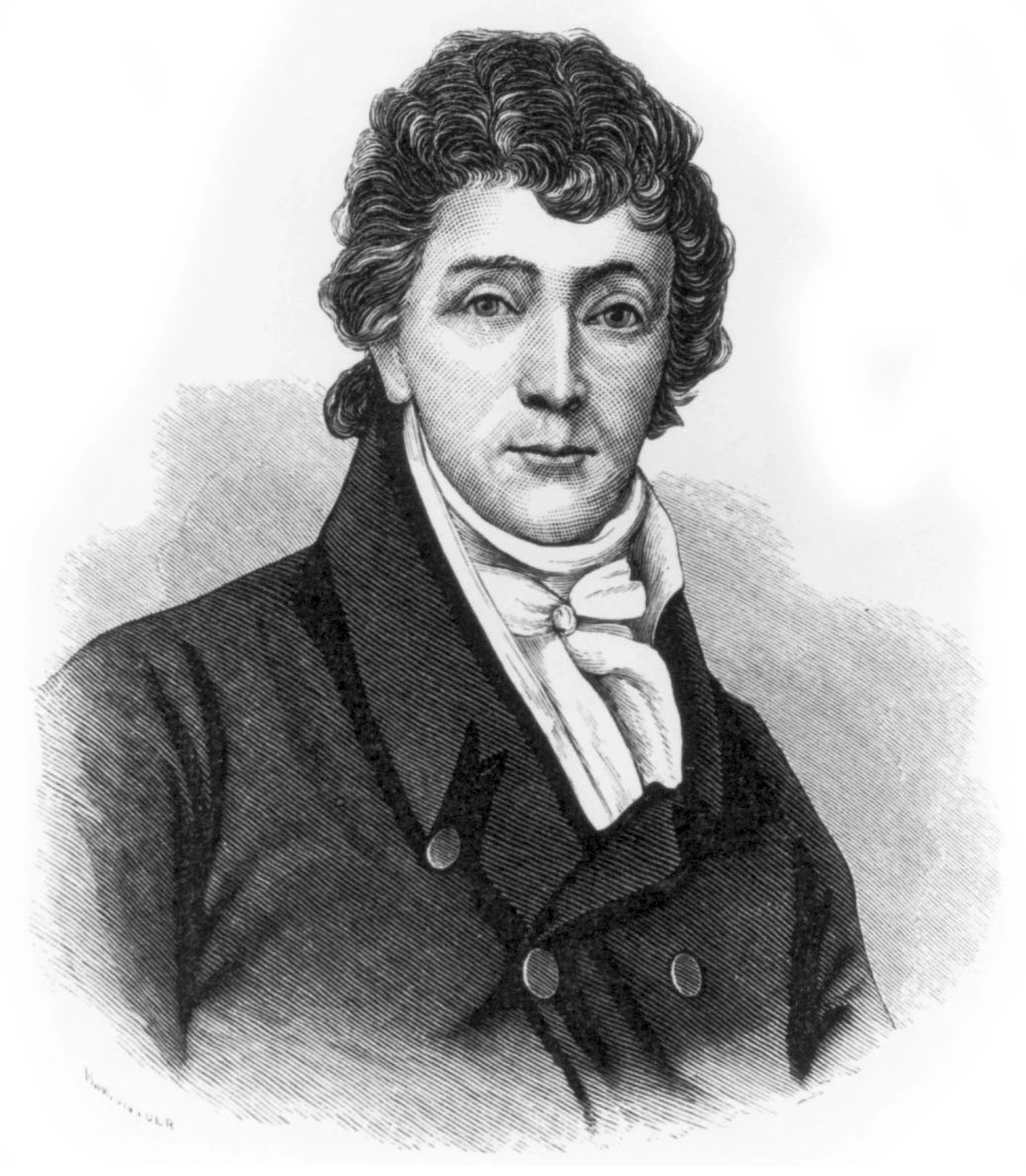
| 4 Quotes | |
| Occup. | Author |
| From | USA |
| Born | August 1, 1779 Carroll County, Maryland, U.S. |
| Died | January 11, 1843 Baltimore, Maryland, U.S. |
| Aged | 63 years |
| Cite | |
Citation Formats
APA Style (7th ed.)
Francis scott key biography, facts and quotes. (2026, February 24). FixQuotes. https://fixquotes.com/authors/francis-scott-key/
Chicago Style
"Francis Scott Key biography, facts and quotes." FixQuotes. February 24, 2026. https://fixquotes.com/authors/francis-scott-key/.
MLA Style (9th ed.)
"Francis Scott Key biography, facts and quotes." FixQuotes, 24 Feb. 2026, https://fixquotes.com/authors/francis-scott-key/. Accessed 26 Mar. 2026.
Early Life and Background
Francis Scott Key was born on August 1, 1779, on the Key family plantation, Terra Rubra, in Frederick County, Maryland, a borderland society where Anglican gentry culture, Revolutionary memory, and slavery coexisted without apology. His father, John Ross Key, had served as an officer in the Continental Army, and the household breathed a mix of patriotic inheritance and hierarchical order. That tension - devotion to republican ideals alongside acceptance of bondage - would follow Key throughout his life, shaping both his moral language and his blind spots.Key came of age as the early republic hardened into parties and as the Chesapeake region became a strategic corridor between North and South. Maryland planters watched commerce, war, and politics wash against their fields; Key watched, too, and learned to treat national events as personal tests of character. From the beginning he seemed pulled between private piety and public ambition, aspiring to be useful, honorable, and - in his own terms - faithful.
Education and Formative Influences
He studied at St. Johns College in Annapolis, graduating in 1796, absorbing classical rhetoric and the civic ideal of the lawyer-statesman; he then read law under his uncle, Philip Barton Key, and was admitted to the bar in 1801. The education mattered less for doctrine than for voice: Key learned to argue in balanced clauses and moral appeals, a style that later made even a hurried lyric sound like a public address. Equally formative was his deep Christianity, which pushed him to interpret politics through providence and to measure national destiny against conscience, even when his conduct did not fully align with his professed standards.Career, Major Works, and Turning Points
Key built a prominent legal practice in Georgetown and Washington, D.C., married Mary Tayloe Lloyd in 1802, and moved among the capital's governing families; he also served as a part-time civic figure, advising, petitioning, and preaching by example in a city that was itself an argument about what the United States would become. His defining turning point came during the War of 1812. In September 1814 he traveled under a flag of truce to secure the release of Dr. William Beanes, was held on a British ship during the attack on Baltimore, and watched Fort McHenry endure the night bombardment; at dawn, seeing the enormous American flag still flying, he drafted the verses that became "The Star-Spangled Banner" (first titled "Defence of Fort M'Henry") and set to the melody of the English tune "To Anacreon in Heaven". Later he became U.S. attorney for the District of Columbia (1833-1841), prosecuting cases in a volatile capital while the slavery question and sectional rhetoric rose toward crisis; he died on January 11, 1843, in Baltimore and was ultimately interred at Mount Olivet Cemetery in Frederick.Philosophy, Style, and Themes
Key's inner life was anchored in a providential nationalism: he wanted the republic to be more than a political experiment - he wanted it to be morally legible. In speeches and religious reflections he framed citizenship as stewardship, insisting that the public man should act under a higher gaze: “The patriot who feels himself in the service of God, who acknowledges Him in all his ways, has the promise of Almighty direction, and will find His Word in his greatest darkness”. The psychological weight of that sentence is revealing. Key did not merely believe in God; he leaned on faith as a stabilizer for anxiety in crisis, a way to convert fear into duty and to read chaos as guidance. For him, the nation survived not only by guns and forts but by moral orientation.His style, trained by the bar and the pulpit, favored elevated diction, antithesis, and crowd-address - the voice of a man trying to weld private emotion to public meaning. The most famous example is his account of inspiration: “Then, in that hour of deliverance, my heart spoke. Does not such a country, and such defenders of their country, deserve a song?” He presents feeling as evidence, almost a legal testimony of the heart, and the resulting lyric turns a battlefield dawn into a ritual of collective identity. Yet Key's themes also expose the era's cruelties. In the anthem's third stanza he could celebrate annihilation with chilling certainty: “Their blood has washed out their foul footsteps' pollution. No refuge could save the hireling and slave from the terror of flight or the gloom of the grave”. That line, aimed at enemy forces and their auxiliaries, shows how readily sacred-national language could sanctify violence and how the word "slave" could be deployed as insult even within a slaveholding society - a glimpse of moral contradiction that later generations would not forget.
Legacy and Influence
Key's enduring influence rests on a paradox: a single poem, written in a specific war for a particular harbor, became the United States' national anthem (officially adopted in 1931), yet the man behind it embodied the unresolved tensions of the early republic - pious idealism alongside participation in a slave society and hard-edged partisan currents. As an author he left no comparable body of literature, but "The Star-Spangled Banner" became a civic script, performed at moments of mourning and triumph, continually reinterpreted by abolitionists, soldiers, immigrants, and protestors alike. The anthem's survival proves how a work can outgrow its maker, carrying forward the emotional architecture of its time while inviting each generation to argue, through song, what the nation is and what it ought to be.Our collection contains 4 quotes written by Francis, under the main topics: War - Faith - Military & Soldier - God.
Other people related to Francis: James McHenry (Politician)
Francis Scott Key Famous Works
- 1857 Poems of the Late Francis Scott Key, Esq. (Book)
- 1814 Defence of Fort McHenry (Poem)
Source / external links