
Francis Wright Biography Quotes 19 Report mistakes
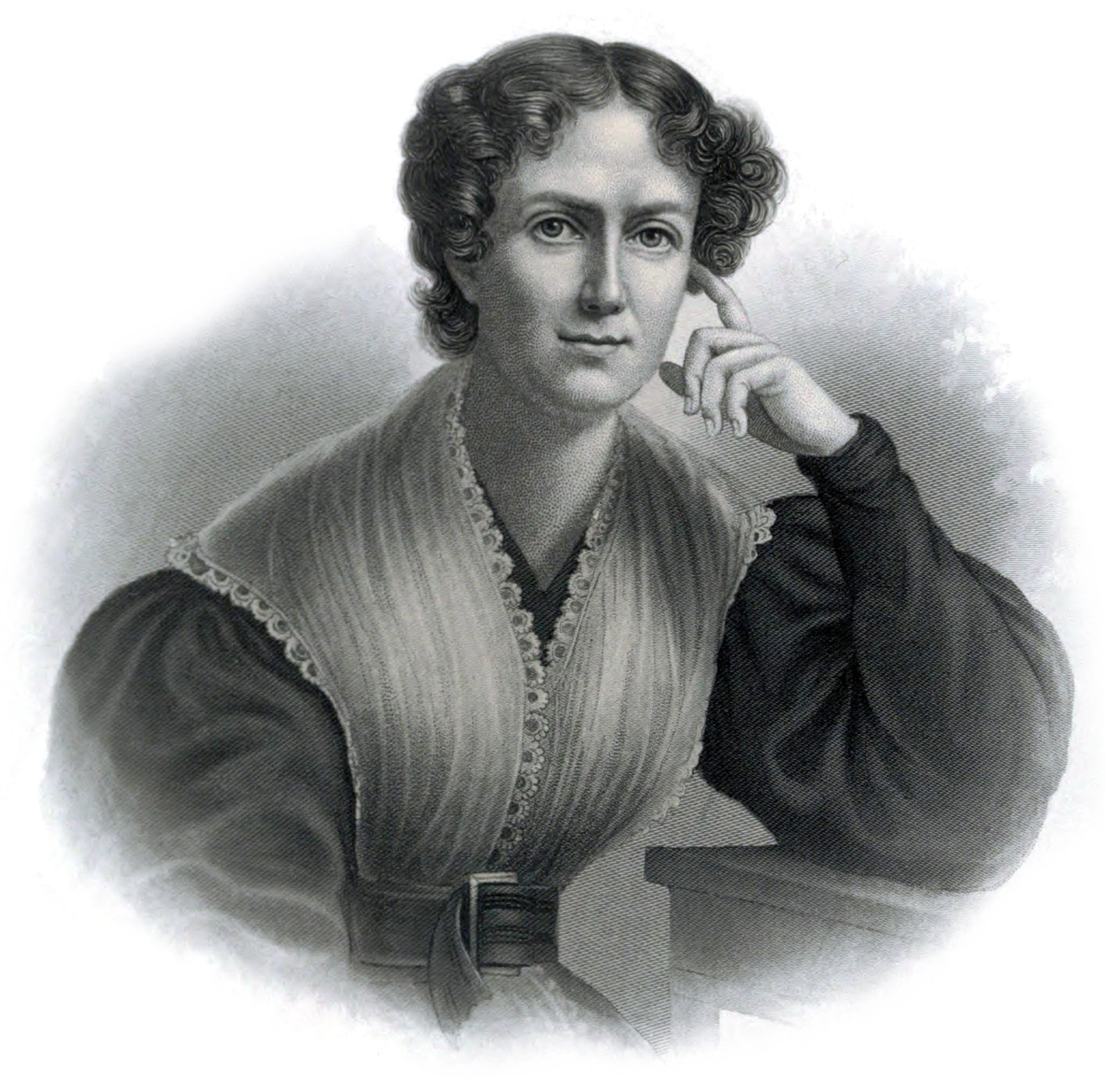
| 19 Quotes | |
| Born as | Frances Wright |
| Known as | Fanny Wright |
| Occup. | Activist |
| From | Scotland |
| Born | September 6, 1795 Dundee, Scotland |
| Died | December 13, 1852 |
| Aged | 57 years |
| Cite | |
Citation Formats
APA Style (7th ed.)
Francis wright biography, facts and quotes. (2026, February 11). FixQuotes. https://fixquotes.com/authors/francis-wright/
Chicago Style
"Francis Wright biography, facts and quotes." FixQuotes. February 11, 2026. https://fixquotes.com/authors/francis-wright/.
MLA Style (9th ed.)
"Francis Wright biography, facts and quotes." FixQuotes, 11 Feb. 2026, https://fixquotes.com/authors/francis-wright/. Accessed 6 Apr. 2026.
Early Life and Background
Francis Wright was born Frances Wright on 1795-09-06 in Dundee, Scotland, into a world being refashioned by the aftershocks of the American and French revolutions and the accelerating discipline of industrial capitalism. Orphaned young after the deaths of James Wright, a linen manufacturer, and Camilla Campbell Wright, she and her sister were sent to relatives, moving between Scotland and England. The early loss of parents and the experience of being "kept" by family arrangements helped form a lifelong impatience with dependence - especially the legal and economic dependence expected of women.In her teens she traveled and read widely, drawn to Enlightenment argument more than piety, and to public questions more than the private virtues prescribed to her sex. The Scotland of her youth offered sharp contrasts: a culture proud of learning and moral seriousness, yet bound by rigid class relations and by a church that policed belief. Wright learned to think of authority as something built, defended, and funded - and therefore contestable. That early combination of bereavement, mobility, and observation of social stratification gave her reforming zeal a personal core: liberty, to be real, had to be lived in institutions, not merely praised in sermons.
Education and Formative Influences
Wright received no university education, but she made herself a public intellectual through voracious self-study - philosophy, political economy, and the history of revolutions - and through the example of radical and republican writers circulating across the Atlantic. The United States, which she first visited in 1818, struck her as a living laboratory of modern politics, capable of extending rights beyond Europe but also capable of reproducing slavery, religious coercion, and gender hierarchy under democratic language; that tension became the engine of her activism and her prose.Career, Major Works, and Turning Points
Her first major public success came with Travels in America (1821), a brisk, analytical travel narrative that praised American civic energy while criticizing slavery and provincialism; it made her an object of fascination in Britain and the United States. In 1825 she attempted an audacious experiment at Nashoba, near Memphis, Tennessee - a communal project meant to educate enslaved people and prepare them for freedom and resettlement - but disease, debt, scandal, and the impossibility of reforming slavery through a single settlement led to its collapse; she later arranged for the remaining participants to be transported to Haiti. Wright then threw herself into open agitation: she lectured publicly (rare for a woman), allied with Workingmen's parties, advocated labor organization, public education, secularism, birth control, and women's equality, and with Robert Dale Owen helped edit the New-York Free Enquirer (late 1820s-early 1830s), becoming a leading voice of the era's freethinking and labor reform. After a later marriage to the French physician Guillaume D'Arusmont and a period in Europe, she returned intermittently to the United States, but injuries and declining health narrowed her public life before her death on 1852-12-13 in Cincinnati, Ohio.Philosophy, Style, and Themes
Wright's inner life was marked by a fierce need for coherence: she wanted belief to submit to evidence, and moral feeling to be translated into arrangements that could endure. Her writing and lectures move with the clipped insistence of someone who distrusts ornament because ornament can hide cruelty. She saw reform not as sentiment but as intellectual labor against inherited mental habits - “The simplest principles become difficult of practice, when habits, formed in error, have been fixed by time, and the simplest truths hard to receive when prejudice has warped the mind”. In that sentence is her psychological diagnosis of the age and of herself: the enemy was not only tyrants, but the comfort people took in familiar error.Her secularism and republicanism were equally psychological projects: she wanted citizens capable of self-rule because they could explain to themselves why they held a conviction. “Know why you believe, understand what you believe, and possess a reason for the faith that is in you”. That demand, applied to politics, religion, and gender roles, made her formidable and widely disliked. Yet her critique was never mere negation; she pursued a positive social ideal grounded in equal development and shared work. “It will appear evident upon attentive consideration that equality of intellectual and physical advantages is the only sure foundation of liberty, and that such equality may best, and perhaps only, be obtained by a union of interests and cooperation in labor”. Nashoba, however flawed, was the lived test of that belief: a wager that cooperation could replace domination, and that liberty required material conditions - education, health, and economic security - not just declarations.
Legacy and Influence
Wright's influence survives less in a single institution than in the repertoire of American radicalism: the woman lecturer who treated politics as an arena for reasoned argument; the abolitionist who refused gradualist comfort; the freethinker who insisted that democratic culture needed secular education; the labor ally who linked freedom to economic structure. She was caricatured in her own time as "Fanny Wright", a warning label for female independence, yet that notoriety signaled her breakthrough - she made it harder to pretend that public reason belonged only to men or only to the devout. Later reformers, from abolitionists to early feminists to organized labor advocates, inherited both her daring and her cautionary lesson: that utopian experiments expose the costs of injustice, but also the brutal strength of the systems they seek to replace.Our collection contains 19 quotes written by Francis, under the main topics: Ethics & Morality - Truth - Wisdom - Freedom - Knowledge.
Source / external links