
Francois Truffaut Biography Quotes 13 Report mistakes
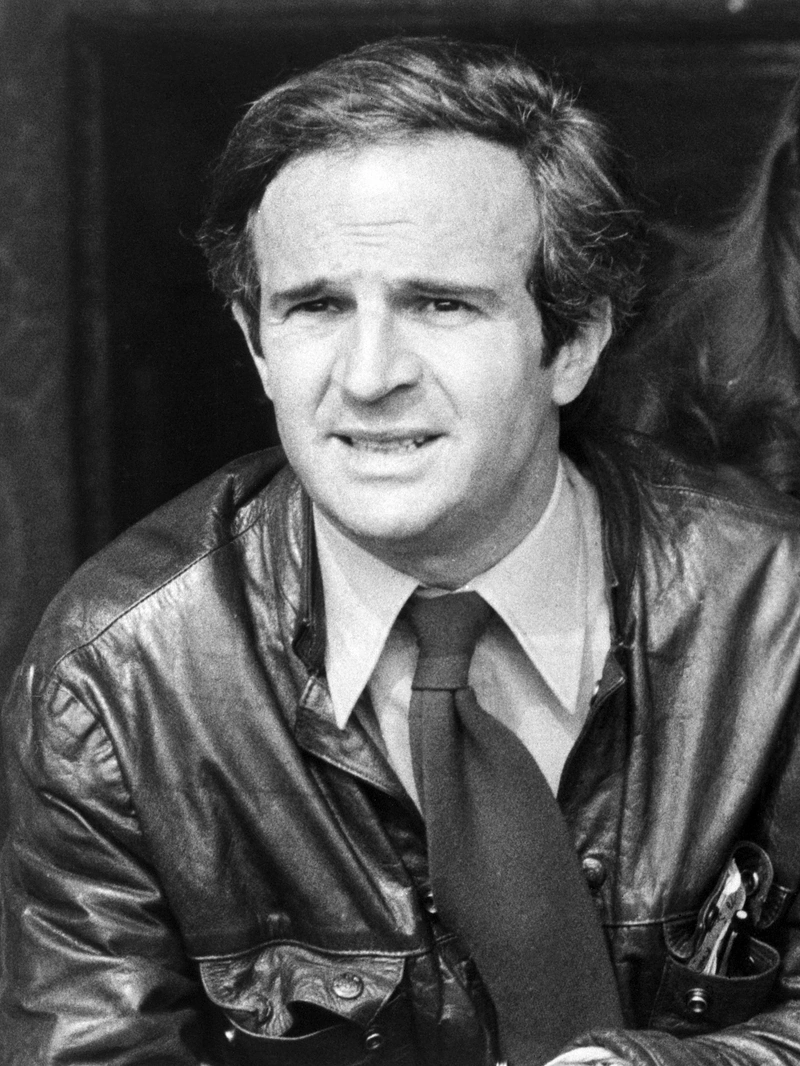
| 13 Quotes | |
| Occup. | Director |
| From | France |
| Born | February 6, 1932 Paris, France |
| Died | October 21, 1984 Neuilly-sur-Seine, France |
| Aged | 52 years |
| Cite | |
Citation Formats
APA Style (7th ed.)
Francois truffaut biography, facts and quotes. (2026, February 11). FixQuotes. https://fixquotes.com/authors/francois-truffaut/
Chicago Style
"Francois Truffaut biography, facts and quotes." FixQuotes. February 11, 2026. https://fixquotes.com/authors/francois-truffaut/.
MLA Style (9th ed.)
"Francois Truffaut biography, facts and quotes." FixQuotes, 11 Feb. 2026, https://fixquotes.com/authors/francois-truffaut/. Accessed 27 Mar. 2026.
Early Life and Background
Francois Truffaut was born in Paris on February 6, 1932, and raised in circumstances that left him feeling both crowded by adults and essentially alone. His mother, Janine de Monferrand, was young and often emotionally distant; the man who legally recognized him, Roland Truffaut, provided a name but not a secure inner home. The ambiguity around his paternity, later clarified as likely involving another man, became an early lesson in secrecy and shifting identities - a theme that would echo through his portraits of love, betrayal, and self-invention.Paris during the Occupation and the austere postwar years gave Truffaut a city of movie theaters, black markets, and moral gray zones. He drifted through school, stole, lied, and ran away; by his teens he was in minor trouble with the law and spent time in a detention center. What might have been a dead end instead became his origin story: the sensation of being judged by institutions would later fuel his lifelong skepticism toward authority, classrooms, police, and the polite hypocrisies of bourgeois life.
Education and Formative Influences
Truffaut educated himself through cinephilia, haunting the Cinematheque Francaise and Paris repertory houses, and finding a surrogate family among film obsessives. Crucially, he was mentored by critic and theorist Andre Bazin, who helped him stabilize his life, encouraged his writing, and modeled a rigorous, moral way of talking about cinema. In the 1950s Truffaut wrote for Cahiers du Cinema, developing the politique des auteurs and attacking what he called the French "Tradition of Quality" in his 1954 polemic "Une certaine tendance du cinema francais", an essay that announced a generational revolt: the director as author, and film as personal expression rather than tasteful illustration.Career, Major Works, and Turning Points
After shorts and assistant work, Truffaut burst onto the world stage with "Les Quatre Cents Coups" (The 400 Blows, 1959), a semi-autobiographical debut that won him Best Director at Cannes and made Jean-Pierre Leaud his on-screen alter ego as Antoine Doinel. He followed with "Tirez sur le pianiste" (Shoot the Piano Player, 1960), the lyrical and jagged "Jules et Jim" (1962), and "La Peau douce" (The Soft Skin, 1964), then expanded his range with the noir homage "La Mariee etait en noir" (1968) and the child-centered fable "L'Enfant sauvage" (1970), in which he also acted. His most broadly beloved successes included "Baisers voles" (1968) and "Domicile conjugal" (1970) in the Doinel cycle, the nostalgic "La Nuit americaine" (Day for Night, 1973), and the tender "L'Histoire d'Adelaide H". (1975). Later works such as "La Chambre verte" (1978), "Le Dernier metro" (1980), and his final film, "Vivement dimanche!" (Confidentially Yours, 1983) revealed a director increasingly preoccupied with memory, death, and the ethics of devotion. Truffaut died in Neuilly-sur-Seine on October 21, 1984, at 52, from a brain tumor, leaving an oeuvre that mapped his private wounds onto the public language of cinema.Philosophy, Style, and Themes
Truffaut believed cinema could be as intimate as literature, but with the added charge of faces, weather, and time passing across a body. “The film of tomorrow appears to me as even more personal than an individual and autobiographical novel, like a confession, or a diary”. That line is less a manifesto than an admission: he filmed to translate shame, longing, and stubborn hope into narrative, often disguising confession as genre. The Doinel films turn a troubled childhood into a lifelong inquiry into how a man tries - and often fails - to grow up; "Jules et Jim" romanticizes freedom while showing its collateral damage; "The Soft Skin" strips adultery of glamour and leaves only panic and consequence. Even his gentlest scenes carry the psychology of a boy who watched adults lie and learned to lie back.His style joined New Wave lightness to classical clarity: mobile camera, location texture, and spontaneous rhythm, yet shaped by exacting editing and a love of narrative propulsion. He distrusted bureaucracy in art and idealized filmmaking as risk and ardor: “The film of tomorrow will not be directed by civil servants of the camera, but by artists for whom shooting a film constitutes a wonderful and thrilling adventure”. Underneath the romantic rhetoric was a practical creed - if art was to be truthful, the artist had to expose himself. That exposure bred obsession; he joked with the candor of someone diagnosing his own compulsion, “Film lovers are sick people”. In Truffaut, the "sickness" was productive: an inability to stop looking, replaying, revising, and seeking, especially in love stories where desire collides with conscience, and where tenderness is never far from cruelty.
Legacy and Influence
Truffaut helped redefine postwar cinema by proving that a director could be both critic and creator, both populist storyteller and personal essayist, and his interviews and books - especially his landmark conversations with Alfred Hitchcock - permanently altered how filmmakers study craft. Internationally, his mixture of emotional directness, cinephile reference, and humane skepticism became a template for generations of writer-directors; domestically, he remains a central figure of the French New Wave alongside Godard, Rohmer, Chabrol, and Rivette, yet distinct in his warmth and narrative drive. His films endure because they keep faith with the inner child and the compromised adult at once, insisting that art can be a shelter, a confession, and sometimes the only honest way to say what family and society make unsayable.Our collection contains 13 quotes written by Francois, under the main topics: Wisdom - Art - Justice - Love - Movie.
Other people related to Francois: Jean-Luc Godard (Director), Nicolas Roeg (Director), Claude Chabrol (Director), Catherine Deneuve (Actress), Jeanne Moreau (Actress), Roberto Rossellini (Director), Jacques Rivette (Director), Isabelle Adjani (Actress), Agnes Varda (Director), Oskar Werner (Actor)