
Frank Stella Biography Quotes 12 Report mistakes
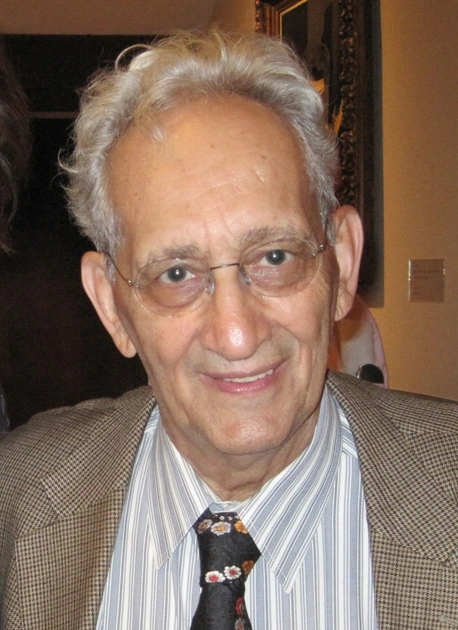
| 12 Quotes | |
| Occup. | Artist |
| From | USA |
| Born | May 12, 1936 Malden, Massachusetts |
| Age | 89 years |
| Cite | |
Citation Formats
APA Style (7th ed.)
Frank stella biography, facts and quotes. (2026, February 11). FixQuotes. https://fixquotes.com/authors/frank-stella/
Chicago Style
"Frank Stella biography, facts and quotes." FixQuotes. February 11, 2026. https://fixquotes.com/authors/frank-stella/.
MLA Style (9th ed.)
"Frank Stella biography, facts and quotes." FixQuotes, 11 Feb. 2026, https://fixquotes.com/authors/frank-stella/. Accessed 12 Feb. 2026.
Early Life and Background
Frank Philip Stella was born on May 12, 1936, in Malden, Massachusetts, an industrial suburb north of Boston whose brick mills and working harbors formed an early backdrop of hard edges and pragmatic American modernity. The son of Italian American parents, he grew up in a household shaped by mid-century upward striving, where craft, discipline, and the promise of postwar prosperity mattered as much as talk. The young Stella absorbed a visual world of signage, factory geometry, and New England austerity - a vernacular clarity that later reappeared, purified, in his refusal of pictorial illusion.By the time he reached adolescence, the United States was entering the Cold War era in which culture became a public battleground: Abstract Expressionism was hailed as a symbol of freedom, while mass production and suburban expansion remade everyday form. Stella, temperamentally suspicious of melodrama, was drawn less to heroic biography than to making - to the idea that a painting could be built with the blunt certainty of a door or a road. That psychological preference for structure over confession would become his signature, and also his provocation to a scene still enthralled by gestural selfhood.
Education and Formative Influences
Stella attended Phillips Academy, Andover, where he encountered strong teaching in drawing and art history and saw first-hand how modernism could be taught as a lineage rather than a myth. In 1954 he entered Princeton University, studying history while pursuing painting seriously; he learned from the campus presence of modernist criticism and from museum trips that made European abstraction tangible. He looked hard at Jasper Johns and Robert Rauschenberg as contemporaries breaking the Abstract Expressionist spell, and he studied older models - from Barnett Newman to Piet Mondrian - not as icons but as problems to be solved in paint, scale, and edge.Career, Major Works, and Turning Points
After graduating in 1958, Stella moved to New York and, within a year, produced the Black Paintings (1958-60) - severe canvases of enamel house paint laid in parallel bands that declared the picture as a literal object. Their impact was immediate: inclusion in the Museum of Modern Art and the 1959 "Sixteen Americans" exhibition positioned him, still in his early twenties, as a leading figure in what would soon be called Minimalism. In the 1960s he expanded into shaped canvases and color-driven series such as the Aluminum and Copper Paintings and the Protractor series, using geometry to make the picture's perimeter an active fact rather than a passive frame. From the late 1970s onward, he pushed painting into relief and then into full three-dimensionality - the Polish Village series, then the exuberant, industrially fabricated constructions of the 1980s and 1990s - while also undertaking public commissions and large-scale sculpture. Each turning point kept the same wager: that an artwork could be argued through its structure, not narrated through subject matter.Philosophy, Style, and Themes
Stella's most famous maxim is a psychological tell as much as an aesthetic claim: "What you see is what you see". It is often heard as chilly formalism, but it also functions as self-protection - a refusal to let interpretation colonize the work or to let biography become its alibi. In an era when painters were still measured against the existential theater of Abstract Expressionism, Stella insisted that meaning could arise from decision, repetition, and limits. The early bands, their tight spacing and emphatic borders, are less about emptiness than about control: a mind choosing to eliminate rhetoric until only the necessary remains.Yet he was never merely reducing. His deeper aim was spatial, even metaphysical, and he said so: "But, after all, the aim of art is to create space - space that is not compromised by decoration or illustration, space within which the subjects of painting can live". This helps explain the later leap into relief and sculpture, where space stops being depicted and becomes occupied. Even his quip, "A sculpture is just a painting cut out and stood up somewhere". , is less dismissive than strategic - a way of keeping continuity while crossing mediums. Across the decades, Stella's work stages a tension between the diagram and the body: the plan is rigorous, but the scale demands physical encounter, and the engineered surfaces keep asserting the hand that chose, masked, rotated, bolted, and insisted.
Legacy and Influence
Stella became one of the decisive American artists of the postwar period, both for what he made and for the permission he gave others: to treat painting as an object, to let the edge become the image, to pursue abstraction without existential performance. His early paintings helped shift the center of gravity from Abstract Expressionism toward Minimalism and Post-Painterly Abstraction, influencing artists from Donald Judd and Sol LeWitt to later generations working between painting, fabrication, and architecture. Just as importantly, his career models restlessness without repudiation - a long argument with the rectangle that expanded into constructed space, leaving a legacy of works that keep asking the same hard question in new materials: how much can a form do, when it refuses to pretend to be anything else?Our collection contains 12 quotes written by Frank, under the main topics: Art - Aging.
Other people related to Frank: Harry Seidler (Architect), Ad Reinhardt (Artist), Barnett Newman (Artist)
Source / external links