
Frank Whittle Biography Quotes 4 Report mistakes
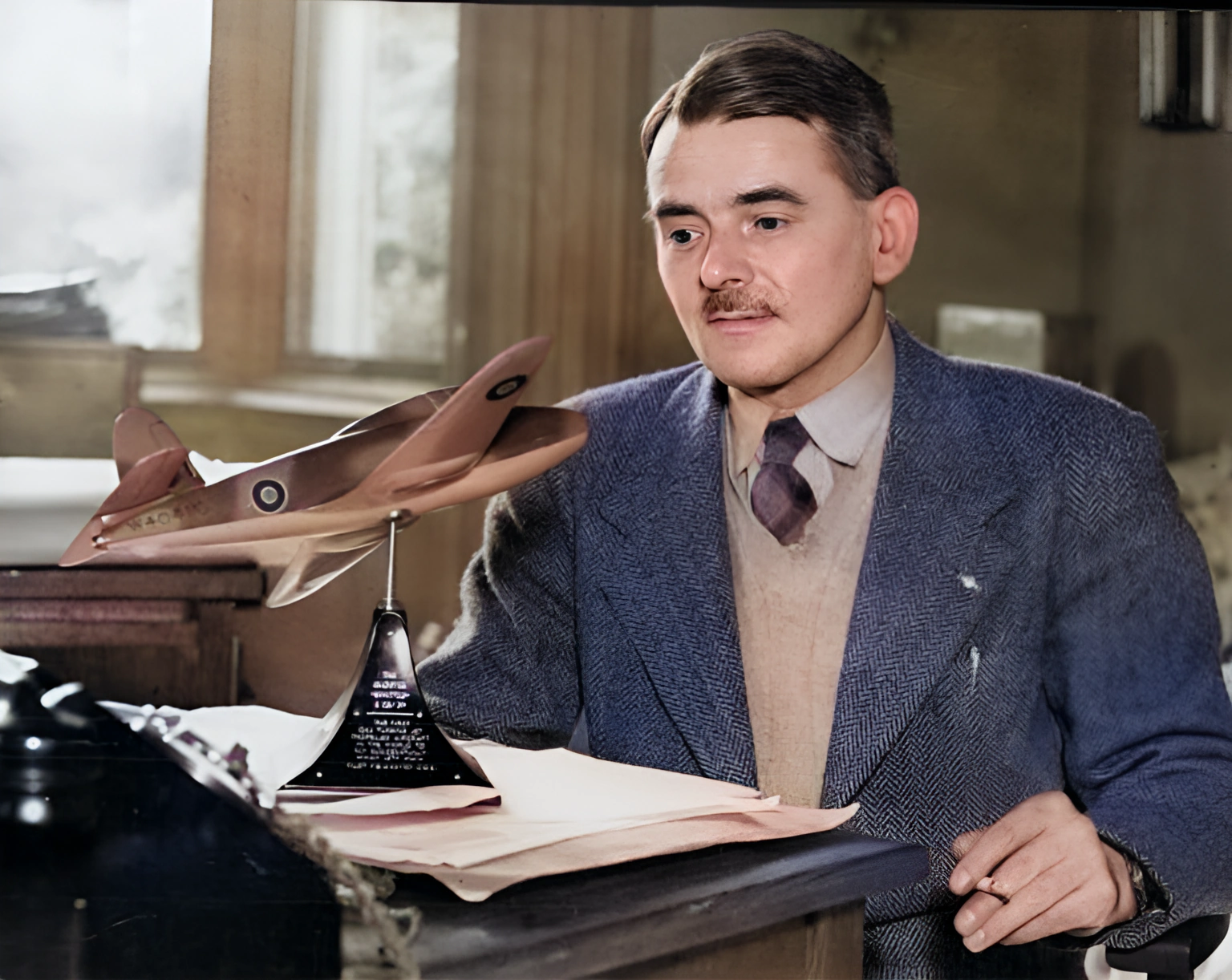
| 4 Quotes | |
| Known as | Sir Frank Whittle |
| Occup. | Inventor |
| From | England |
| Spouses | Dorothy Lee (1930-1976) Hazel Hall (1976) |
| Born | June 1, 1907 Coventry, Warwickshire, England |
| Died | August 8, 1996 Columbia, Maryland, US |
| Aged | 89 years |
| Cite | |
Citation Formats
APA Style (7th ed.)
Frank whittle biography, facts and quotes. (2026, February 11). FixQuotes. https://fixquotes.com/authors/frank-whittle/
Chicago Style
"Frank Whittle biography, facts and quotes." FixQuotes. February 11, 2026. https://fixquotes.com/authors/frank-whittle/.
MLA Style (9th ed.)
"Frank Whittle biography, facts and quotes." FixQuotes, 11 Feb. 2026, https://fixquotes.com/authors/frank-whittle/. Accessed 5 Mar. 2026.
Early Life and Background
Frank Whittle was born on June 1, 1907, in Coventry, England, into a working-class Midlands world shaped by machine shops, early motor transport, and the lingering afterimage of the First World War. His father, a practical man with experience in engineering trades, moved the family to Leamington Spa, where a small business in mechanical repair exposed the boy to tools, tolerances, and the unforgiving logic of metal. Whittle grew up during a period when Britain still carried imperial confidence but was also learning that industrial advantage could evaporate fast under modern warfare.As a teenager, he was small, intense, and technically obsessed, drawn to aircraft at a time when flight was still a public marvel and a military frontier. He saw aviation not as romance but as performance: speed, altitude, range, and the constraints imposed by piston engines and propellers. The interwar years gave him both a target and a pressure cooker - a society cutting defense budgets yet haunted by the prospect of another war, and an air force trying to imagine the next conflict while flying machines that were, by Whittle's standards, already obsolete.
Education and Formative Influences
Whittle entered the Royal Air Force as an apprentice and fought his way through the RAF College Cranwell, where his mathematical ability and stubborn independence stood out. In 1928, while still a cadet, he produced a thesis that argued for a gas-turbine jet aircraft - a radical break from the propeller era - and soon pursued the idea with patent applications (his key patent was filed in 1930). He later studied engineering at Cambridge University (Peterhouse), where formal thermodynamics and fluid mechanics gave him the language to defend an intuition he already possessed: that compressing air, burning fuel, and expanding the gases through a turbine could yield thrust more directly and, at high speed and altitude, more efficiently than propellers limited by tip-speed and drag.Career, Major Works, and Turning Points
The central drama of Whittle's career was the long gap between insight and institutional belief. He formed Power Jets Ltd in 1936 to develop the concept, and in 1937 the first experimental engine ran, proving the principle but exposing brutal engineering realities - high-temperature materials, compressor stability, combustion, and turbine blade endurance. Wartime urgency finally shifted government attitudes; Power Jets became a focal point for jet development even as official support arrived late and often grudgingly. The Whittle W.1 powered the Gloster E.28/39 for Britain's first jet flight in 1941, and the W.2 lineage fed into the Gloster Meteor, which entered service in 1944 as the RAF's first operational jet fighter. Yet Whittle paid for success with exhaustion and conflict: disputes over control, the nationalization of Power Jets in 1944, and years of stress that contributed to ill health. After the war he worked in the United States, including advisory roles, and later lived in America, watching jet propulsion become the baseline of global airpower and commercial flight.Philosophy, Style, and Themes
Whittle's inner life combined visionary abstraction with a mechanic's impatience. He thought in systems - compressor ratios, turbine efficiencies, thrust-to-weight - but he also trusted the evidence of a test stand. That duality made him both difficult and indispensable: he could be uncompromising when others treated the engine as a committee problem rather than a machine that either ran or failed. His blunt humor captured a core belief that engineering is accountable to purpose; when questioned about an engine doing exactly what it should, he snapped, “Well, that's what it was bloody well designed to do, wasn't it?” The remark is more than bravado - it shows a mind that disliked mystique and demanded functional clarity.He also carried a strategic worldview forged by two wars and an interwar lull that nearly strangled innovation. For Whittle, jet propulsion was not merely a technical upgrade but a national necessity, and he judged states by their willingness to invest in laboratories, manufacturing, and talent: “A nation's ability to fight a modern war is as good as its technological ability”. That conviction made him persuasive when he was listened to, and furious when he was not. Even in technical details his thinking emphasized efficiency and integration - how engines must couple to airframes and operational needs - and he noted early, “I had always realized it was desirable to gear down the jet”. , a compact admission that pure thrust was never the whole story; propulsion had to be tamed, transmitted, and matched to real-world flight regimes.
Legacy and Influence
Whittle died on August 8, 1996, having lived long enough to see the jet age reshape warfare, travel, trade, and culture. His enduring influence lies not only in the specific engines he designed but in the proof that a small team, armed with theory and relentless testing, could change the strategic geometry of the world. Modern turbofans, high-bypass airliners, and the very expectation of rapid global mobility trace back to the path he forced open - through skepticism, bureaucratic delay, and technical risk - until the gas turbine became the engine of the century.Our collection contains 4 quotes written by Frank, under the main topics: Sarcastic - War - Technology.
Frequently Asked Questions
- When did Frank Whittle invent the jet engine: He patented his turbojet concept in 1930.
- Frank Whittle education: RAF College Cranwell; later studied Mechanical Sciences at the University of Cambridge.
- Frank Whittle invention: The turbojet engine.
- Frank Whittle, son: He had two sons.
- Frank Whittle jet engine: Pioneer of the turbojet, patent in 1930; first run 1937; first flight 1941 (Gloster E.28/39).
- What is Frank Whittle net worth? Not publicly disclosed; no reliable estimate.
- How old was Frank Whittle? He became 89 years old
Source / external links