
Franz Boas Biography Quotes 16 Report mistakes
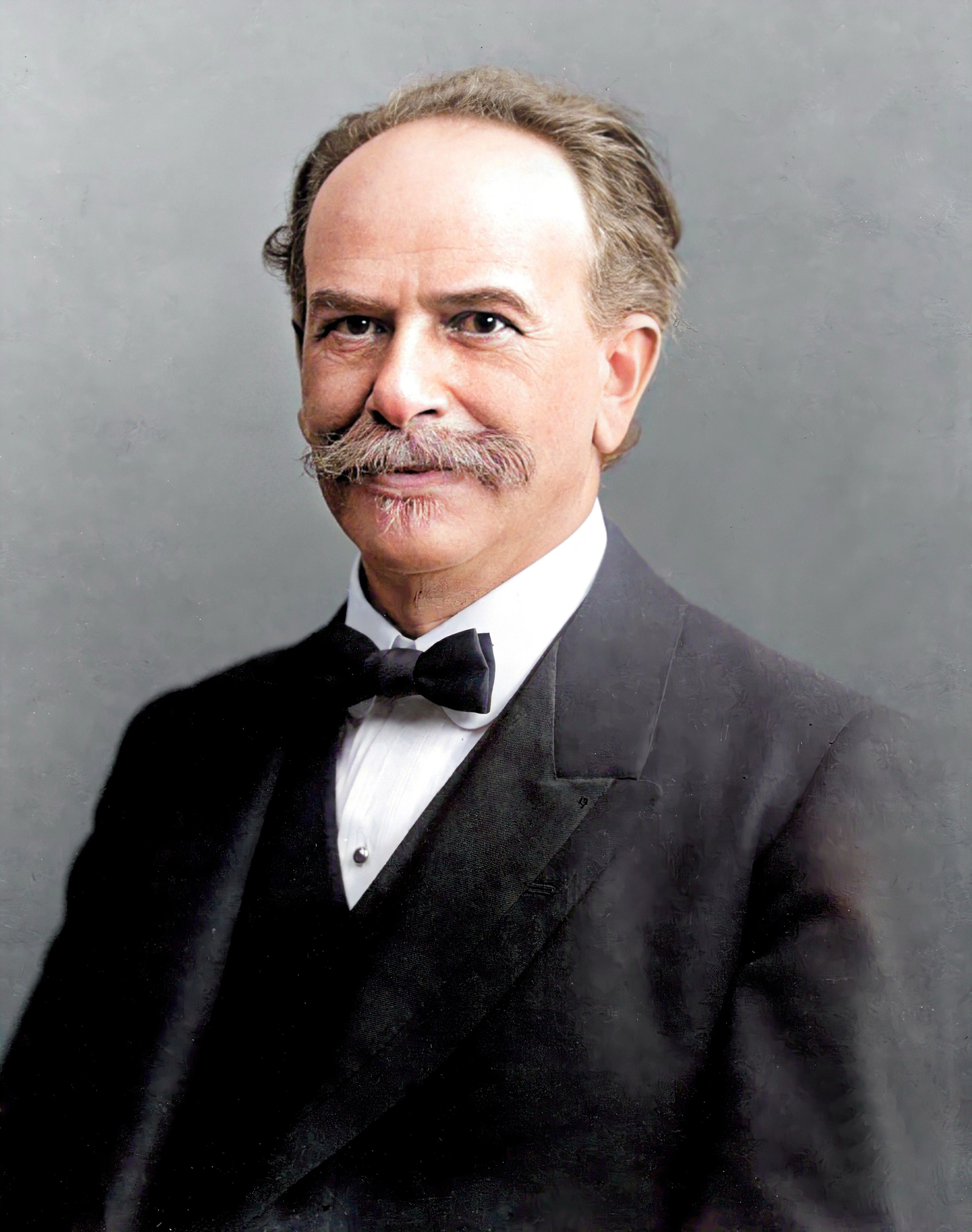
Attr: Canadian Museum of History
| 16 Quotes | |
| Occup. | Scientist |
| From | USA |
| Born | July 9, 1858 Minden, Westphalia, Germany |
| Died | December 21, 1942 New York, U.S. |
| Aged | 84 years |
| Cite | |
Citation Formats
APA Style (7th ed.)
Franz boas biography, facts and quotes. (2026, February 11). FixQuotes. https://fixquotes.com/authors/franz-boas/
Chicago Style
"Franz Boas biography, facts and quotes." FixQuotes. February 11, 2026. https://fixquotes.com/authors/franz-boas/.
MLA Style (9th ed.)
"Franz Boas biography, facts and quotes." FixQuotes, 11 Feb. 2026, https://fixquotes.com/authors/franz-boas/. Accessed 5 Mar. 2026.
Early Life and Background
Franz Uri Boas was born on July 9, 1858, in Minden, Westphalia, in the Kingdom of Prussia, into a liberal Jewish household marked by the aftershocks of the 1848 revolutions and the pressures of German nationalism. His parents, Meier and Sophie Boas, ran a merchant business and cultivated a home where music, reading, and civic ideals mattered as much as practical work. Boas grew up attentive to how minorities were classified, disciplined, and romanticized - an early apprenticeship in the politics of labeling that later made him suspicious of racial generalizations dressed up as science.In adolescence he developed a private intensity: methodical, exacting, and emotionally loyal to family, yet unwilling to let inherited identity harden into dogma. His early notebooks and letters already show a mind drawn to the concrete - measurements, maps, weather - but also to questions about what makes people different without making them unequal. That tension, between empiricism and moral urgency, became the engine of his life.
Education and Formative Influences
Boas studied mathematics and physics at Heidelberg and Bonn and earned a doctorate in physics at the University of Kiel in 1881, working in psychophysics and the study of perception. The late-19th-century German university system trained him in rigorous measurement and in the prestige of laboratory methods, while the era's debates over evolution, nationalism, and "scientific" racism pushed him toward a broader synthesis. A decisive formative experience came with his turn to geography and fieldwork: in 1883-1884 he traveled to Baffin Island to study the relationship between environment and human behavior among Inuit communities, learning that the realities of language, custom, and history could not be reduced to climate or biology.Career, Major Works, and Turning Points
After immigrating to the United States in 1887, Boas moved through museum anthropology before transforming American anthropology into an academic discipline: he worked at the American Museum of Natural History, organized the influential 1893 World's Columbian Exposition ethnology displays, and then anchored his career at Columbia University (from 1899), training a generation that included Margaret Mead, Ruth Benedict, Zora Neale Hurston, and Edward Sapir. His major works - The Mind of Primitive Man (1911), Race, Language and Culture (1940), and pioneering studies with George Hunt on Kwakwaka'wakw texts and ceremonial life - advanced cultural relativism, historical particularism, and intensive field methods. Turning points included his campaign against typological race science through immigrant body-measurement studies (showing cranial plasticity), his leadership in founding professional institutions like the American Anthropological Association, and his outspoken public opposition to racism and militarism, even when it cost him professionally during World War I.Philosophy, Style, and Themes
Boas's inner life was anchored in a moral empiricism: the belief that careful observation was inseparable from intellectual freedom, and that freedom was inseparable from the dignity of others. He traced his own temperament to family liberalism - “My parents had broken through the shackles of dogma”. That autobiographical note is more than nostalgia; it explains his allergy to grand systems that demanded loyalty at the expense of evidence. In his hands, anthropology became an ethical practice not because it preached, but because it refused to let prejudice masquerade as measurement.His style was deliberately anti-spectacular: slow accumulation of linguistic texts, artifacts, life histories, and comparative data - then a refusal to leap beyond what the record could bear. He challenged the era's racial hierarchies by insisting on shared human capacity: “If we were to select the most intelligent, imaginative, energetic, and emotionally stable third of mankind, all races would be present”. The sentence doubles as a psychological self-portrait - a man trying to discipline the mind against the seductions of superiority. Yet he also distrusted sanctimony in science, warning that personal virtue and scientific integrity do not always coincide: “We all know scientists who in private life do not come up to the standard of truthfulness, but who, nevertheless, would not consciously falsify the results of their researches”. That realism fueled his institutional focus on method, peer scrutiny, and field accountability, especially in an era when anthropology could be recruited to empire.
Legacy and Influence
Boas died on December 21, 1942, in New York City, collapsing after a lunch conversation at Columbia, and he left behind not just books but a reordered intellectual landscape. He helped dislodge biological determinism from the human sciences, made culture and language central to explanations of behavior, and raised the evidentiary bar through intensive fieldwork and linguistic documentation. His students carried his approach into public debates on race, education, gender, and national identity, while later critiques of his limits - including his partial blindness to colonial power and his sometimes narrow empiricism - still operate within a Boasian world where claims about "human nature" must answer to history, context, and data. In that sense, his enduring influence is methodological and moral: the insistence that difference be studied without being weaponized.Our collection contains 16 quotes written by Franz, under the main topics: Truth - Freedom - Reason & Logic - Equality - Science.
Other people related to Franz: Alfred L. Kroeber (Scientist), James Mooney (Scientist), Edward Burnett Tylor (Scientist)
Frequently Asked Questions
- Franz Boas pronunciation: Pronounced as 'Frahnz Boh-ahs'.
- What did Franz Boas study: Focus on indigenous cultures, especially Native American and Inuit societies, and language.
- Why is Franz Boas, the Father of anthropology: Laid foundations for modern anthropology, emphasizing rigorous scientific methodology.
- Franz Boas cultural relativism: Argued that cultures should be understood on their own terms, not judged against others.
- Franz Boas famous works: Authored 'The Mind of Primitive Man' and initiated detailed fieldwork methods.
- Franz Boas theory: Promoted cultural relativism and rejected racial hierarchy theories.
- Franz Boas contribution to anthropology: Pioneered cultural anthropology and introduced cultural relativism.
- How old was Franz Boas? He became 84 years old
Franz Boas Famous Works
- 1940 Race, Language and Culture (Book)
- 1928 Anthropology and Modern Life (Book)
- 1927 Primitive Art (Book)
- 1911 The Mind of Primitive Man (Book)
- 1911 Handbook of American Indian Languages (Book)
Source / external links