
Franz Kafka Biography Quotes 64 Report mistakes
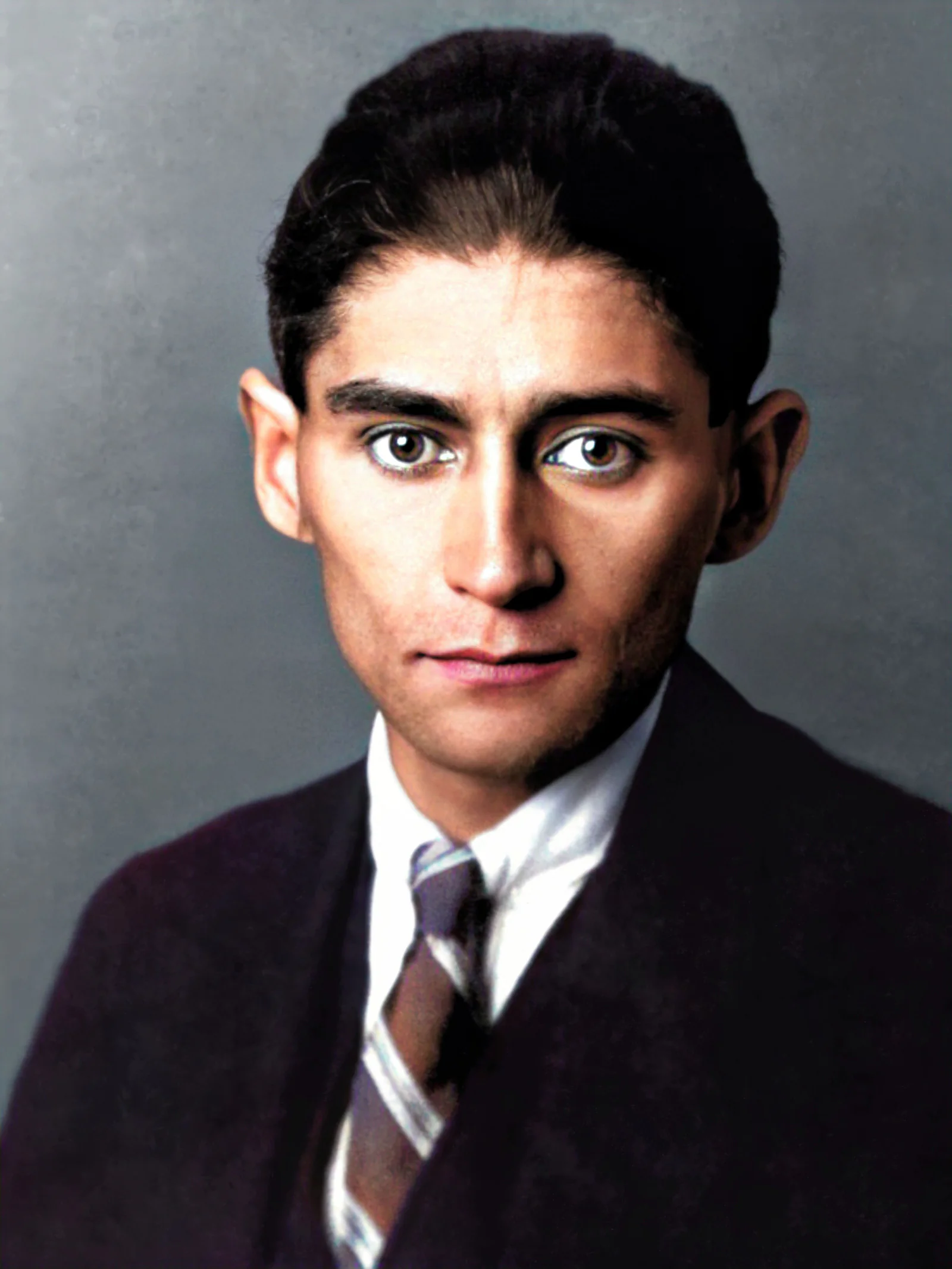
| 64 Quotes | |
| Occup. | Novelist |
| From | Austria |
| Born | July 3, 1883 Prague, Bohemia, Austria-Hungary |
| Died | June 3, 1924 Kierling, Lower Austria, Austria |
| Cause | Tuberculosis |
| Aged | 40 years |
| Cite | |
Citation Formats
APA Style (7th ed.)
Franz kafka biography, facts and quotes. (2026, February 1). FixQuotes. https://fixquotes.com/authors/franz-kafka/
Chicago Style
"Franz Kafka biography, facts and quotes." FixQuotes. February 1, 2026. https://fixquotes.com/authors/franz-kafka/.
MLA Style (9th ed.)
"Franz Kafka biography, facts and quotes." FixQuotes, 1 Feb. 2026, https://fixquotes.com/authors/franz-kafka/. Accessed 5 Mar. 2026.
Early Life and Background
Franz Kafka was born on July 3, 1883, in Prague, then a tense provincial capital of the Austro-Hungarian Empire, where Czech nationalism rose against imperial bureaucracy and German cultural dominance. He grew up in the German-speaking, Jewish minority - socially ambitious yet perpetually exposed - a triangulated identity that later hardened into his fiction's sense of being tried, classified, and judged by invisible authorities.His father, Hermann Kafka, a self-made merchant with a thunderous will, ran a haberdashery and expected robustness, practicality, and gratitude. Kafka, delicate, bookish, and inward, developed an early habit of self-interrogation that bordered on self-prosecution. The deaths of two younger brothers in infancy and the emotional distance he felt within a household staffed by servants contributed to the isolating domestic atmosphere later distilled into his "Letter to His Father" (written 1919, not published in his lifetime), a key document of fear, shame, and filial entrapment.
Education and Formative Influences
Kafka attended the Altstadter Deutsches Gymnasium in Prague and entered Charles-Ferdinand University in 1901, drifting from chemistry to law, a pragmatic choice that promised employability and time for writing. In the ferment of Prague's German-Jewish intellectual circles he met Max Brod, his most fateful friend and early champion, and encountered Nietzschean modernity, Jewish cultural renewal, and the pressures of assimilation. He read widely - Flaubert, Dostoevsky, Kierkegaard - while also absorbing the rhythms of legal language, files, petitions, and official seals that would become his imaginative raw material.Career, Major Works, and Turning Points
After earning his law degree (1906) and completing legal training, Kafka worked first at Assicurazioni Generali (1907) and then at the Workers' Accident Insurance Institute for the Kingdom of Bohemia (1908-1922), drafting reports and evaluating industrial injuries as Prague industrialized. Nights belonged to writing. A breakthrough came in September 1912 with an intense burst that produced "The Judgment" and launched the first version of "The Man Who Disappeared" (later published as "Amerika"); soon followed "The Metamorphosis" (1915), "In the Penal Colony" (1919), and the great unfinished novels "The Trial" (written 1914-1915) and "The Castle" (written 1922). His private life oscillated between desire and panic: the prolonged engagement to Felice Bauer collapsed under his fear of marriage and the demands of art; later relationships with Milena Jesenska and Dora Diamant offered intimacy shadowed by illness. Diagnosed with tuberculosis in 1917, he cycled through sanatoria, resigned in 1922, and died in Kierling, near Vienna, on June 3, 1924, unable to eat as the disease invaded his larynx.Philosophy, Style, and Themes
Kafka's work is often misread as prophecy; it is more precisely a microscope turned inward until the self becomes a legal case file. His narrators speak in clean, almost clerical sentences that make the impossible sound procedural, as if nightmare were a form to be properly stamped. The emotional engine is not spectacle but an ethics of attention, a belief that the smallest deviation in a hallway, a letter, a door left ajar, can decide a life. He sought a discipline of solitude, not as romance but as method: "You do not need to leave your room. Remain sitting at your table and listen. Do not even listen, simply wait, be quiet still and solitary. The world will freely offer itself to you to be unmasked,Our collection contains 64 quotes written by Franz, under the main topics: Witty One-Liners - Motivational - Ethics & Morality - Wisdom - Truth.
Other people related to Franz: Cynthia Ozick (Novelist), Ugo Betti (Playwright), Gustave Meyrink (Writer)
Franz Kafka Famous Works
- 1927 Amerika (Novel)
- 1926 The Castle (Novel)
- 1925 The Trial (Novel)
- 1915 The Metamorphosis (Novella)
- 1914 In the Penal Colony (Short Story)
- 1912 The Judgment (Short Story)
Source / external links