
Frederick C. Frieseke Biography Quotes 6 Report mistakes
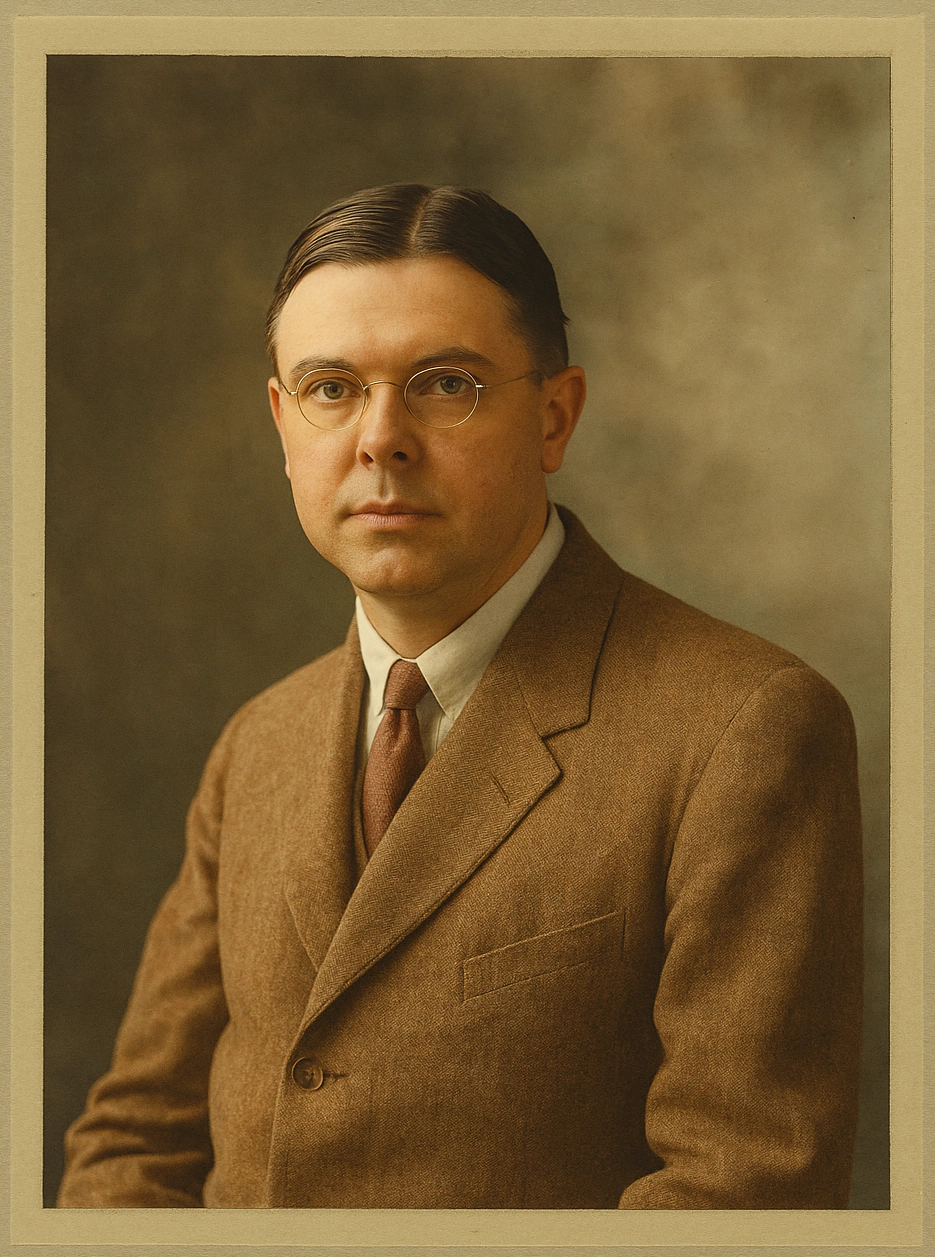
| 6 Quotes | |
| Born as | Frederick Carl Frieseke |
| Occup. | Painter |
| From | USA |
| Born | April 7, 1874 Owosso, Michigan, United States |
| Died | August 24, 1939 Le Mesnil-sur-Blangy, Normandy, France |
| Aged | 65 years |
| Cite | |
Citation Formats
APA Style (7th ed.)
Frederick c. frieseke biography, facts and quotes. (2026, February 24). FixQuotes. https://fixquotes.com/authors/frederick-c-frieseke/
Chicago Style
"Frederick C. Frieseke biography, facts and quotes." FixQuotes. February 24, 2026. https://fixquotes.com/authors/frederick-c-frieseke/.
MLA Style (9th ed.)
"Frederick C. Frieseke biography, facts and quotes." FixQuotes, 24 Feb. 2026, https://fixquotes.com/authors/frederick-c-frieseke/. Accessed 3 Apr. 2026.
Early Life and Background
Frederick Carl Frieseke was born on April 7, 1874, in Owosso, Michigan, into a Midwestern America still defining itself through industry, small-town civic life, and the afterglow of the Civil War. His childhood was spent largely in Florida, a move that mattered: the hard-edged northern light of Michigan gave way to a more luminous climate and a looser, seasonal rhythm. That early oscillation between places helped form a painter who would later treat atmosphere as subject - not merely what objects are, but how a room, a garden, or a figure feels when light passes through it.In the 1890s he gravitated toward Chicago, then a fast-modernizing metropolis where architecture, publishing, and poster design created steady work for a young draughtsman. Frieseke began as a commercial illustrator, learning clarity, design, and the discipline of making images for a public. Yet the very practicality of the work sharpened his awareness of what it lacked: the slower, riskier search for color and sensation that could not be standardized. By the time he turned toward Paris, he carried with him both a craftsman's confidence and a hunger to escape merely functional picture-making.
Education and Formative Influences
In 1897 Frieseke arrived in Paris and entered the Academie Julian, later studying with Jean-Joseph Benjamin-Constant and Jean-Paul Laurens, before absorbing the freer studio culture around James McNeill Whistler's legacy and the city's living arguments over Manet, Monet, and the still-controversial Impressionists. He worked in the orbit of American expatriate painters and, crucially, encountered the decorative color and pattern of Post-Impressionism. The example of Claude Monet at Giverny and the color structures of Pierre Bonnard and Edouard Vuillard offered him a way to reconcile academic figure training with modern light - a fusion that would become his signature.Career, Major Works, and Turning Points
Frieseke settled for long periods in and near Giverny, developing a mature style of sunlit figure paintings staged in gardens, verandas, and interiors where patterned textiles and foliage compete with skin and shadow. He exhibited at the Paris Salon and became associated with the Giverny group of American Impressionists; his paintings won major honors, including acclaim at the Panama-Pacific International Exposition in San Francisco (1915), which helped secure his American reputation even as he lived largely in France. Works such as "The Garden Umbrella" (1910), "Summer" (1911), and "Woman with Parasol" (1912) show his turning point: abandoning illustration's linear priorities for a painting logic where color temperature and broken light carry the narrative. After World War I he spent time in the south of France, and his later decades alternated between France and the United States, with a steady output that refined rather than reinvented his vision until his death on August 24, 1939.Philosophy, Style, and Themes
Frieseke's art is often described as hedonistic, but its pleasure is structured, almost philosophical: he treats beauty as something built, not found. He repeatedly chose motifs that let him test the boundary between observation and arrangement - a woman reading by a window, a bather in dappled shade, a garden where petals and fabric share the same visual grammar. In this, he aligns with the modern idea that perception is an active construction. His best canvases do not argue; they assert. “The truth simply is; that's all. It doesn't need reasons; it doesn't have to be right; it's just the truth. Period”. Frieseke's psychological confidence lies in that refusal to over-explain: a painting can be valid as a lived optical fact, even if it resists anecdote.At the same time, his immersion in patterned surfaces suggests a private temperament that sought order inside abundance. The figure is rarely heroic or narratively strained; instead it is situated, sheltered, and allowed to drift into environment, as if the self is most whole when it stops performing. This matches an ethic of alignment rather than struggle: “Take a look at your natural river. What are you? Stop playing games with yourself. Where's your river going? Are you riding with it? Or are you rowing against it? Don't you see that there is no effort if you're riding with your river?” Frieseke's river is light - the flow of sun across leaves, skin, and cloth - and his method is to ride it through broken brushwork and high-key color. Yet there is also choice, a quiet modern agency in selecting what the eye will honor: “The key to your universe is that you can choose”. His recurring theme is not escape from reality but a chosen attention to the ordinary made radiant.
Legacy and Influence
Frieseke died just as Europe entered another war, but his achievement had already become a durable counterpoint to the century's harsher modernisms: a demonstration that modern painting could be advanced without becoming grim. In American art history he stands as one of the most accomplished expatriate Impressionists, a bridge between French color innovations and an American appetite for legible subjects. Museums continue to prize his Giverny pictures for their technical intelligence - the way value, hue, and pattern lock together - and painters still study him for a lesson that remains contemporary: intensity can be gentle, and the most persuasive modernity may be the one that quietly chooses what to love.Our collection contains 6 quotes written by Frederick, under the main topics: Motivational - Truth - Goal Setting - Work - Free Will & Fate.
Frequently Asked Questions
- Frederick Carl Frieseke Hollyhocks: An Impressionist garden scene of a woman among hollyhocks in Giverny, oil on canvas, c. 1911-1912.
- Frederick Carl Frieseke paintings: American Impressionist works of sunlit gardens and women at Giverny; notable pieces include The Garden Parasol and Hollyhocks.
- How old was Frederick C. Frieseke? He became 65 years old
Source / external links