
Frederick Jackson Turner Biography Quotes 8 Report mistakes
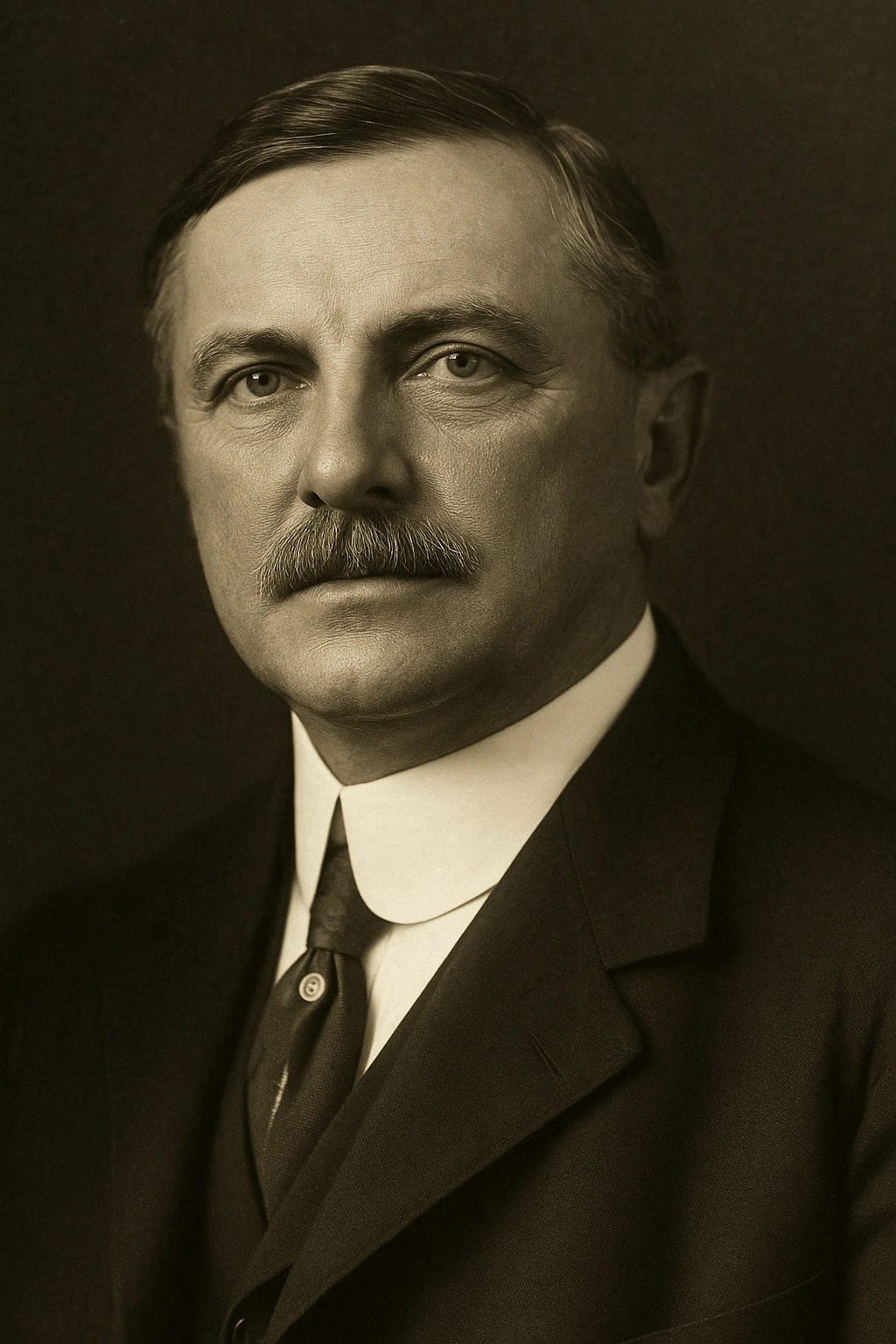
Attr: Rounds, Charles Ralph
| 8 Quotes | |
| Occup. | Historian |
| From | USA |
| Born | November 14, 1861 Portage, Wisconsin, USA |
| Died | March 14, 1932 Pasadena, California, USA |
| Aged | 70 years |
| Cite | |
Citation Formats
APA Style (7th ed.)
Frederick jackson turner biography, facts and quotes. (2026, February 24). FixQuotes. https://fixquotes.com/authors/frederick-jackson-turner/
Chicago Style
"Frederick Jackson Turner biography, facts and quotes." FixQuotes. February 24, 2026. https://fixquotes.com/authors/frederick-jackson-turner/.
MLA Style (9th ed.)
"Frederick Jackson Turner biography, facts and quotes." FixQuotes, 24 Feb. 2026, https://fixquotes.com/authors/frederick-jackson-turner/. Accessed 6 Mar. 2026.
Early Life and Background
Frederick Jackson Turner was born on November 14, 1861, in Portage, Wisconsin, a river town perched between the Great Lakes watershed and the upper Mississippi. He arrived as the Civil War began and came of age during Reconstruction, the rail boom, and the consolidation of the industrial order - decades when the Midwest was both a receiving ground for migration and a launching point for further settlement. The landscape around him still held living memories of frontier war, land speculation, and sudden town-making, but it was also becoming a region of courts, newspapers, schools, and commodity markets.
His father, Mary Turner and Andrew Jackson Turner, was a lawyer, newspaperman, and local political figure who steeped him early in civic argument and the way public opinion is manufactured. That household training made Turner unusually alert to how ordinary Americans narrated themselves - in editorials, campaign speeches, county histories, and booster literature. The young Turner learned to see history not only as events, but as a repertoire of explanations that communities use to justify expansion, property, and power.
Education and Formative Influences
Turner studied at the University of Wisconsin in Madison, graduating in 1884, then pursued graduate work at Johns Hopkins University under Herbert Baxter Adams, earning his PhD in 1890. Wisconsin gave him proximity to state archives and the living institution-building of a young commonwealth; Hopkins gave him German-influenced seminar discipline and a faith in social-scientific history. From Adams he absorbed the idea that American development could be analyzed through evolving institutions, but Turner redirected that institutional lens toward geography, migration, and the pressures of settlement, building a method that combined archival work with a broad, synthetic appetite for explanation.
Career, Major Works, and Turning Points
Turner taught at the University of Wisconsin from 1889, establishing himself as an ambitious interpreter of national development. His decisive turning point came in 1893 at the Chicago World`s Columbian Exposition, when he delivered "The Significance of the Frontier in American History" to the American Historical Association. The essay and its many revisions argued that the moving edge of settlement shaped American democracy, individualism, and social mobility, and that the 1890 Census announcement of a fragmented frontier line marked a new era. Later he taught at Harvard (1910-1924), then joined the Huntington Library in California as a research associate. He expanded his ideas through essays collected in The Frontier in American History (1920) and through a major but unfinished synthesis, The United States, 1830-1850 (published posthumously in 1935), while supervising students who carried his questions into regional, economic, and social history.
Philosophy, Style, and Themes
Turner`s signature move was to treat the nation as a process rather than an essence: a society repeatedly remade by migration, land policy, and the friction between older institutions and new conditions. He argued that “The existence of an area of free land, its continuous recession, and the advance of American settlement explain American development”. In his hands, that claim was less a hymn to wilderness than a mechanism: abundant land weakened old hierarchies, invited experimentation, and forced improvisation in law, politics, and economy. It also offered a story of national coherence during the Gilded Age, when class conflict and corporate power made many Americans wonder what still united them.
Psychologically, Turner wrote like a man trying to capture motion before it vanished. The famous pronouncement “The West is now closed”. carries more than demographic meaning - it signals a historian haunted by endings, by the fear that a key source of national renewal had been exhausted. His portraits of frontier character were likewise double-edged, fascinated by energy and wary of its costs: “That coarseness and strength combined with acuteness and inquisitiveness... that dominant individualism, working for good and evil”. He used long, accumulative sentences to mimic that restless force, turning traits into a psychological inventory of a society trained to solve problems quickly, tolerate risk, and convert space into opportunity.
Legacy and Influence
Turner became one of the most consequential American historians of the 20th century because he offered a powerful organizing thesis at the very moment the United States was becoming an overseas empire and an industrial superpower. His work shaped generations of scholarship on regionalism, migration, political development, and environmental constraint, and it influenced public memory through textbooks and popular speech. Later historians corrected his blind spots - especially his marginalization of Native peoples, the centrality of federal power, and the roles of women, slavery, and capitalism in western expansion - yet even critiques kept him central, because they were forced to argue with his map of causation. Turner's enduring impact lies in how he taught Americans to see history as an argument about conditions and change, not simply a chronicle of leaders, and how he made the frontier a metaphor through which the nation still debates its character and its limits.
Our collection contains 8 quotes written by Frederick, under the main topics: Freedom - Change - Time - Wealth.
Frequently Asked Questions
- Frederick Jackson Turner 1893: In 1893, Frederick Jackson Turner presented his influential essay "The Significance of the Frontier in American History" at the American Historical Association meeting in Chicago.
- Frederick Jackson Turner The Significance of the frontier in American history: "The Significance of the Frontier in American History" is Turner’s 1893 essay arguing that the moving frontier line was the key factor in shaping American democracy, character, and institutions.
- Frederick Jackson Turner books: Notable works include "The Frontier in American History" (1920), "The Significance of Sections in American History" (1932), and "Rise of the New West, 1819–1829" (1906).
- Frederick Jackson Turner Frontier Thesis: Turner’s Frontier Thesis argued that the American frontier shaped U.S. democracy, individualism, and culture, and that the closing of the frontier in 1890 marked the end of a key era in American development.
- How old was Frederick Jackson Turner? He became 70 years old
Source / external links