
Frederick Sanger Biography Quotes 14 Report mistakes
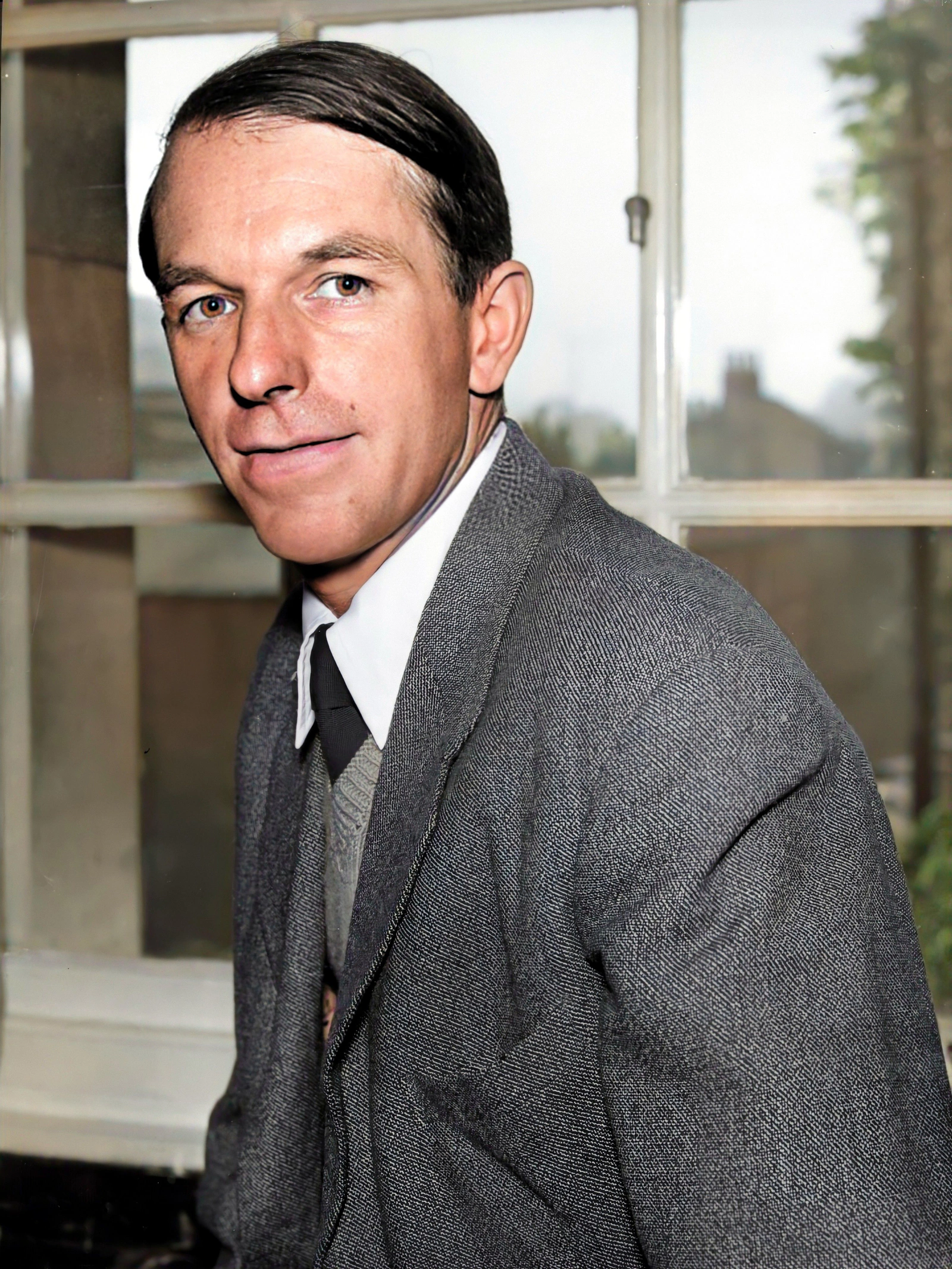
| 14 Quotes | |
| Occup. | Scientist |
| From | United Kingdom |
| Spouse | Margaret Joan Howe |
| Born | August 13, 1918 Rendcombe, Gloucestershire, England |
| Died | November 19, 2013 Cambridge, England |
| Cause | Natural causes |
| Aged | 95 years |
| Cite | |
Citation Formats
APA Style (7th ed.)
Frederick sanger biography, facts and quotes. (2026, February 11). FixQuotes. https://fixquotes.com/authors/frederick-sanger/
Chicago Style
"Frederick Sanger biography, facts and quotes." FixQuotes. February 11, 2026. https://fixquotes.com/authors/frederick-sanger/.
MLA Style (9th ed.)
"Frederick Sanger biography, facts and quotes." FixQuotes, 11 Feb. 2026, https://fixquotes.com/authors/frederick-sanger/. Accessed 5 Mar. 2026.
Early Life and Background
Frederick Sanger was born on August 13, 1918, in Rendcomb, Gloucestershire, and came of age in a Britain reshaped by the aftermath of World War I and the accelerating prestige of laboratory science. His father, Frederick Sanger Sr., was a physician and a Quaker whose moral seriousness and plain style left a lasting mark; the younger Sanger would later be known for an almost ascetic focus on method, evidence, and modest claims. The household combined ethical rigor with intellectual permission, and Sanger grew up with a quiet conviction that useful work mattered more than noise about it.Family influence also nudged him toward the life sciences early. As he later recalled, “Influenced by him, and probably even more so by my brother Theodore (a year older than me), I soon became interested in biology and developed a respect for the importance of science and the scientific method”. That respect was less an abstract creed than a temperament: careful attention, patience with detail, and a preference for what could be shown rather than asserted - traits that would fit the emerging biochemical era in which molecules were beginning to be treated as readable texts.
Education and Formative Influences
Sanger studied Natural Sciences at St John's College, University of Cambridge, completing his BA in 1939 as Europe slid into war; he then stayed on for specialized training in biochemistry. “After taking my B.A. degree in 1939 I remained at the University for a further year to take an advanced course in Biochemistry, and surprised myself and my teachers by obtaining a first class examination result”. In the wartime and immediate postwar years, he learned the craft of research in an environment that prized rigor over grand theory, and he absorbed the ethos of protein chemistry, where progress depended on improving techniques as much as on asking big questions.Career, Major Works, and Turning Points
At Cambridge, working in and around the biochemical circles shaped by figures such as A. C. Chibnall, Sanger set out to solve a problem that looked technical but was philosophically explosive: determining whether proteins had defined sequences. In the late 1940s and early 1950s he developed methods for labeling and breaking proteins into manageable fragments, using 1-fluoro-2, 4-dinitrobenzene (Sanger's reagent) to identify N-terminal amino acids, and then reconstructing order from overlapping peptides. The outcome was the first complete amino acid sequence of a protein, insulin, published in 1955 - proof that proteins were precise chemical entities rather than colloidal aggregates. Awarded the 1958 Nobel Prize in Chemistry for this work, he later pivoted from proteins to nucleic acids as molecular biology surged; at the MRC Laboratory of Molecular Biology in Cambridge he helped bring DNA from metaphor to manuscript, culminating in the chain-termination DNA sequencing method (the "Sanger method") in 1977 and major sequences such as bacteriophage phiX174. That second revolution earned him a second Nobel Prize in Chemistry in 1980 (shared), making him one of the few double laureates and the only person to win two Chemistry Nobels.Philosophy, Style, and Themes
Sanger's inner life, as it emerges from his remarks and from the logic of his career, was organized around craft, curiosity, and an almost domestic view of scientific greatness: build a stable life, do honest work, and let discoveries accumulate. He spoke without theatricality about motivation, insisting that the engine of his research was intrinsic rather than competitive: “I believe that we have been doing this not primarily to achieve riches or even honour, but rather because we were interested in the work, enjoyed doing it and felt very strongly that it was worthwhile”. That sentence is not a pose so much as an explanation for why he repeatedly chose problems where progress depended on years of methodological refinement - a personality comfortable with delayed reward and with credit arriving, if at all, after the fact.His writing and laboratory style mirrored that psychology: minimalism, controlled variables, and techniques that could be trusted by strangers. Yet he also framed research as a form of exploration rather than mere procedure: “It is like a voyage of discovery into unknown lands, seeking not for new territory but for new knowledge. It should appeal to those with a good sense of adventure”. The "adventure" for Sanger was not romance but epistemic risk - the willingness to be wrong, to iterate, and to let the molecule answer back. Beneath the celebrated methods lay a consistent theme: sequence as meaning. Insulin sequencing argued that biological function is written in linear order; DNA sequencing extended that principle to heredity itself, turning life into something that could be read, compared, and edited. His personal equilibrium mattered to that endurance, and he acknowledged how private life sustained public work: “I was married to Margaret Joan Howe in 1940. Although not a scientist herself she has contributed more to my work than anyone else by providing a peaceful and happy home”. Legacy and Influence
Sanger's influence is both conceptual and infrastructural. Conceptually, he helped establish that biological macromolecules have determinate sequences, a cornerstone of molecular biology that made genetics, enzymology, and evolutionary comparison quantitatively legible. Infrastructurally, the chain-termination method became the workhorse of late 20th-century genetics and underpinned the early phases of large-scale genome projects, shaping medicine, forensics, and biotechnology long after newer high-throughput platforms arrived. Just as importantly, his example modeled a scientific virtue that is easy to praise and hard to practice: ambition without vanity, precision without posturing, and a belief that the deepest breakthroughs can come from the patient perfection of a tool.
Our collection contains 14 quotes written by Frederick, under the main topics: Truth - Work Ethic - Science - Knowledge - Student.
Other people related to Frederick: Walter Gilbert (Scientist), Paul Berg (Scientist), John E. Walker (Scientist)
Frederick Sanger Famous Works
- 1957 The arrangement of the amino acids in proteins (Scientific paper)
Source / external links