
Frederik Pohl Biography Quotes 20 Report mistakes
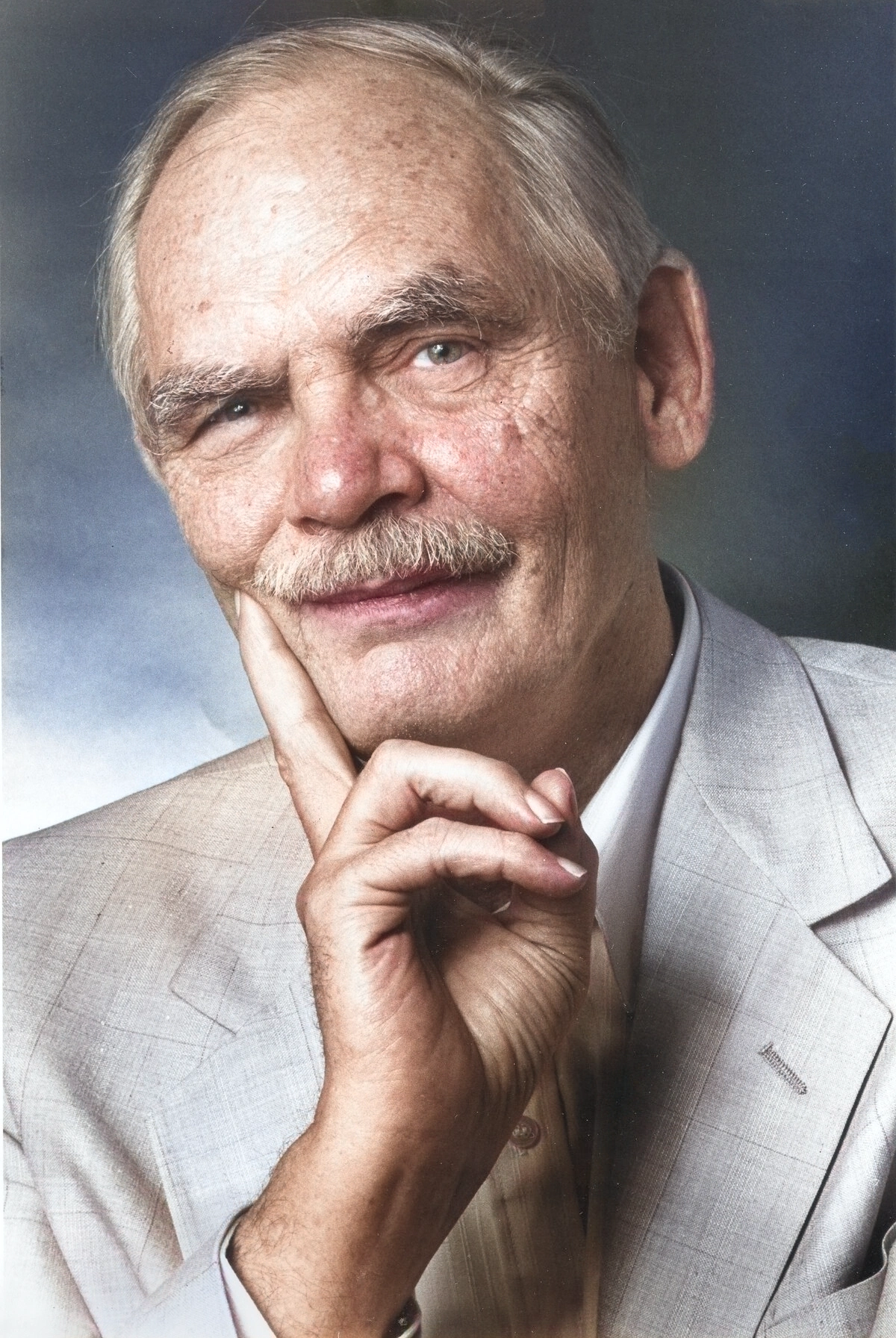
| 20 Quotes | |
| Born as | Frederik George Pohl Jr. |
| Occup. | Writer |
| From | USA |
| Born | November 26, 1919 New York City, New York, USA |
| Died | September 2, 2013 Arlington Heights, Illinois, USA |
| Cause | Respiratory failure |
| Aged | 93 years |
| Cite | |
Citation Formats
APA Style (7th ed.)
Frederik pohl biography, facts and quotes. (2026, February 11). FixQuotes. https://fixquotes.com/authors/frederik-pohl/
Chicago Style
"Frederik Pohl biography, facts and quotes." FixQuotes. February 11, 2026. https://fixquotes.com/authors/frederik-pohl/.
MLA Style (9th ed.)
"Frederik Pohl biography, facts and quotes." FixQuotes, 11 Feb. 2026, https://fixquotes.com/authors/frederik-pohl/. Accessed 6 Mar. 2026.
Early Life and Background
Frederik George Pohl Jr. was born on November 26, 1919, in New York City, the child of a peripatetic family shaped by the restless tempo of interwar America. The years between the Roaring Twenties and the Depression gave him an early lesson in systems - markets, institutions, and public moods - failing in plain sight. That habit of watching society as if it were a machine with missing parts would later become his signature stance as a science fiction writer: intimate with everyday life, but always mentally taking it apart.As a boy he discovered the new pulp science fiction magazines just as the genre was organizing itself into a self-aware subculture. The early fandom he entered was not merely escapist; it was a social network for ambitious, technically curious young people who felt the future pressing on the present. The same city that offered libraries, movie palaces, and political argument also offered scarcity and insecurity, and Pohl learned to treat optimism as something you earned by analysis rather than by wish.
Education and Formative Influences
Pohl attended Brooklyn Technical High School, an environment that reinforced his appetite for engineering logic even as he aimed it at stories and politics rather than blueprints. In the late 1930s he plunged into New York science fiction fandom, joining the Futurians, a contentious but fertile group that included Isaac Asimov, Donald A. Wollheim, Damon Knight, and Cyril Kornbluth. Their debates about Marxism, modernity, and the responsibilities of speculative art sharpened Pohl's sense that "the future" was not a neutral playground but a moral and economic battleground - and that a writer could be both entertainer and diagnostician.Career, Major Works, and Turning Points
Pohl moved early between roles: fan organizer, editor, agent, and finally major author. After service in the U.S. Army Air Forces during World War II, he returned to the field with a professional's eye for what the magazine market rewarded and what it suppressed. He became an influential editor at Galaxy Science Fiction in the 1960s, helping steer the magazine toward social critique while sustaining narrative propulsion. As a writer he first gained wide notice with collaborations, especially with Kornbluth: The Space Merchants (1952) and Gladiator-at-Law (1955) turned advertising, corporate power, and consumer desire into high-velocity satire. His solo career later deepened into psychologically textured, cosmically scaled work - notably the Heechee sequence beginning with Gateway (1977), which fused space archeology with anxiety, therapy, and the economics of risk - and he kept producing into old age, publishing memoir and commentary as well as fiction.Philosophy, Style, and Themes
Pohl's inner life reads as a contest between appetite and suspicion: he liked the seductions of progress, but distrusted the institutions selling it. His best stories feel like case studies in how ordinary people negotiate systems that promise fulfillment yet extract a price. He returned again and again to the marketplace as a moral engine, not because he hated technology but because he feared the ease with which technology becomes a delivery mechanism for manipulation. Even when his plots roam among alien artifacts and starflung mysteries, the emotional weather is recognizably modern - status anxiety, debt, romantic bargaining, and the quiet dread that one bad decision can define a lifetime.He described his craft in analytic, almost mechanical terms: “The science fiction method is dissection and reconstruction”. That credo underlies his consistent approach - take a social arrangement apart, swap components, then watch human motives reassert themselves in altered circumstances: “That's the method: restructure the world we live in in some way, then see what happens”. His impatience with merely decorative technicality was equally blunt; he insisted that hard science fiction requires genuine curiosity rather than outsourced authenticity, warning that “Stories where the author has known very little, but run a computer program that tells him how to construct a planet, and looked up specific things about rocketry and so on, really suck”. The psychology behind those statements is revealing: Pohl wanted rigor, but as lived understanding, not as fetish. For him, method served meaning - a way to force characters, and readers, into confronting the costs of their wants.
Legacy and Influence
Pohl died on September 2, 2013, in the United States, after a career that spanned nearly the entire history of modern science fiction. His enduring influence lies in how naturally he merged editorial intelligence with authorial bite: he helped shape the genre's mid-century turn toward social realism, then modeled how to keep that realism while enlarging the cosmic canvas. The Space Merchants remains a template for corporate dystopia that still feels uncomfortably current; Gateway and the Heechee novels helped normalize science fiction that treats fear, therapy, and self-deception as seriously as propulsion. Writers and critics continue to cite Pohl as proof that the genre's sharpest futurism begins with an unflinching look at the present - then the courage to rebuild it, differently, to see what breaks.Our collection contains 20 quotes written by Frederik, under the main topics: Witty One-Liners - Truth - Writing - Science - Change.
Frequently Asked Questions
- Drunkard's Walk Frederik Pohl: 'Drunkard's Walk' is a science fiction novel by Frederik Pohl that involves mathematical probability and free will, set in a dystopian future.
- Gateway Frederik Pohl review: 'Gateway' is praised for its imaginative world-building, psychological depth, and exploration of existential themes, adding depth to traditional science fiction tropes.
- Jem Frederik Pohl: 'Jem' is a science fiction novel by Frederik Pohl, depicting the colonization of a distant planet amid political and ecological challenges.
- Gateway Frederik Pohl summary: 'Gateway' is a novel about a space station built by an extinct alien race. Protagonist Robinette Broadhead navigates the risks and rewards of space missions using alien ships.
- Frederik Pohl Books in order: Some key books by Frederik Pohl in order of publication are 'The Space Merchants' (co-authored), 'Gateway,' 'Man Plus,' and 'Jem.'
- Frederik Pohl Chernobyl: Frederik Pohl co-authored a novel titled 'Chernobyl,' which dramatizes the events surrounding the nuclear disaster and its aftermath.
- Frederik Pohl Gateway series: The Gateway series is part of Pohl's Heechee saga, which began with the novel 'Gateway,' focusing on space exploration and alien technology.
- Frederik Pohl Eschaton: Frederik Pohl did not have a series or book titled 'Eschaton,' but he explored themes of future possibilities and societal evolution.
- How old was Frederik Pohl? He became 93 years old
Frederik Pohl Famous Works
- 1990 The World at the End of Time (Novel)
- 1987 The Heechee Saga (Series)
- 1986 The Coming of the Quantum Cats (Novel)
- 1981 The Cool War (Novel)
- 1980 Beyond the Blue Event Horizon (Novel)
- 1979 Jem (Novel)
- 1977 Gateway (Novel)
- 1976 Man Plus (Novel)
- 1956 Slave Ship (Novel)
- 1953 The Space Merchants (Novel)
Source / external links