
Fredrik Bajer Biography Quotes 27 Report mistakes
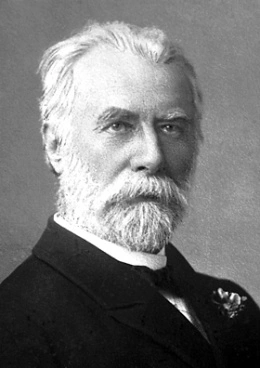
| 27 Quotes | |
| Occup. | Writer |
| From | Denmark |
| Born | April 21, 1837 Vester Egede, Copenhagen, Denmark |
| Died | January 22, 1922 |
| Aged | 84 years |
| Cite | |
Citation Formats
APA Style (7th ed.)
Fredrik bajer biography, facts and quotes. (2026, February 11). FixQuotes. https://fixquotes.com/authors/fredrik-bajer/
Chicago Style
"Fredrik Bajer biography, facts and quotes." FixQuotes. February 11, 2026. https://fixquotes.com/authors/fredrik-bajer/.
MLA Style (9th ed.)
"Fredrik Bajer biography, facts and quotes." FixQuotes, 11 Feb. 2026, https://fixquotes.com/authors/fredrik-bajer/. Accessed 27 Mar. 2026.
Early Life and Formation
Fredrik Bajer was a Danish politician, writer, teacher, and pacifist whose life bridged the turbulence of nineteenth-century nation-building and the fragile hopes for international cooperation that marked the early twentieth century. Born in Denmark in 1837, he grew up in a society reshaped by constitutional reform, national conflict, and the spread of civic associations. As a young man he entered military service and saw the human cost of war during the Second Schleswig War of 1864, a defining experience for many in his generation. The defeat and its aftermath left a deep impression on him. What he learned in uniform, discipline, public duty, and the limits of force, later informed his determination to seek political and social change through law, persuasion, and international dialogue rather than through arms.Teacher, Writer, and Entry into Public Life
After leaving the army, Bajer moved into civilian life as a teacher and translator in Copenhagen. He wrote articles and pamphlets that explored education, citizenship, and the prospects for peaceful relations between states. His command of languages and his habit of careful, reasoned argument helped him bridge Danish debates with wider European conversations. In this period he married Matilde Bajer, a formidable reformer in her own right. She became one of Denmark's leading advocates for women's rights and civic participation. Their marriage was a partnership in activism: her focus on equal rights complemented his evolving commitment to peace, arbitration, and democratic reform. Together, they nurtured a circle of colleagues and correspondents who believed that a more just society at home would strengthen prospects for peace abroad.Parliamentarian and Reformer
Bajer entered national politics in the 1870s and served for many years in the Folketing, the lower house of the Danish Parliament. He was not a grandstanding orator; he worked steadily in committees, introduced motions, and built cross-party coalitions on practical reforms. He argued that small states were safest when international disputes were settled by treaty and arbitration rather than by arms races they could not win. At the same time, he pursued reforms within Denmark that aligned with a broader liberal program: expanding education, strengthening civil liberties, improving municipal governance, and widening the political sphere so that more citizens, including women, could be heard. His advocacy intersected naturally with the work of Matilde Bajer and other pioneers of the women's movement, and he used his parliamentary platform to legitimize their claims before skeptical colleagues.Pacifism and the International Parliamentary Movement
From the 1880s onward, Bajer emerged as one of Scandinavia's most consistent voices for organized, practical pacifism. He helped to establish and lead the Danish Peace Society, an association that sought to replace the rhetoric of national glory with the routines of arbitration treaties, fact-finding commissions, and regular parliamentary contacts across borders. He believed that parliamentarians, accountable to voters rather than dynastic pride, were well placed to reduce tensions through dialogue.This conviction drew him into the new Inter-Parliamentary Union, founded by William Randal Cremer of Britain and Frédéric Passy of France. Bajer was an active participant in its conferences, where he collaborated with colleagues including the Swedish reformer Klas Pontus Arnoldson. In these gatherings he pressed for concrete steps: mutual arbitration agreements, codification of international law, and mechanisms to encourage transparency between governments. He also maintained close links with the International Peace Bureau in Bern, engaging with leading figures such as Élie Ducommun and Charles Albert Gobat. Through these networks he met and worked alongside Bertha von Suttner, whose role in shaping European opinion for peace was unmatched, and he found long-term allies in Henri La Fontaine and others who sought to anchor peace in international institutions. These were not mere acquaintances; they were interlocutors in a sustained, transnational project to normalize deliberation and legal settlement over confrontation.
The Nobel Peace Prize
In 1908, the Norwegian Nobel Committee honored Bajer and Klas Pontus Arnoldson with the Nobel Peace Prize. The award recognized years of patient, organized work rather than a single dramatic act. Bajer had helped carry the idea of arbitration from idealistic rhetoric into parliamentary resolutions, bilateral proposals, and public education. He encouraged Nordic cooperation, believing that the region could model how neighbors with historical disputes might still resolve differences peacefully. The Nobel recognition did not change his approach; it confirmed a strategy he had followed for decades: build institutions, cultivate relationships, and keep public attention focused on the practicality of law in international affairs.World War I and an Elder Statesman of Peace
When the First World War erupted in 1914, Bajer was nearing eighty. Denmark remained neutral, yet the war tested the assumptions of his generation of peace advocates. Even so, he continued to correspond with colleagues abroad and to argue that lasting peace would require not only the cessation of hostilities but also the strengthening of legal frameworks capable of adjudicating future disputes. He pointed to the earlier Hague Conferences and the progress already made toward a permanent court as proof that institutional solutions were possible. In this difficult period, he lent moral support to fellow activists, including Bertha von Suttner's circle and later Nobel laureates such as Henri La Fontaine, who struggled to keep transnational ties alive amid censorship and suspicion. Bajer's voice, clear but measured, insisted that neutrality should not mean passivity: small states could still champion mediation, humanitarian standards, and the revival of cooperative structures once war ended.Personal Life and Collaborations
Throughout his career, Bajer's home life with Matilde Bajer reinforced his public commitments. She organized, wrote, and spoke on behalf of women's education, property rights, and suffrage, and her efforts helped prepare the ground for later achievements in Danish law. The couple's shared purpose drew them into contact with reformers from many countries. In congresses and correspondence they compared strategies with William Randal Cremer and Frédéric Passy, who had pioneered the parliamentary peace idea; with Klas Pontus Arnoldson, whose Scandinavian perspective was close to their own; and with organizers like Élie Ducommun and Charles Albert Gobat, who gave the peace movement administrative backbone. These relationships anchored Bajer in a network that outlived individual careers and awards, a network that continued to press for arbitration and international cooperation after the war.Legacy
Fredrik Bajer died in 1922, closing a life that had spanned dramatic transformations in Denmark and Europe. His legacy rests in three intertwined achievements. First, he helped normalize the notion that parliaments, not militaries alone, should shape how states manage conflicts, a principle institutionalized in the Inter-Parliamentary Union and in the growth of arbitration practices. Second, he treated peace not as a sentiment but as a method, built from treaties, committees, and public education, and he persisted long enough to see his methods acknowledged with the Nobel Peace Prize he shared with Klas Pontus Arnoldson. Third, he joined domestic reform to internationalism, reinforcing the idea that a fairer society strengthens the credibility of a state's voice for peace. The work of Matilde Bajer and her allies in the women's movement was integral to that vision.Measured in headlines, Bajer's career appears quiet. Measured in institutions and habits of cooperation, it was transformative. He left behind no single doctrine, only the demonstration that patient legislative work, international friendship, and public advocacy can change what states and citizens consider normal. In the decades after his death, the structures he supported, from parliamentary dialogue across borders to international legal bodies, became pillars of efforts to prevent and resolve conflict. That is the enduring meaning of his life's work.
Our collection contains 27 quotes written by Fredrik, under the main topics: Witty One-Liners - Wisdom - Leadership - Freedom - Learning.
Source / external links