
Frida Kahlo Biography Quotes 11 Report mistakes
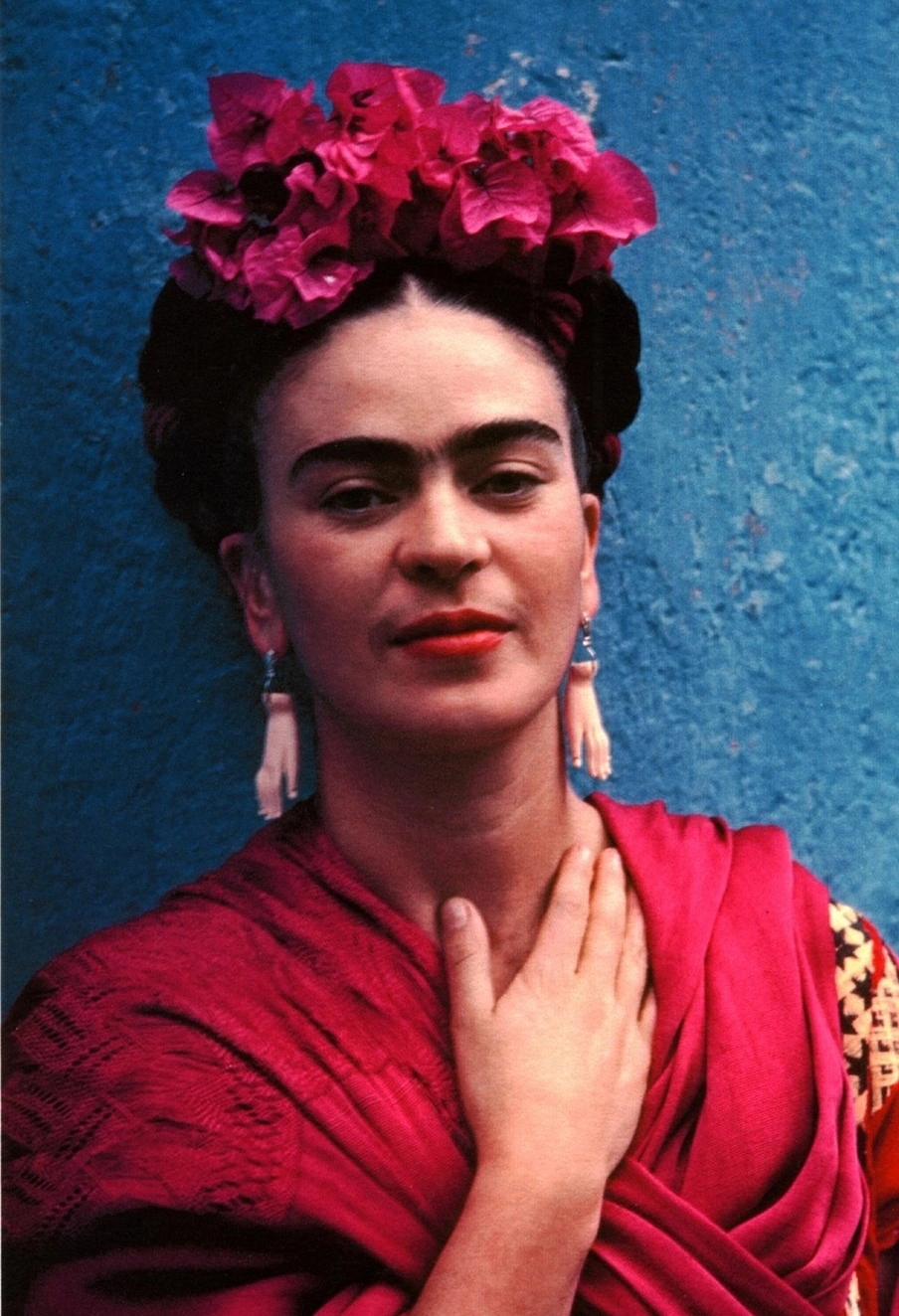
| 11 Quotes | |
| Born as | Magdalena Carmen Frida Kahlo Calderón |
| Occup. | Painter |
| From | Mexico |
| Spouse | Diego Rivera |
| Born | July 6, 1907 Coyoacán, Mexico City, Mexico |
| Died | July 13, 1954 Coyoacán, Mexico City, Mexico |
| Cause | Pulmonary embolism |
| Aged | 47 years |
| Cite | |
Citation Formats
APA Style (7th ed.)
Frida kahlo biography, facts and quotes. (2026, February 11). FixQuotes. https://fixquotes.com/authors/frida-kahlo/
Chicago Style
"Frida Kahlo biography, facts and quotes." FixQuotes. February 11, 2026. https://fixquotes.com/authors/frida-kahlo/.
MLA Style (9th ed.)
"Frida Kahlo biography, facts and quotes." FixQuotes, 11 Feb. 2026, https://fixquotes.com/authors/frida-kahlo/. Accessed 5 Mar. 2026.
Early Life and Background
Magdalena Carmen Frida Kahlo Calderon was born on 1907-07-06 in Coyoacan, then a village on the edge of Mexico City, in the Blue House (La Casa Azul) that would become both sanctuary and stage. Her father, Guillermo Kahlo, a German-born photographer, trained her eye toward posed truth: the face as document, the body as evidence. Her mother, Matilde Calderon y Gonzalez, was devout and practical, anchoring the household in Mexican Catholic customs and mestizo tradition. Frida grew up as Mexico itself was remaking its identity after the Revolution of 1910-1920, when politics, folklore, and art were pressed into the same nationalist project.Illness and fracture arrived early. As a child she suffered polio, leaving one leg thinner and sharpening her sense of difference; she learned to counter pity with performance, costumes, and a fierce, often cutting humor. On 1925-09-17, at eighteen, a streetcar collision shattered her pelvis and spine and injured her right leg and foot. Months of immobilization followed, then years of pain, surgeries, and miscarriages. What might have become mere tragedy became her subject matter and method: the body not as ideal, but as lived, wounded, and insisted upon.
Education and Formative Influences
In 1922 she entered the National Preparatory School in Mexico City, one of a small cohort of women, planning to study medicine. She joined the irreverent student circle Los Cachuchas and absorbed a modernist mix of science, satire, and politics. At the school she first watched Diego Rivera paint a mural, seeing how art could be public argument. After the accident, convalescence redirected her toward painting; a special easel and mirror allowed her to work flat on her back, turning the enforced stillness of her room into a laboratory of self-observation.Career, Major Works, and Turning Points
Kahlo sought Rivera out in 1928 with her paintings; they married in 1929, an alliance of love, rivalry, and ideology that braided her private life to Mexico's cultural diplomacy. She traveled with him to San Francisco, Detroit, and New York (1930-1934), encountering industrial modernity and U.S. capitalism while her own reproductive losses deepened her iconography (Henry Ford Hospital, 1932). Back in Mexico, she refined a small-scale, meticulously rendered style that drew on retablos, votive paintings, and portraiture rather than the monumental muralism dominating the era. Major works such as The Two Fridas (1939), Self-Portrait with Thorn Necklace and Hummingbird (1940), and The Broken Column (1944) staged identity as anatomical, political, and theatrical at once. After her divorce and remarriage to Rivera (1939-1940), and amid activism that included hosting Leon Trotsky in Coyoacan, her health declined, yet her visibility rose: exhibitions in New York (1938) and Paris (1939) brought international attention; her first solo show in Mexico came only in 1953, when she arrived by ambulance and greeted guests from a bed placed in the gallery. She died on 1954-07-13 in Coyoacan, officially of pulmonary embolism, with later debate about suicide shadowing the record.Philosophy, Style, and Themes
Kahlo's art reads like a diary written in symbols, but its intimacy is engineered. She used frontal composition, crisp outlines, and a luminous, almost enamel surface to make pain legible and undeniable, borrowing the directness of folk art while quoting European portrait conventions. Her repeated return to her own face was not vanity but method: “I paint self-portraits because I am so often alone, because I am the person I know best”. The loneliness she names is practical (long recoveries, separations, betrayals) and metaphysical - the self trapped inside a body that fails and yet persists. She painted medical devices, surgical scars, fetuses, and severed anatomy without abstraction, insisting the viewer meet what polite society prefers to veil.At the same time, she refused the romantic escape route of Surrealist labeling, policing the boundary between fantasy and testimony: “I never paint dreams or nightmares. I paint my own reality”. That "reality" includes the psychic collisions of her marriage and politics, where love and injury are inseparable and desire is not redemptive. Her wit could turn cruel even toward her deepest attachment: “There have been two great accidents in my life. One was the trolley, and the other was Diego. Diego was by far the worst”. The line exposes a psychology that converts catastrophe into narrative control - if she can name the disaster, she can frame it. Self-fashioning through Tehuana dress, indigenous motifs, and split genealogies was likewise both politics and armor: a way to inhabit Mexicanidad while protecting a core self that remained unassimilable, fiercely private even when painted for the world.
Legacy and Influence
Kahlo's posthumous rise turned her from "wife of Rivera" into a global emblem of self-definition under constraint. La Casa Azul became the Museo Frida Kahlo in 1958, and her paintings - once marginal to the muralist canon - came to anchor discussions of gender, disability, mestizo identity, and autobiography in art. She influenced generations of artists who treat the body as archive and politics as intimate fact, from feminist painters to contemporary self-portraitists working in photography and performance. Her enduring power lies in the paradox she mastered: the more specifically she recorded her own injuries, the more universally she spoke, making the private body a historical document and the painted face a form of survival.Our collection contains 11 quotes written by Frida, under the main topics: Witty One-Liners - Motivational - Art - Long-Distance Relationship - Heartbreak.
Other people related to Frida: Diego Rivera (Artist), Isamu Noguchi (Sculptor)
Source / external links