
Fridtjof Nansen Biography Quotes 6 Report mistakes
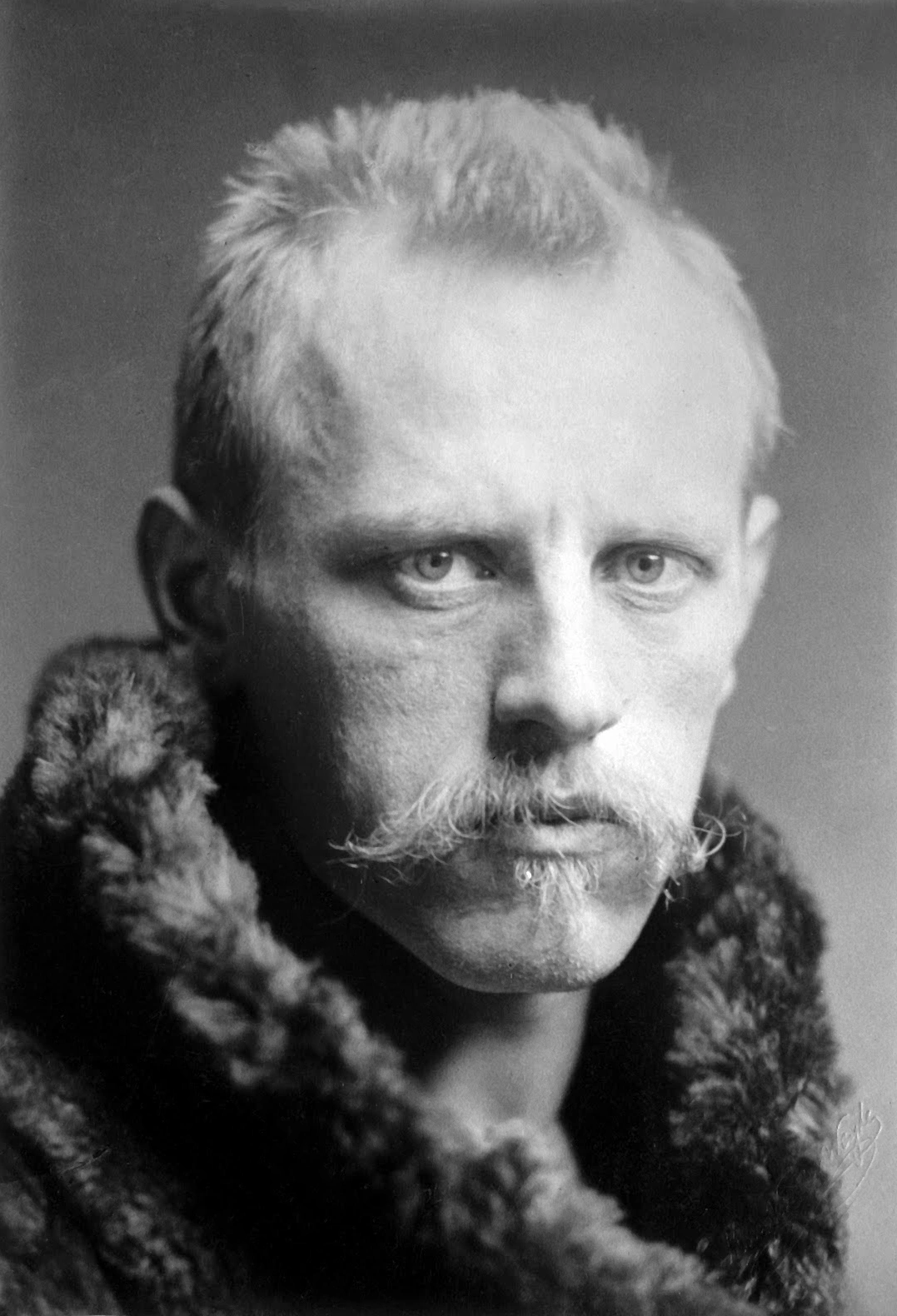
| 6 Quotes | |
| Born as | Fridtjof Wedel-Jarlsberg Nansen |
| Occup. | Explorer |
| From | Norway |
| Born | October 10, 1861 Store Frøen, Christiania, Norway |
| Died | May 13, 1930 Polhøgda, Lysaker, Norway |
| Cause | Heart attack |
| Aged | 68 years |
| Cite | |
Citation Formats
APA Style (7th ed.)
Fridtjof nansen biography, facts and quotes. (2026, February 11). FixQuotes. https://fixquotes.com/authors/fridtjof-nansen/
Chicago Style
"Fridtjof Nansen biography, facts and quotes." FixQuotes. February 11, 2026. https://fixquotes.com/authors/fridtjof-nansen/.
MLA Style (9th ed.)
"Fridtjof Nansen biography, facts and quotes." FixQuotes, 11 Feb. 2026, https://fixquotes.com/authors/fridtjof-nansen/. Accessed 27 Mar. 2026.
Early Life and Background
Fridtjof Wedel-Jarlsberg Nansen was born on October 10, 1861, at Store Fron? No - at Store Fron is wrong; he was born near Christiania (now Oslo), in the parish of Aker, and raised at the family home at Froen. Norway in his childhood was a country in union with Sweden, culturally ambitious yet politically constrained, where national identity was being forged as much in literature and science as in the outdoors. Nansen grew up in a prosperous, educated household that treated nature as both classroom and proving ground: skiing, hunting, and long treks were not diversions but disciplines.That early immersion formed a temperament that would later read as both romantic and unsentimental - thrilled by wide horizons, intolerant of half measures. He learned early to trust his body and his judgment in weather and terrain, and he developed a taste for solitude that was not withdrawal so much as concentration. The Norway of his youth prized hardiness as civic virtue, and Nansen internalized it as personal ethics: self-reliance, endurance, and a kind of stern joy in difficulty.
Education and Formative Influences
He entered the University of Christiania and trained in zoology, then gained practical scientific experience at Bergen Museum, where careful observation and classification sharpened his eye for systems - ocean currents, ice behavior, animal life - that he would later apply to exploration. A crucial early test came with the 1882 Viking sealing voyage to the Arctic, which introduced him to pack ice and the psychology of risk; the experience convinced him that polar travel could be approached with method rather than fatalism, and that modern national prestige could be built through science as much as conquest.Career, Major Works, and Turning Points
Nansen became internationally known after leading the first crossing of Greenland's ice cap in 1888, a trek accomplished by skis and sledges from the east coast to the west, planned so that retreat was practically impossible and therefore psychologically irrelevant. He narrated it in The First Crossing of Greenland (1890), combining logistical detail with a persuasive philosophy of resolve. His greatest gamble followed: the Fram expedition (1893-1896), built on his theory that a specially designed ship could be frozen into the Siberian pack and drift across the Arctic Ocean. Fram's drift proved the existence of deep polar seas and advanced oceanography; Nansen's near dash for the North Pole with Hjalmar Johansen, though short of the goal, became a study in controlled extremity and survival. In later life he shifted from explorer-scientist to statesman-humanitarian: he aided Norway's 1905 independence diplomacy, served as minister in London, and after World War I became the League of Nations' High Commissioner for Refugees, orchestrating repatriation of prisoners of war and creating the "Nansen passport" for stateless people, work that earned him the 1922 Nobel Peace Prize. He died May 13, 1930, in Lysaker, near Oslo.Philosophy, Style, and Themes
Nansen's inner life shows a man who treated will as a tool - not mystical, not decorative, but something to be engineered like a ship's hull. His defining psychological move was to narrow options until action became inevitable. “I demolish my bridges behind me - then there is no choice but forward”. In his expeditions this was literal strategy - landings chosen to prevent easy reversal, plans designed to force commitment - but it also reads as self-knowledge: he distrusted the comfort of alternatives because he knew how seductive they could be in cold, fatigue, and fear. His writing voice, even when lyrical, stays practical; beauty is registered, then subordinated to the next decision.Yet he was not simply a titan of grit. He carried a reflective streak shaped by Norwegian outdoor culture and a Protestant-adjacent seriousness that did not require church walls. “It is better to go skiing and think of God, than go to church and think of sport”. Nature for him was moral training: the body moving honestly through honest conditions, the mind stripped of performative piety. That ethic helped him bridge science and humanitarianism later - the same insistence on reality as it is, not as one wishes it to be, underlies both ice navigation and refugee administration. His optimism, moreover, was never naive; it was disciplined. “The difficult is what takes a little time; the impossible is what takes a little longer”. The line captures his habit of converting awe into sequence: break the terrifying into tasks, measure them, do them, then do the next.
Legacy and Influence
Nansen endures as a rare figure whose authority came from multiple arenas: polar science, national politics, and international humanitarian practice. In exploration he helped normalize skis, dogs, and lightweight travel, and he proved that research-driven hypotheses could guide polar strategy; Fram remains a symbol of engineering aligned with scientific purpose. In diplomacy and relief work he expanded the idea that a famous individual could leverage prestige into institutions, leaving behind not only books and expedition data but legal and administrative innovations that saved lives - especially the Nansen passport, a template for later refugee documentation. His life also helped define a modern Norwegian ideal: competence in harsh nature paired with responsibility toward human suffering, a combination that kept his reputation alive long after maps filled in and flags changed.Our collection contains 6 quotes written by Fridtjof, under the main topics: Never Give Up - God - Tough Times - Perseverance.
Fridtjof Nansen Famous Works
- 1914 Through Siberia the Land of the Future (Book)
- 1911 In Northern Mists (Book)
- 1905 Norway and the Union with Sweden (Book)
- 1897 Farthest North (Book)
- 1893 Eskimo Life (Book)
Source / external links