
Friedrich Schiller Biography Quotes 52 Report mistakes
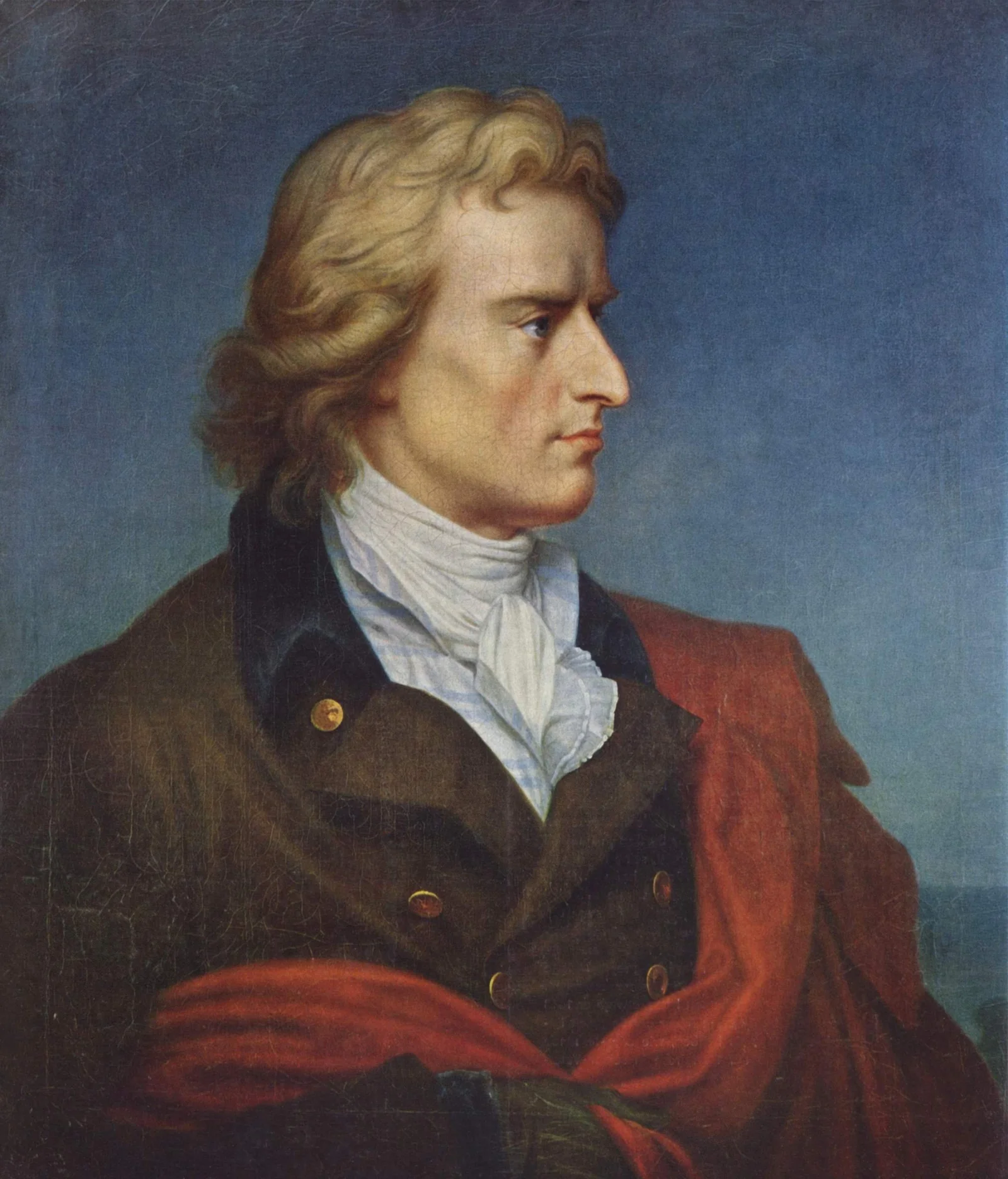
| 52 Quotes | |
| Born as | Johann Christoph Friedrich von Schiller |
| Occup. | Dramatist |
| From | Germany |
| Born | November 10, 1759 Marbach am Neckar, Württemberg, Germany |
| Died | May 9, 1805 Weimar, Saxe-Weimar, Germany |
| Cause | Tuberculosis |
| Aged | 45 years |
| Cite | |
Citation Formats
APA Style (7th ed.)
Friedrich schiller biography, facts and quotes. (2026, February 2). FixQuotes. https://fixquotes.com/authors/friedrich-schiller/
Chicago Style
"Friedrich Schiller biography, facts and quotes." FixQuotes. February 2, 2026. https://fixquotes.com/authors/friedrich-schiller/.
MLA Style (9th ed.)
"Friedrich Schiller biography, facts and quotes." FixQuotes, 2 Feb. 2026, https://fixquotes.com/authors/friedrich-schiller/. Accessed 24 Mar. 2026.
Early Life and Background
Johann Christoph Friedrich von Schiller was born on November 10, 1759, in Marbach am Neckar in the Duchy of Wurttemberg, a small state where princely authority pressed hard on ordinary lives. His father, Johann Kaspar Schiller, was a military man turned administrator, and the family followed the rhythms of garrison towns and court employment. That mobile, disciplined upbringing placed the boy at the hinge of two worlds - the practical regimentation of a minor German court and the wider intellectual ferment of the late Enlightenment.In the 1760s and 1770s, as German lands absorbed the shockwaves of the Seven Years' War and the new prestige of Frederick the Great, Wurttemberg under Duke Karl Eugen cultivated spectacle and control in equal measure. Schiller grew up keenly aware of rank, patronage, and the vulnerability of those without it. The tensions that would animate his drama - conscience versus obedience, inner freedom versus external coercion - were not abstractions but lived facts in a society where careers and even education could be commanded by the state.
Education and Formative Influences
In 1773 Karl Eugen compelled Schiller into the Hohe Karlsschule, the duke's elite military academy near Stuttgart, a rigorous institution designed to manufacture loyal servants. Schiller studied law and then medicine, read widely in French and English literature, and fell under the spell of Shakespeare, Rousseau, and the emotional insurgency of Sturm und Drang. The academy's surveillance and drill sharpened his sensitivity to moral captivity; the very training meant to domesticate him supplied the psychological pressure that made him a dramatist of rebellion, dignity, and the costs of defiance.Career, Major Works, and Turning Points
Schiller's breakout came with "Die Rauber" (The Robbers), first published in 1781 and staged in Mannheim in 1782, a volatile indictment of social hypocrisy and arbitrary power. After attending the premiere without permission, he faced ducal sanctions and fled Wurttemberg in 1782, beginning years of precarious work in Mannheim and elsewhere. He wrote "Kabale und Liebe" (Intrigue and Love, 1784), exposing court corruption through bourgeois tragedy, and "Don Carlos" (begun 1783, published 1787), expanding his canvas to political liberty and spiritual conflict. Stabilization arrived in Weimar and Jena: a professorship in history at Jena (1789), marriage to Charlotte von Lengefeld (1790), and a decisive intellectual alliance with Johann Wolfgang von Goethe in the mid-1790s. Even as chronic illness shadowed him, he produced the great late trilogy of historical dramas - "Wallenstein" (1799), "Maria Stuart" (1800), "Die Jungfrau von Orleans" (1801), and "Wilhelm Tell" (1804) - forging a classical style that married stage momentum to philosophical weight. He died in Weimar on May 9, 1805, at 45.Philosophy, Style, and Themes
Schiller's inner life, as it surfaces in letters and essays, oscillated between feverish striving and a disciplined search for form - a man who wanted passion without chaos, freedom without mere negation. His pivotal theoretical writings, including "Uber Anmut und Wurde" (1793), "Briefe uber die asthetische Erziehung des Menschen" (1795), and essays on naive and sentimental poetry (1795-1796), argue that politics and ethics require an education of feeling. He insisted that the human being becomes whole through aesthetic experience: “Man only plays when in the full meaning of the word he is a man, and he is only completely a man when he plays”. In Schiller's psychology, "play" is not frivolity but a third space where duty and desire reconcile, revealing why his dramas so often stage characters at the brink, searching for a freedom that is inwardly earned.This is also why Schiller treated art as a civic force rather than ornament. He wrote, “Art is the daughter of freedom”. , and his theater repeatedly tests whether a society that coerces bodies can ever persuade souls. His villains typically wield systems - courts, armies, conspiracies - while his heroes discover that moral liberty costs comfort, security, and sometimes life. Yet he was no sentimental democrat: he distrusted the tyranny of numbers as much as the tyranny of princes, warning that “It does not prove a thing to be right because the majority say it is so”. That skepticism, born in an age of revolution, helps explain the tensile balance of his mature style: elevated rhetoric anchored by psychological consequence, historical panoramas narrowed to choices made in solitude.
Legacy and Influence
Schiller became, alongside Goethe, a central architect of Weimar Classicism and a model for the modern idea of the writer as moral educator. His plays shaped German stage tradition, inspired composers from Beethoven to Rossini and Verdi, and furnished later generations with a language for freedom that could be invoked by liberals, nationalists, and anti-tyrannical movements alike. More enduring than any single political appropriation is his synthesis of drama and ethical inquiry: a theater where history is not backdrop but pressure, and where the struggle for dignity is dramatized as an interior achievement as much as a public act.Our collection contains 52 quotes written by Friedrich, under the main topics: Witty One-Liners - Motivational - Ethics & Morality - Truth - Wisdom.
Other people related to Friedrich: Johann Gottfried von Herder (Philosopher), Christoph Martin Wieland (Poet)
Frequently Asked Questions
- Friedrich Schiller University Jena: A prestigious university in Germany named after the illustrious dramatist.
- Schiller meaning: The word can refer to a person who applies white lead or chalk to make goods appear better.
- Friedrich Schiller pronunciation: Free-drikh Shill-er
- Friedrich Schiller wife: Charlotte von Lengefeld
- Friedrich Schiller Works: 'Don Carlos', 'The Wallenstein Trilogy', 'The Maid of Orleans', 'The Bride of Messina'
- Friedrich Schiller famous works: 'The Robbers', 'William Tell', 'Mary Stuart', 'Ode to Joy'
- Friedrich Schiller cause of death: Tuberculosis
- How old was Friedrich Schiller? He became 45 years old
Source / external links