
Fritz Sauckel Biography Quotes 27 Report mistakes
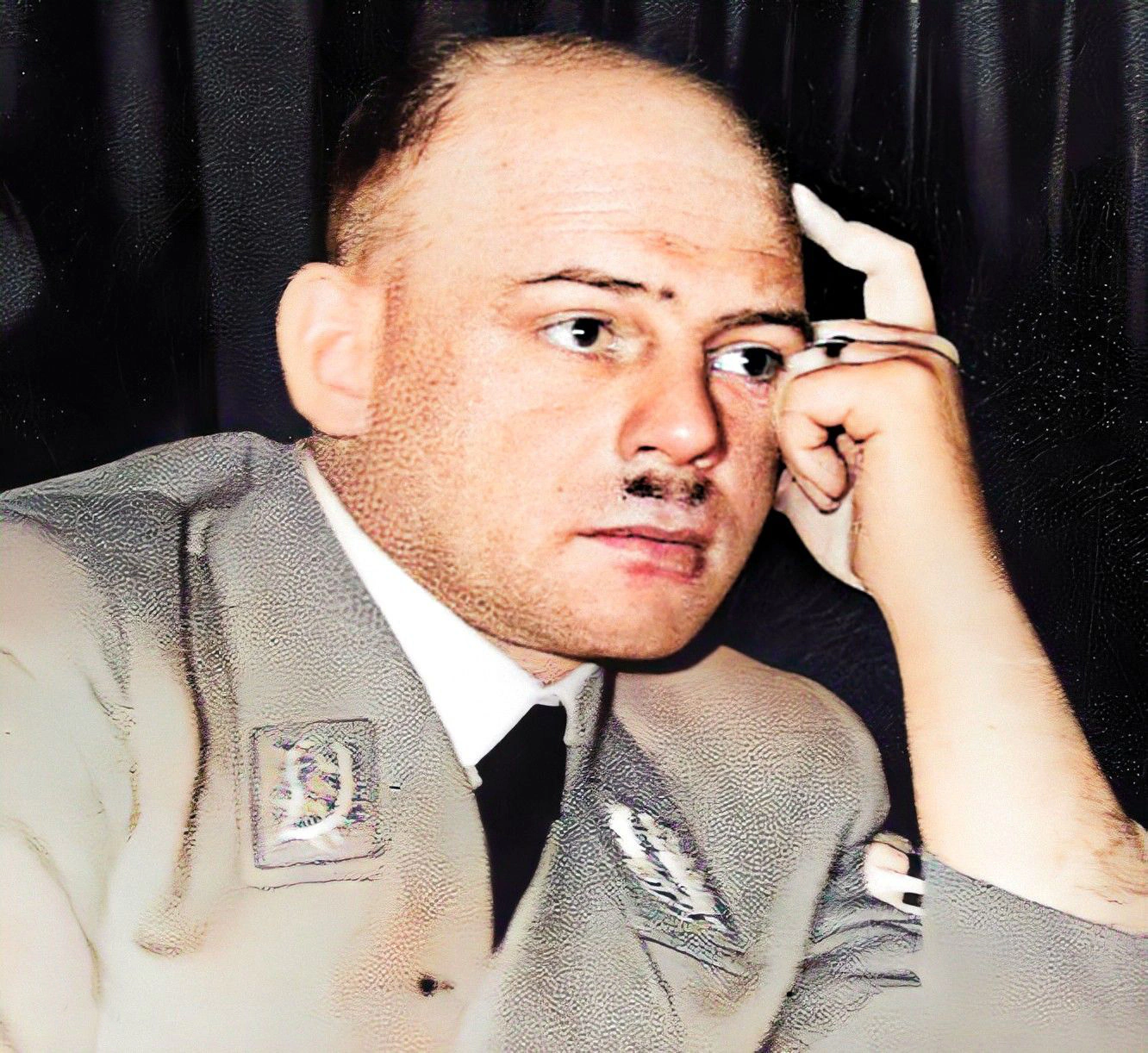
Attr: See page for author
| 27 Quotes | |
| Occup. | Soldier |
| From | Germany |
| Born | October 27, 1894 Germany |
| Died | October 16, 1946 Nuremberg, Germany |
| Cause | Execution by hanging |
| Aged | 51 years |
| Cite | |
Citation Formats
APA Style (7th ed.)
Fritz sauckel biography, facts and quotes. (2026, February 11). FixQuotes. https://fixquotes.com/authors/fritz-sauckel/
Chicago Style
"Fritz Sauckel biography, facts and quotes." FixQuotes. February 11, 2026. https://fixquotes.com/authors/fritz-sauckel/.
MLA Style (9th ed.)
"Fritz Sauckel biography, facts and quotes." FixQuotes, 11 Feb. 2026, https://fixquotes.com/authors/fritz-sauckel/. Accessed 12 Feb. 2026.
Early Life and Background
Fritz Sauckel was born on October 27, 1894, in Hassfurt in Lower Franconia, Bavaria, a river and market town shaped by small commerce, Catholic civic life, and the disciplined culture of the late German Empire. He grew up amid the social gradients of Wilhelmine Germany, where deference to authority coexisted with an increasingly organized working class. The pressures of modest means and the era's cult of duty left a strong mark on his self-conception: he learned early to translate insecurity into obedience, and later, into harshness toward others.Family strain and early responsibility pushed him toward escape and self-making. He framed the decision as necessity and filial piety rather than ambition, later recalling, "When she became very ill with heart trouble, I saw that it would be impossible for my parents to provide for my studies, and I obtained their permission to go to sea to make a career for myself there". That story, repeated in wartime and courtroom settings, functioned as both origin myth and alibi - a way to present himself as shaped by fate and hardship, not ideology.
Education and Formative Influences
Sauckel had conventional schooling for his milieu - "I attended the elementary school at Schweinfurt and the secondary school". - but his real formation came from work, travel, and war. Before 1914 he sailed as a merchant seaman and tasted the cosmopolitan labor world of ports and crews, emphasizing the humility of his beginnings: "As a cabin boy on a Norwegian sailing ship I earned five kronen a week in addition to my keep". The First World War interrupted any stable vocational path; captured by the French and held as a prisoner of war, he experienced years in which rigid hierarchy and scarcity became normal, conditions that later made bureaucratic coercion feel, to him, like administration rather than moral rupture.Career, Major Works, and Turning Points
After returning to a Germany convulsed by defeat, revolution, and hyperinflation, Sauckel drifted into the völkisch-nationalist orbit and joined the National Socialist movement early in the 1920s. His organizational talent and rough, soldierly persona made him useful in regional power struggles; by 1927 he was Gauleiter of Thuringia, building a party apparatus that blended patronage, intimidation, and a cultivated image of social reconciliation. The decisive turning point came after the Nazi seizure of power, when he became Reich Governor of Thuringia and, in 1942, Plenipotentiary-General for Labor Allocation (Generalbevollmaechtigter fuer den Arbeitseinsatz) under Hitler and Speer. In that role he oversaw the mass procurement of labor from occupied Europe for German industry and agriculture - a system that in practice relied on coercion, deportation, and the exploitation of prisoners of war and civilians. His authority expanded with the deepening manpower crisis, and his name became synonymous with the Nazi labor dragnet that fed the war economy.Philosophy, Style, and Themes
Sauckel's inner life, as far as it can be traced through speeches and postwar testimony, was organized around a craving to appear both dutiful and socially integrative - the man who "bridged" classes, stabilized chaos, and followed orders. He portrayed himself as a mediator: "The controversies between the proletariat and the middle class had to be smoothed out and bridged over by each getting to know and understand the other". Psychologically, this language mattered because it re-coded domination as harmony; it allowed him to imagine forced labor not as violence but as a regrettable, even unifying, mobilization in the national interest.His rhetorical style was blunt and managerial, heavy on collective nouns and impersonal necessity, with personal responsibility pushed outward to "developments" and "decisions" elsewhere. He emphasized popular legitimacy and inevitability: "The citizen parties, by an absolute majority, elected a National Socialist Government". In the same self-justifying pattern he claimed political ignorance at crucial moments, a way of presenting himself as a technician rather than an actor: "I was never informed in advance about the start of the war or about foreign political developments". Together these themes reveal a personality that sought moral shelter in procedure, majorities, and chain-of-command - the psychological architecture that made extreme policies feel like routine administration.
Legacy and Influence
Sauckel's legacy is inseparable from the forced-labor regime that underwrote the Third Reich's prolonged war: millions were uprooted, families broken, and lives shortened by hunger, brutality, and hazardous work, while German production was kept afloat by compulsion. Tried at Nuremberg, he was convicted of war crimes and crimes against humanity for his role in slave labor and deportations and was executed by hanging on October 16, 1946. Historically he endures as a case study in how a seemingly "practical" functionary can become an architect of mass suffering - not through theatrical hatred alone, but through ambition, organizational talent, and a persistent need to translate coercion into duty.Our collection contains 27 quotes written by Fritz, under the main topics: Justice - Friendship - Leadership - Freedom - Life.
Other people related to Fritz: Robert Ley (Soldier), Albert Speer (Criminal)
Source / external links